
Small living rooms can be challenging to decorate, especially when trying to incorporate both a TV and dining table.
However, with the right ideas and furniture, it’s possible to create a functional and stylish space that maximizes every inch.
In this article, readers will discover 15 small living room ideas that cleverly integrate a TV and dining table, allowing them to enjoy both entertainment and meals in style.
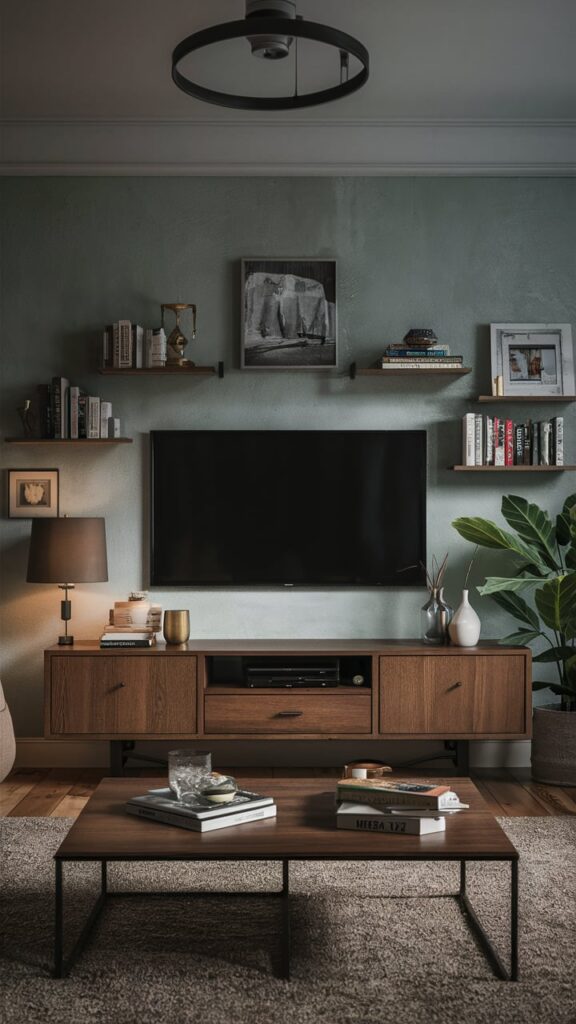
1. Wall-Mounted Media Zone

A wall-mounted TV setup instantly frees up floor space, which is gold in small rooms. Instead of bulky entertainment units, the TV floats cleanly on the wall, keeping things open and airy.
Why It Works
- No floor clutter means easier furniture placement
- Makes the dining area feel less cramped
- Visually expands the room, IMO a must for small spaces
Pro Tip
- Use floating shelves below the TV for storage
- Keep cables hidden for a clean look
This setup keeps the TV functional without stealing space from your dining table.
2. Compact Round Dining Table
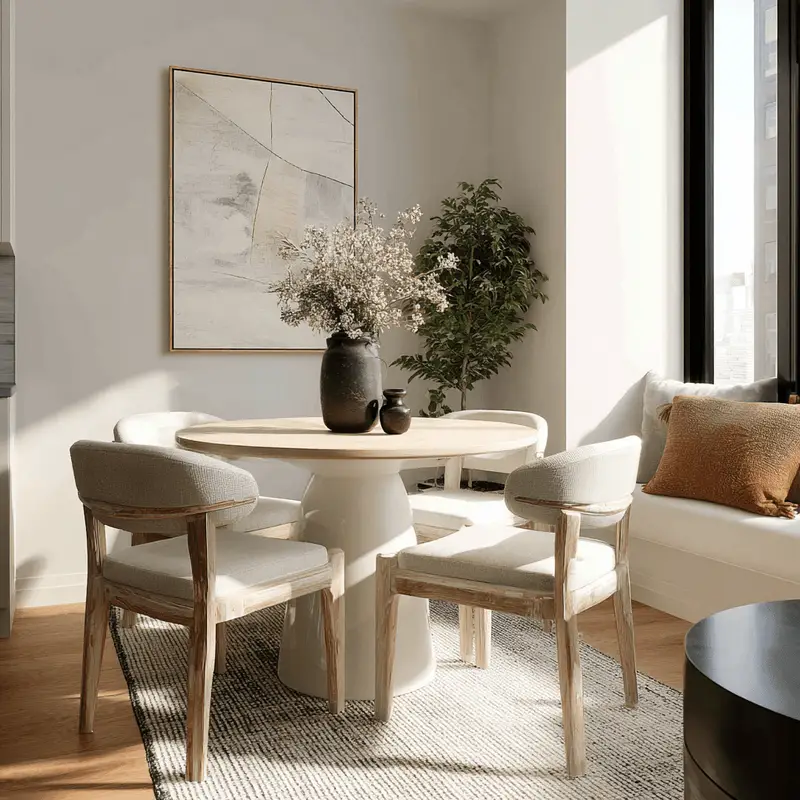
Round tables are underrated heroes in small living rooms. With no sharp corners, they allow smoother movement and make the room feel less boxed in.
Why You’ll Love It
- Easier to walk around in tight spaces
- Fits naturally near sofas or TV walls
- Seats 2 to 4 people comfortably
Smart Styling Tips
- Choose slim legs or a pedestal base
- Pair with armless chairs to save space
It blends beautifully with 10 small living room ideas with TV and dining table layouts.
3. Sofa-Back Dining Placement
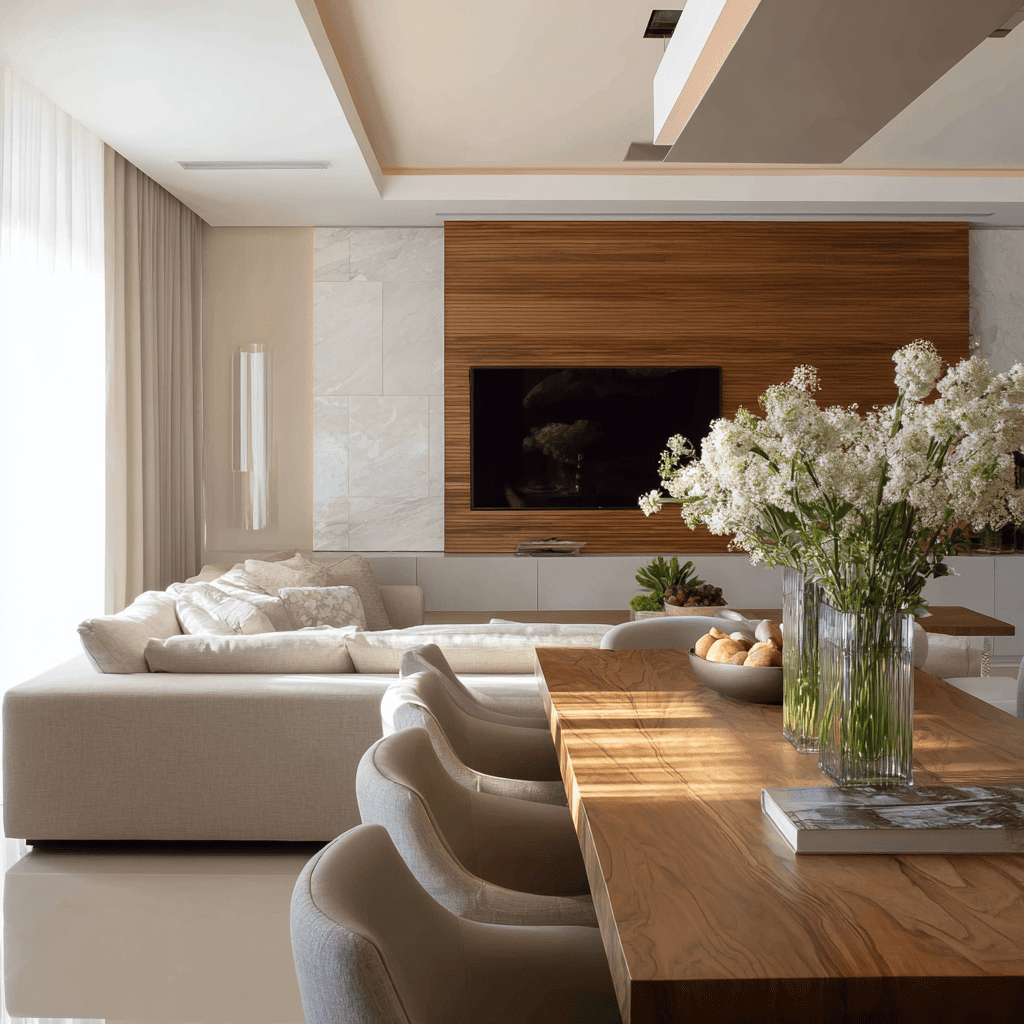
This clever layout places the dining table right behind the sofa, using it as a natural divider. No walls, no clutter, just smart zoning.
Why It’s Genius
- Separates TV and dining areas effortlessly
- Maximizes every inch without crowding
- Keeps the layout visually organized
Make It Work
- Keep sofa backs clean and minimal
- Match dining chair height to sofa height
FYI, this trick works best in rectangular living rooms.
4. Foldable Dining Table
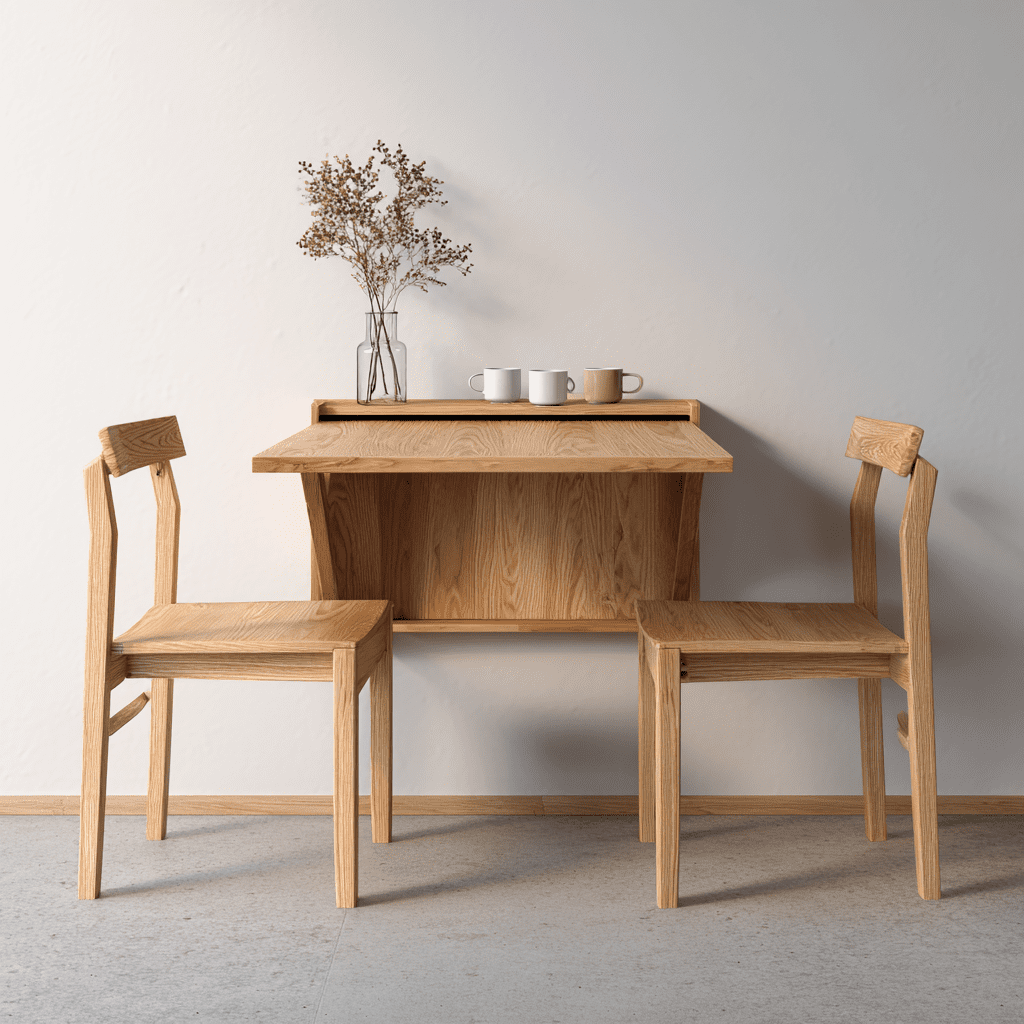
A foldable dining table gives you flexibility without sacrificing style. Use it when needed, fold it away when you don’t.
Why It’s a Game-Changer
- Perfect for daily meals and guests
- Frees up space for TV viewing
- Keeps the room adaptable
Practical Tips
- Wall-mounted fold-down tables save more space
- Choose sturdy hinges and solid materials
This is one of the most practical small living room ideas with TV and dining table setups.
5. TV Partition Divider
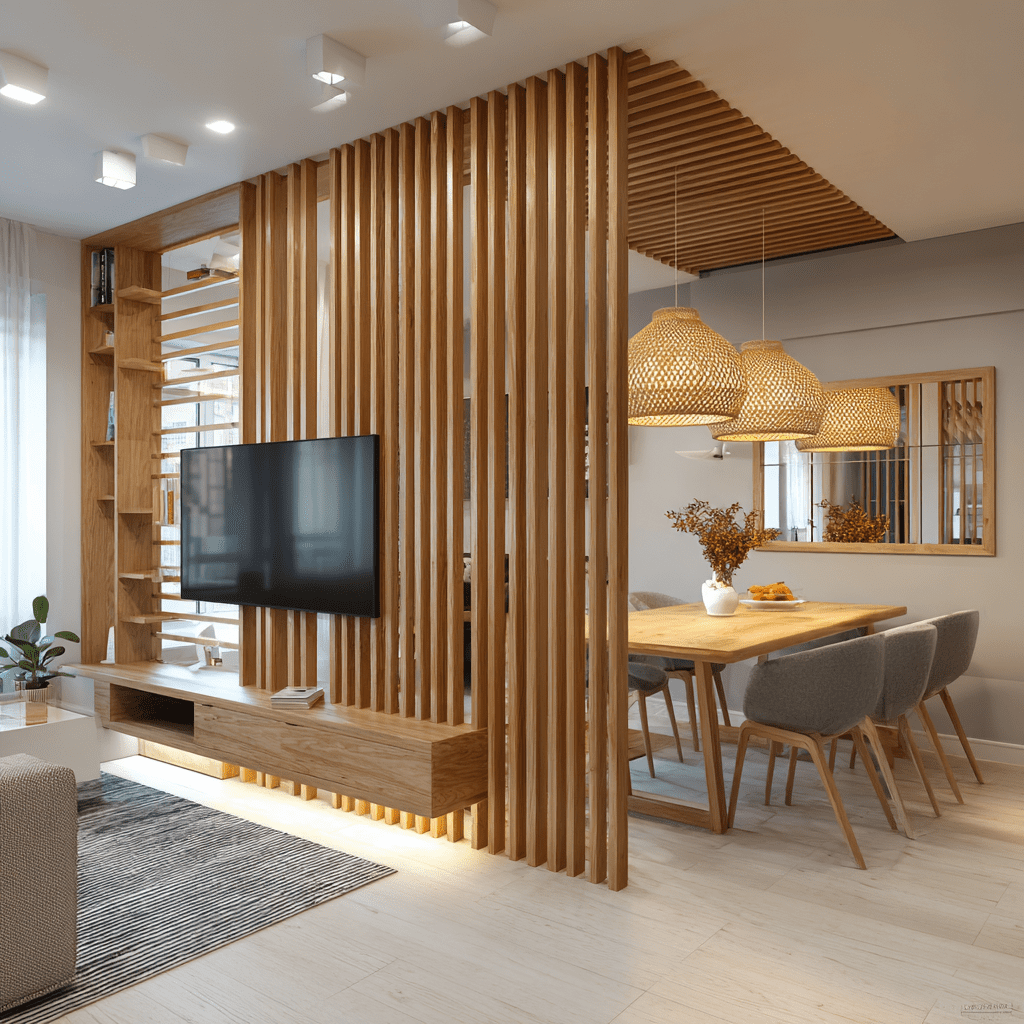
A lightweight partition between the TV and dining area creates structure without closing the room off. Think open shelves, wooden slats, or glass panels.
Why It’s Smart
- Defines zones without blocking light
- Adds storage or display space
- Makes the room feel intentional
Design Tips
- Keep partitions open or semi-open
- Avoid heavy, solid walls
It’s stylish and functional without feeling bulky.
6. Wall-Aligned Dining Setup
Placing the dining table flush against a wall keeps the center of the room open for movement and TV viewing.
Why It Works
- Creates clear walking paths
- Keeps the TV area uncluttered
- Ideal for narrow rooms
Space-Saving Ideas
- Bench seating instead of chairs
- Slim rectangular tables
This layout is simple, clean, and surprisingly effective.
7. Dual-Purpose Furniture Picks
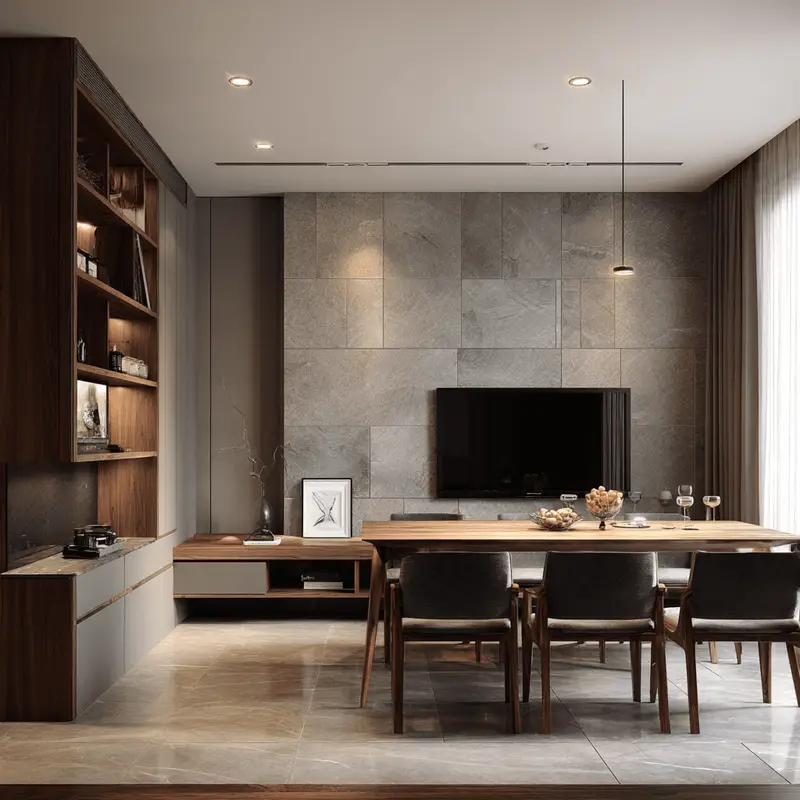
Furniture that does double duty is a lifesaver in small spaces. Think dining tables with storage or TV units that double as sideboards.
Why You’ll Appreciate It
- Reduces the number of furniture pieces
- Keeps storage hidden and tidy
- Saves money and space
Smart Choices
- Storage ottomans
- Extendable dining tables
IMO, multi-use furniture is non-negotiable in small homes.
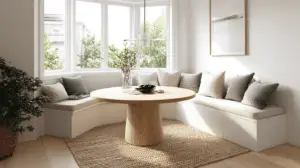
8. Corner Dining Nook
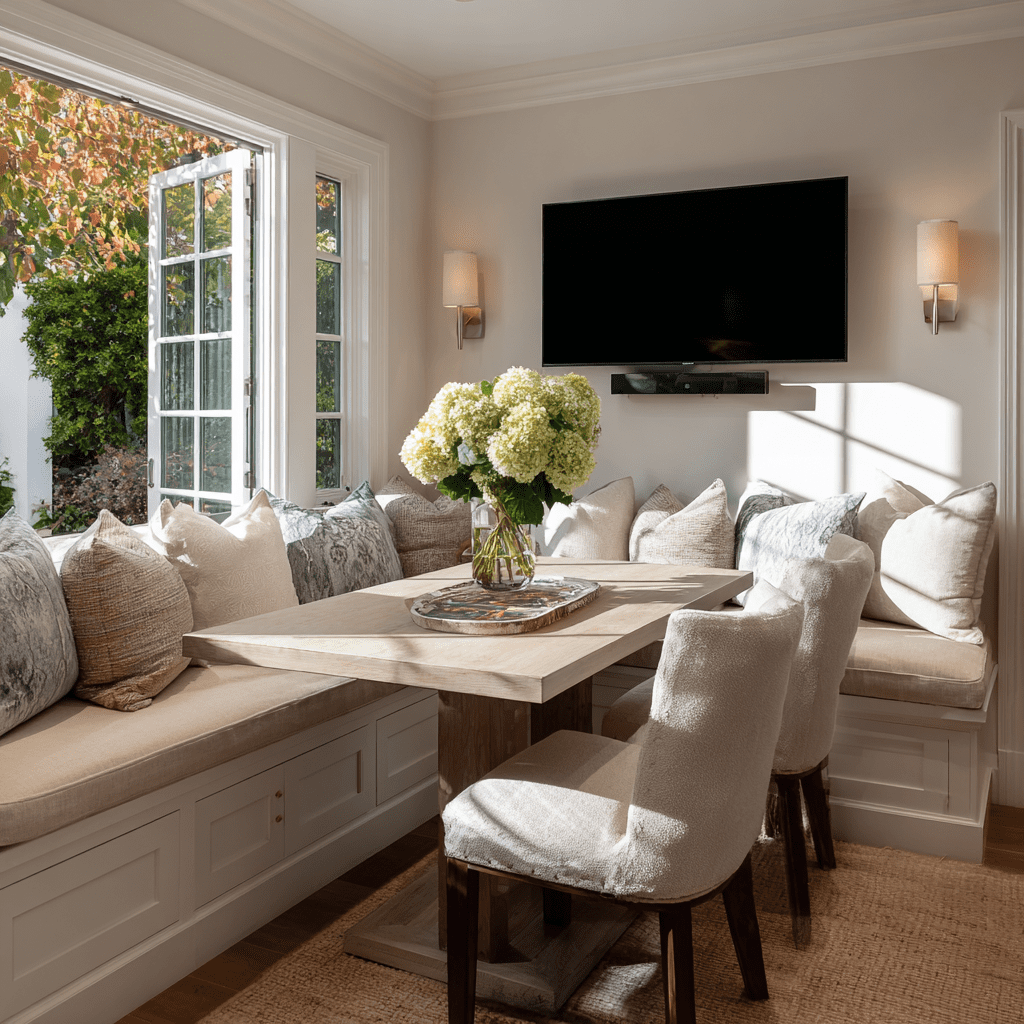
Corners are often wasted space. Turning one into a dining nook leaves more room for your TV and seating area.
Why It’s Clever
- Uses space that usually goes ignored
- Feels cozy and intentional
- Works great with built-in benches
Styling Tips
- Add cushions for comfort
- Keep lighting focused and warm
This idea balances comfort with efficiency.
9. Minimalist TV Console
A sleek, low-profile TV console keeps the room grounded without overpowering the dining area.
Why It Helps
- Keeps sightlines clean
- Allows dining furniture to shine
- Makes the room feel larger
Keep It Light
- Choose light colors or wood tones
- Avoid oversized cabinets
Less bulk equals more breathing room.
10. Unified Color Palette
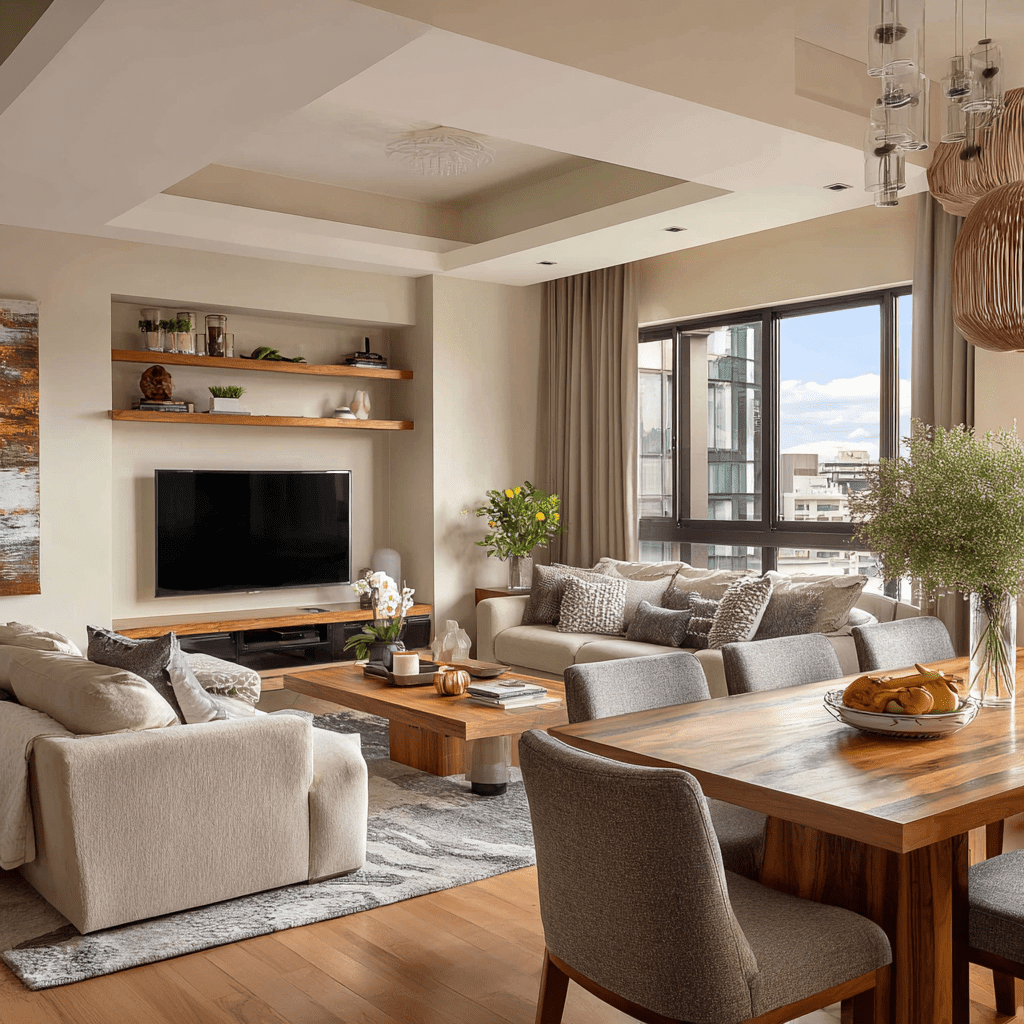
Using one cohesive color palette for both TV and dining areas ties everything together visually.
Why It Matters
- Makes the space feel larger
- Prevents visual clutter
- Creates a calm, balanced vibe
Easy Wins
- Match dining chairs with TV unit tones
- Use similar textures across zones
This subtle trick pulls all 10 small living room ideas with TV and dining table together effortlessly.
11. Sliding Panel TV Wall
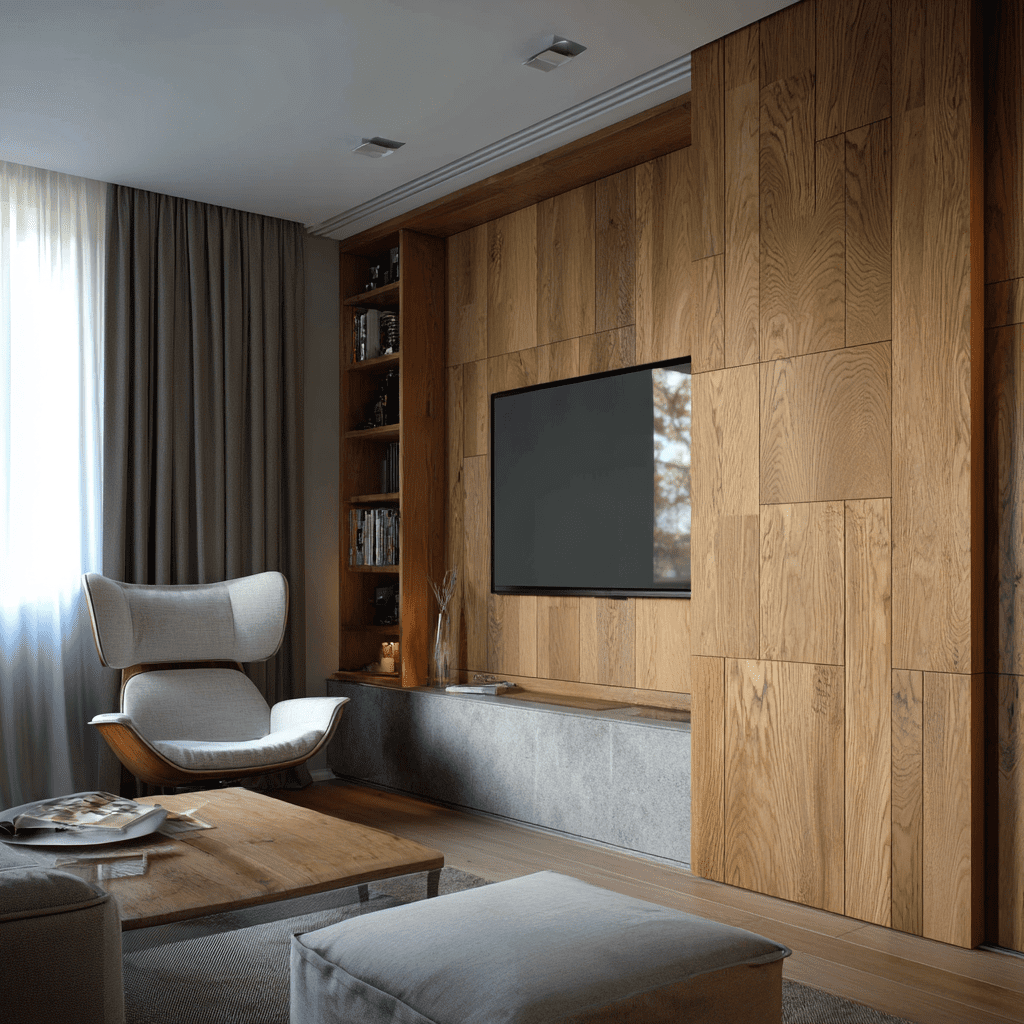
This idea uses a sliding panel that hides or reveals the TV whenever you want. When guests come over for dinner, slide it shut and the room instantly feels like a dining-focused space.
Why It’s So Useful
- Keeps the TV from dominating the room
- Makes the dining area feel more intentional
- Adds a sleek, modern vibe
Smart Tips
- Use wood or fabric panels for warmth
- Go for ceiling-mounted tracks to save space
It’s a stylish win for small living room ideas with TV and dining table setups.
12. Bar-Height Dining Table
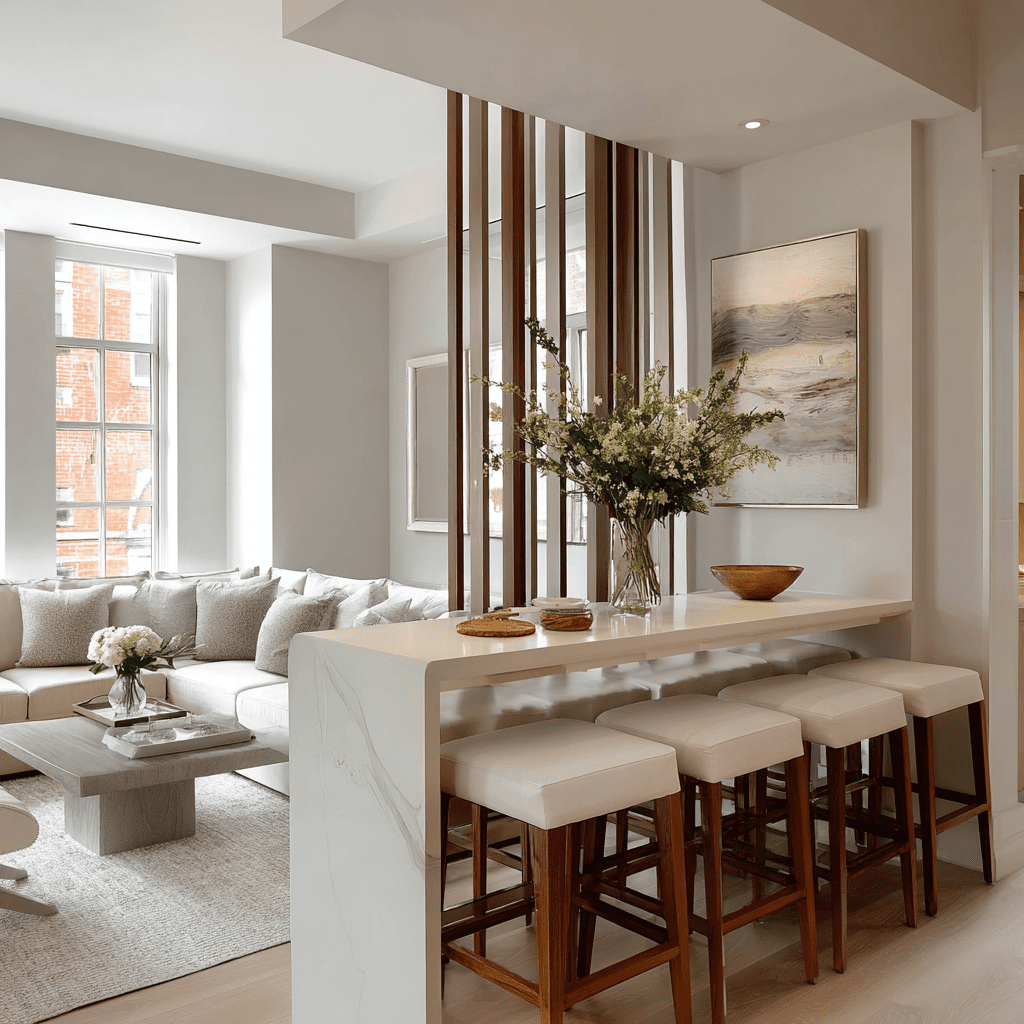
A bar-height table works double duty as a dining spot and a visual divider between the TV and seating area. It subtly separates zones without walls or partitions.
Why It Works
- Saves floor space with a slimmer profile
- Feels modern and casual
- Great for quick meals or work-from-home moments
Make It Better
- Use backless stools that tuck in fully
- Add pendant lighting for definition
Honestly, it’s practical and cool at the same time.
13. Ceiling-Mounted TV Setup
Instead of mounting the TV on the wall, suspend it from the ceiling using a slim bracket. Sounds bold, but it’s surprisingly effective.
Why It’s Clever
- Frees up wall space for dining storage
- Allows flexible viewing angles
- Feels unique and custom
Keep It Safe
- Use professional-grade mounts
- Keep cables neatly concealed
FYI, this works best in rooms with slightly higher ceilings.
14. Window-Side Dining Zone
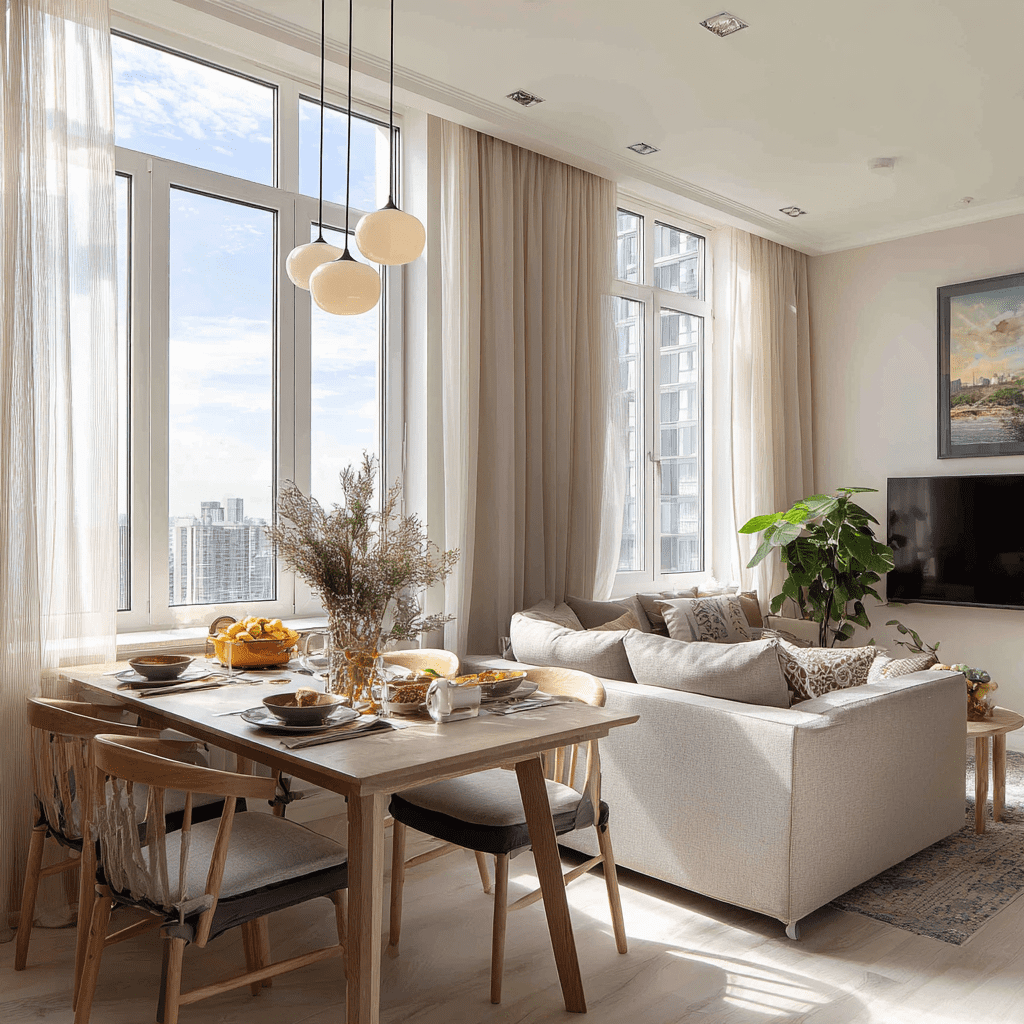
Place the dining table near the window and reserve the inner area for TV seating. Natural light makes the dining space feel bigger and more inviting.
Why You’ll Love It
- Brightens up meals naturally
- Keeps TV glare under control
- Creates a calm, balanced layout
Extra Touch
- Use sheer curtains to soften light
- Choose a compact table that doesn’t block airflow
It’s a simple shift with a big impact.
15. Modular Seating Layout
Modular seating lets you rearrange your living room depending on whether you’re watching TV or hosting a meal. Flexibility is the real hero here.
Why It’s a Lifesaver
- Adapts to different needs easily
- Prevents overcrowding
- Makes the space feel dynamic
Smart Setup
- Use lightweight pieces you can move easily
- Stick to neutral tones for cohesion
IMO, flexible seating is the future of small-space living.
Maximizing Space with Multi-Functional Furniture
When it comes to small living rooms, every inch counts. One of the best ways to maximize space is by investing in multi-functional furniture. In this section, we’ll explore some of the best options for incorporating both a TV and dining table into your small living space.
Choosing the Right TV Stand
When it comes to choosing a TV stand for a small living room, it’s important to consider both function and style. Look for a stand that offers storage options, such as shelves or cabinets, to help reduce clutter. Wall-mounted TV stands are also a great option for small spaces, as they free up valuable floor space. Additionally, consider a stand with a swivel feature, which allows you to angle the TV for optimal viewing from different areas of the room.
Dining Table Options for Small Spaces
When it comes to choosing a dining table for a small living room, consider a table that can be easily stored when not in use. Drop-leaf tables are a great option, as they can be expanded when needed and folded down when not in use. Another option is a table with built-in storage, such as drawers or shelves, to help keep the room organized. For a truly space-saving option, consider a table that can be folded up and stored against the wall when not in use.
In summary, multi-functional furniture is key to maximizing space in a small living room. When choosing a TV stand, look for one with storage options and a swivel feature. For a dining table, consider a drop-leaf table or one with built-in storage, or a table that can be folded up and stored against the wall when not in use.
Designing an Open-Concept Layout
When it comes to designing an open-concept living room, it’s important to create visual separation and optimize traffic flow. Here are some tips to achieve this.
Creating Visual Separation
Visual separation is key to creating a cohesive open-concept living room. One way to achieve this is by using area rugs to define different zones within the space. For example, a rug can be used to define the seating area and another rug can be used to define the dining area. This helps to visually separate the two areas and create a sense of organization within the space.
Another way to create visual separation is by using different colors and textures. By using contrasting colors and textures, you can create a distinct separation between the different zones within the space. For example, you can use a bold color on the walls of the dining area and a neutral color on the walls of the seating area. This creates a clear distinction between the two areas and helps to visually separate them.
Optimizing Traffic Flow
Optimizing traffic flow is important in an open-concept living room to ensure that the space is functional and easy to navigate. One way to achieve this is by creating a clear path from one area to another. This can be done by placing furniture strategically to create a natural flow through the space. For example, you can place the sofa facing the TV and the dining table off to the side, creating a clear path between the two areas.
Another way to optimize traffic flow is by using furniture that can serve multiple purposes. For example, an ottoman can be used as extra seating in the living room and as a coffee table when needed. This helps to maximize the functionality of the space and ensures that there is enough seating for guests.
By following these tips, you can create a functional and visually appealing open-concept living room that is perfect for entertaining guests and spending time with family.
Incorporating Storage Solutions
Small living rooms can quickly become cluttered and disorganized without proper storage solutions. Fortunately, there are many creative ways to incorporate storage into your living room design without sacrificing style. This section will explore two effective ways to maximize storage in a small living room: utilizing vertical space and hidden storage ideas.
Utilizing Vertical Space
One of the most effective ways to add storage to a small living room is by utilizing vertical space. This means taking advantage of the wall space above eye level to add shelves, cabinets, and other storage solutions. For example, floating shelves can be installed above a sofa or TV to display decorative items or store books and magazines. Similarly, wall-mounted cabinets can be used to store electronics, DVDs, and other items without taking up valuable floor space.
Another way to utilize vertical space is by adding a bookshelf or storage tower. These tall, narrow pieces of furniture can be placed in a corner or against a wall to provide ample storage without taking up too much space. Look for pieces with adjustable shelves to accommodate a variety of items, from books to decorative objects.
Hidden Storage Ideas
In addition to utilizing vertical space, hidden storage solutions can also be effective in a small living room. These storage solutions are designed to blend seamlessly into the room, often serving dual purposes. For example, a storage ottoman can be used as a footrest or extra seating, while also providing storage for blankets, pillows, and other items. Similarly, a coffee table with a lift-top can be used as a dining table or work surface, while also providing storage for games, magazines, and other items.
Other hidden storage solutions include built-in cabinets, storage benches, and wall-mounted storage systems. These solutions are particularly effective in small living rooms, where every inch of space counts. By incorporating hidden storage into your living room design, you can keep the space organized and clutter-free while still enjoying all the amenities of a larger space.