12 Small Entryway Rug Ideas That Instantly Upgrade Your Space
Your entryway sets the vibe for your whole home—but when it’s small, it can feel like a design trap. Good news: a smart rug can pull the whole space together, protect your floors, and make your place look way more intentional.
Let’s talk 12 small entryway rug ideas that deliver style, function, and a tiny bit of drama (the good kind).
1. Go Bold With a Runner (Even in a Tiny Space)
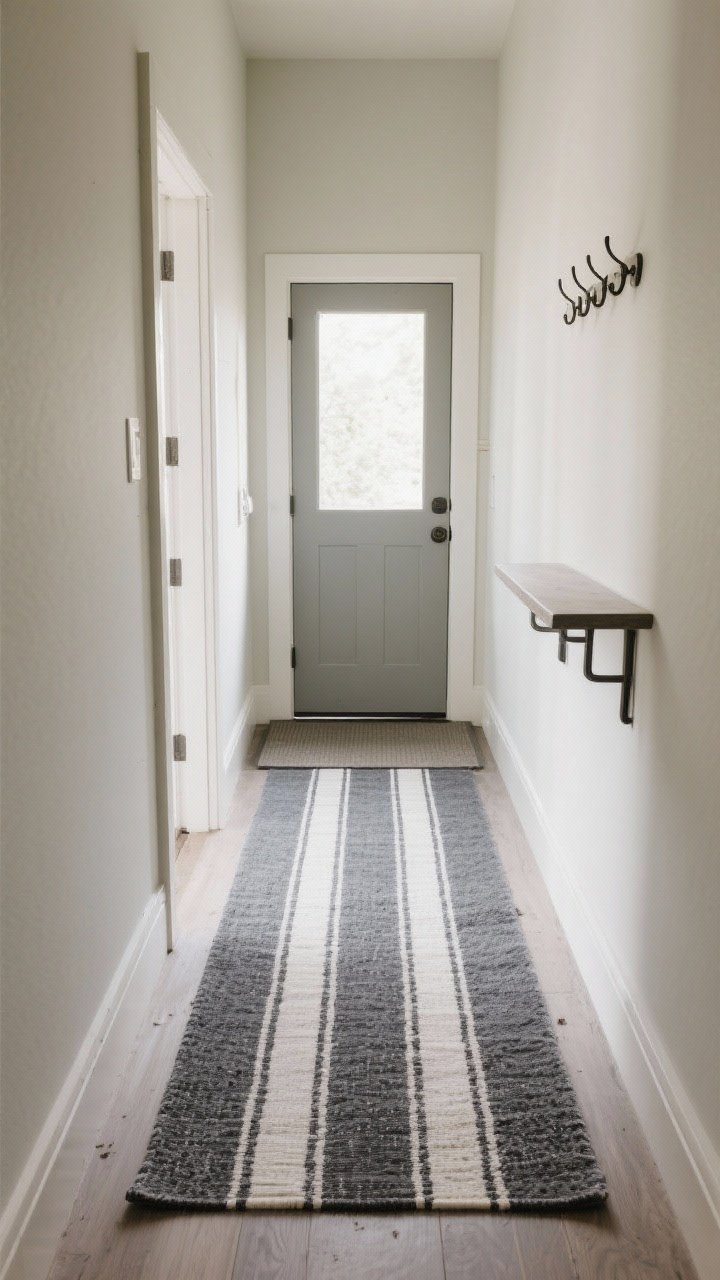
Think your entry is too small for a runner? Plot twist: a slim runner can actually elongate the space and guide the eye inward. Choose a 2’–3′ wide runner and let it extend a bit beyond the door zone to make the area feel larger.
Why it works
- Visual length makes the space look bigger.
- Runners are often thinner, so they fit under doors easily.
- Patterns help hide dirt in high-traffic areas.
Pro tips
- Check the door clearance. You want the door to glide over the rug without snagging.
- Try a low-pile, washable runner if shoes are involved.
- Patterns like stripes or small geometrics = instant elongation.
2. Layer a Natural Fiber Base With a Patterned Topper
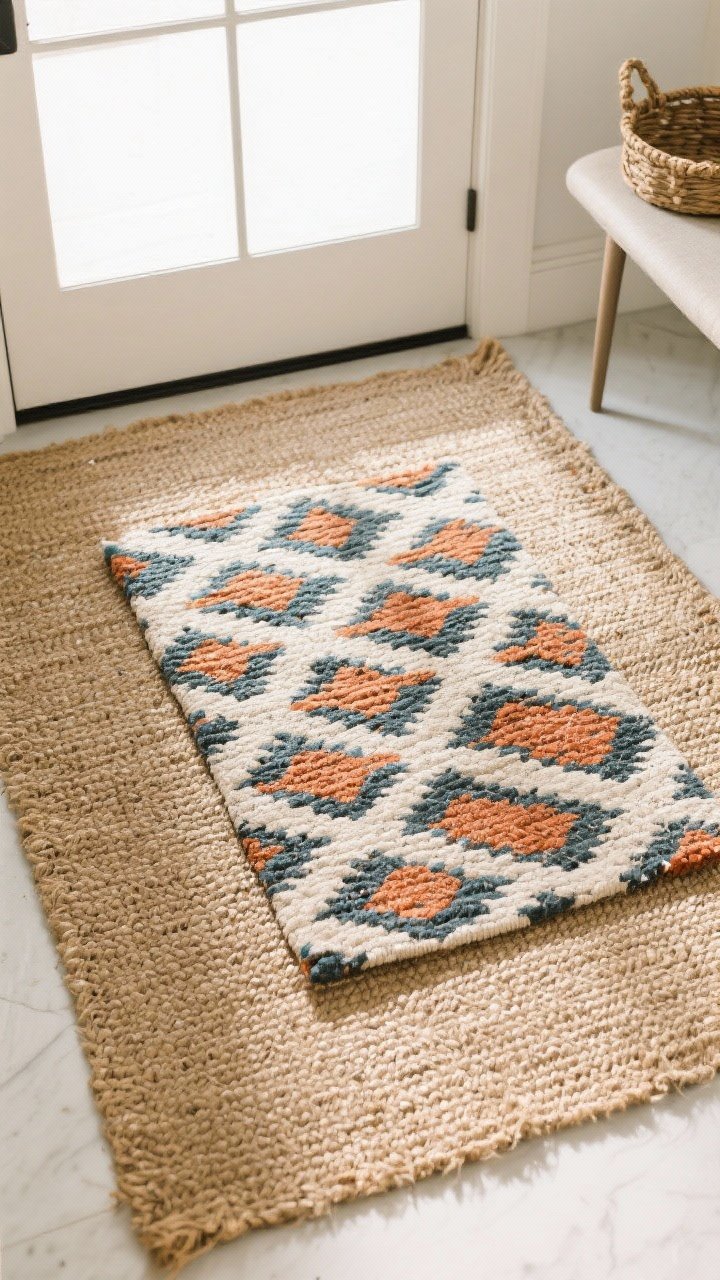
Layering is the entryway hack nobody tells you about. Start with a flat, natural fiber rug (jute or sisal) and top it with a slightly smaller patterned rug for texture and personality.
Why it works
- Texture + pattern makes small spaces feel styled, not cramped.
- The base layer anchors the area; the top rug adds the vibe.
- Easier to clean—swap the topper seasonally (or when your dog “decorates”).
Pro tips
- Try a 3′ x 5′ jute base with a 2′ x 3′ patterned topper.
- Stick to low-pile for both layers so doors don’t catch.
- Contrast is your friend: neutral base + bold top = chef’s kiss.
3. Choose a Durable Indoor/Outdoor Rug
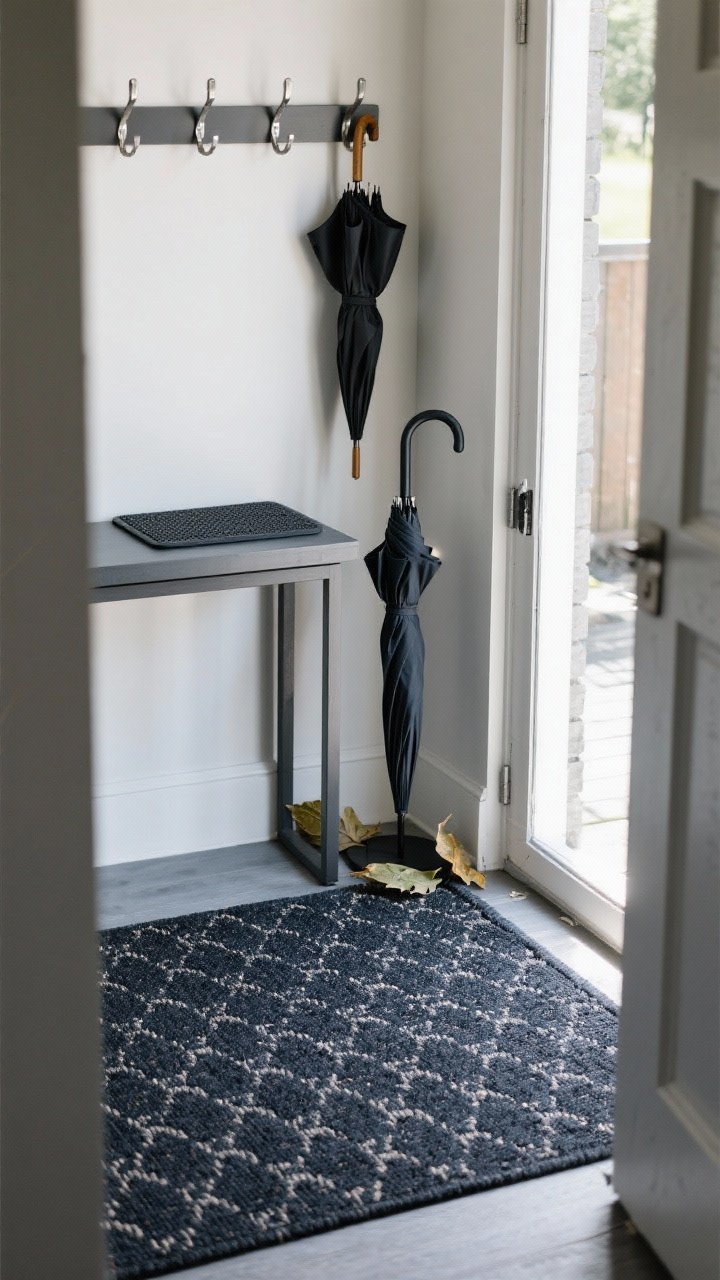
Water, dirt, salt, leaves—entryways see it all. An indoor/outdoor rug looks stylish but stands up to chaos. FYI, this is the fastest way to get the look you want without worrying about stains.
Why it works
- Stain-resistant and easy to hose off or wipe down.
- Flatweave construction means doors don’t snag.
- Tons of patterns that don’t scream “patio.”
Pro tips
- Look for PET or polypropylene fibers for durability.
- Pick a dark or patterned option to hide traffic marks.
- Use a non-slip pad to keep everything in place.
4. Embrace Round Rugs in Boxy Entrances
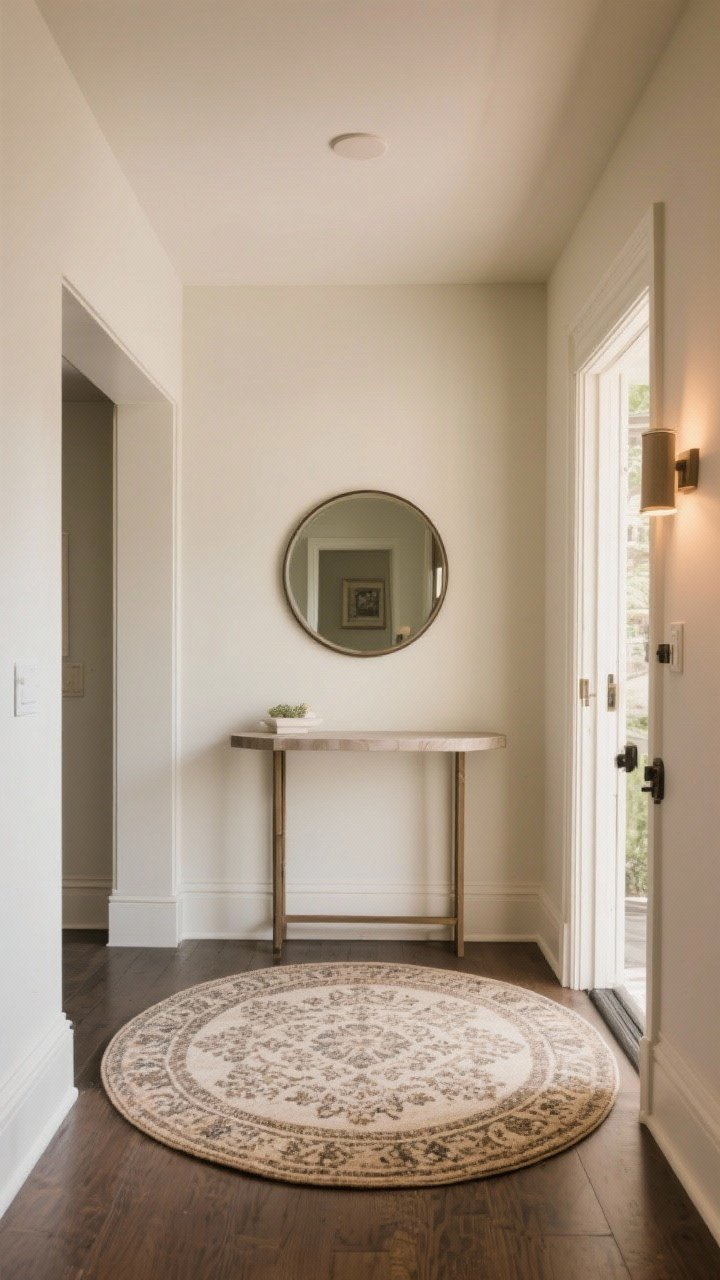
If your entry is a square or tight rectangle, a round rug can soften the lines and feel more welcoming. It’s an unexpected shape that instantly feels intentional.
Why it works
- Breaks up boxy architecture with curves.
- Centers the furniture—like a console or small bench—right over it.
- Helps traffic flow around corners without awkward edges.
Pro tips
- Try a 3′ or 4′ round rug for most small entries.
- Place it so it doesn’t get caught under the door swing.
- Round + vintage pattern = instant charm.
5. Go Monochrome for a Minimalist Moment
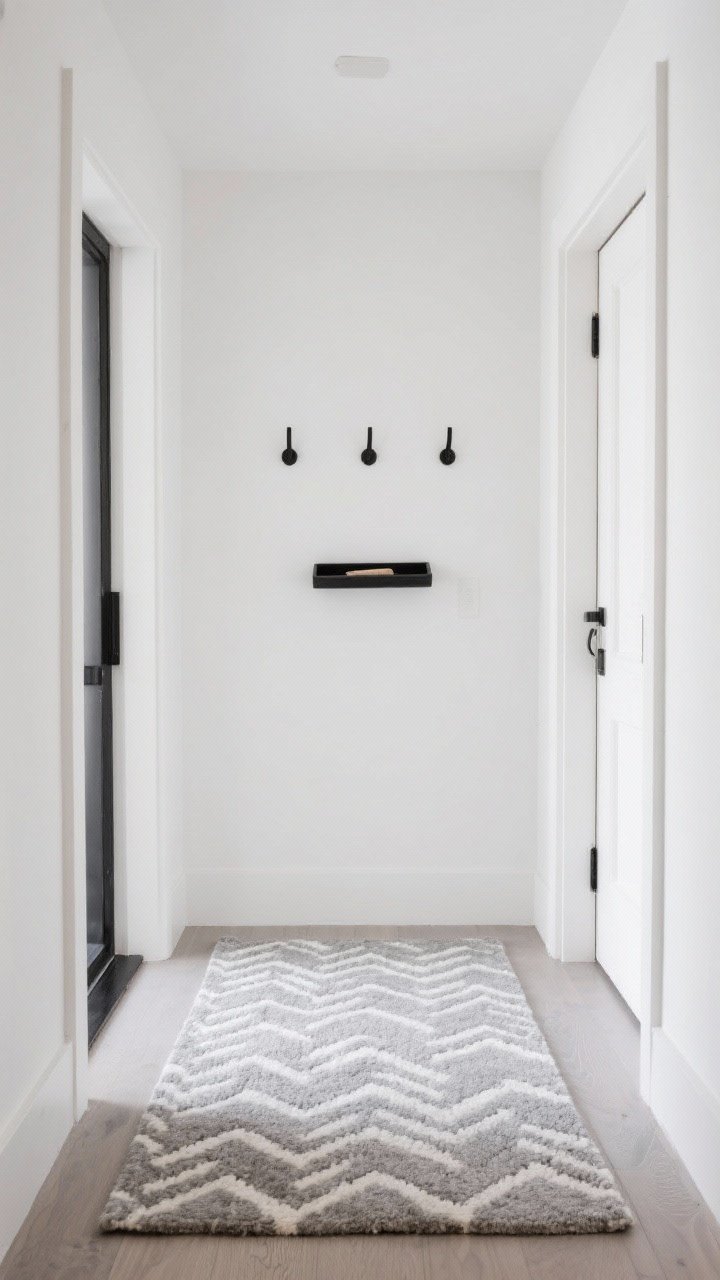
Minimalist spaces still need warmth. A monochrome rug adds texture and structure without visual clutter. Think ivory, greige, charcoal—simple but luxe.
Why it works
- Helps the room feel calm (especially if you’ve got busy floors).
- Looks elevated and doesn’t compete with art or mirrors.
- Easy to pair with any decor and seasonal updates.
Pro tips
- Choose subtle patterns like tone-on-tone herringbone or micro stripes.
- Flatweave or low-pile = no tripping hazards.
- Anchor with a black tray or hooks to keep the palette cohesive.
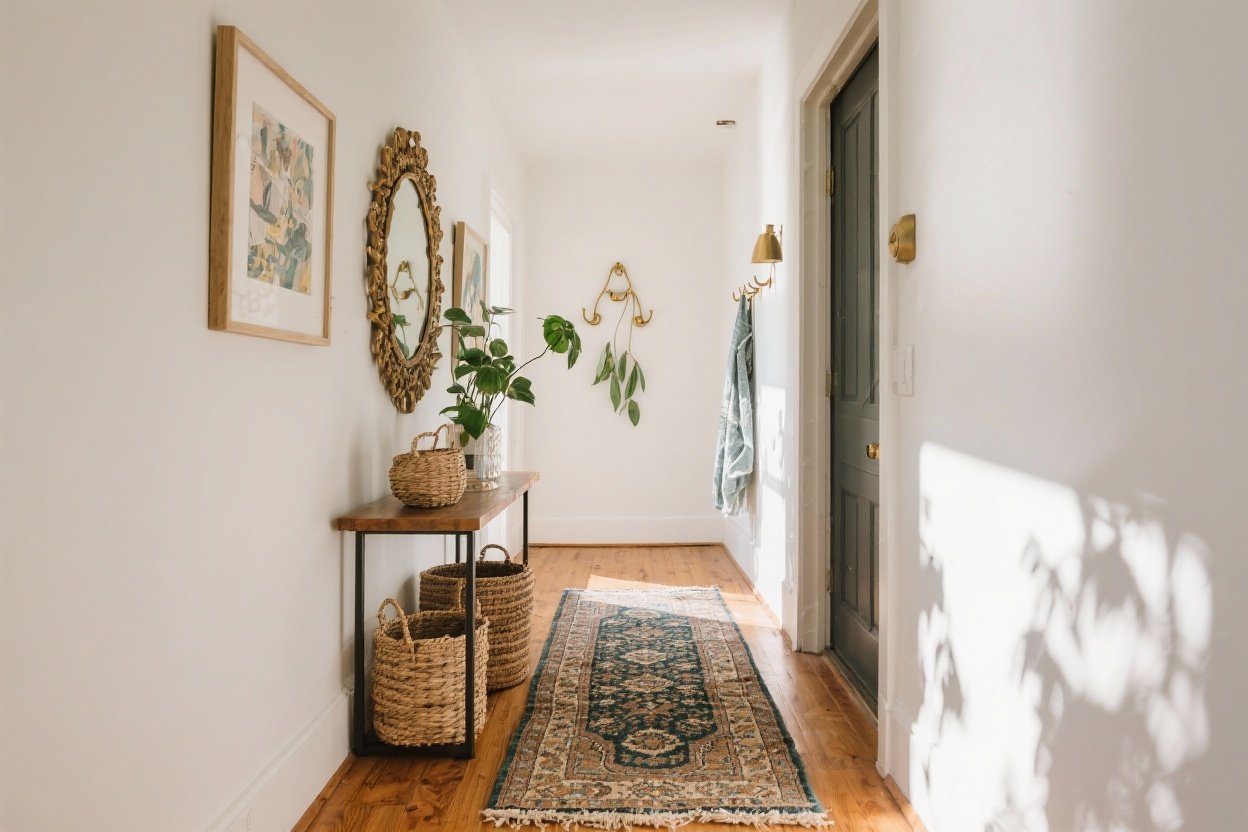
6. Try Vintage or Vintage-Look Rugs for Character
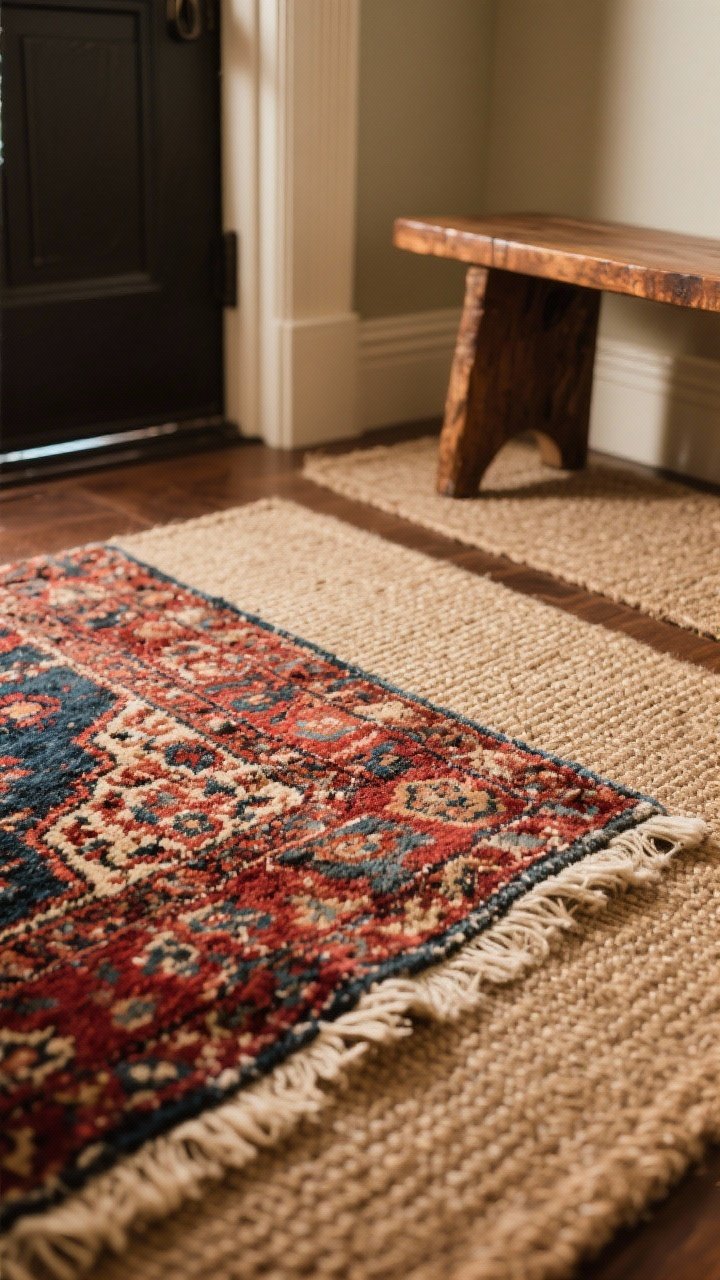
Small entry, big soul. A distressed or vintage rug brings color, history, and instant personality to a plain foyer. Plus, the worn-in look hides basically everything.
Why it works
- Pattern-rich designs disguise scuffs and dirt.
- Warm tones make tight, echo-y entries feel cozy.
- Eco-friendly if you go truly vintage (IMO, always a bonus).
Pro tips
- Check sizes: 2′ x 3′, 2.5′ x 4′, and small runners are perfect.
- Use a rug pad to protect fragile weaves.
- Layer over a neutral jute if the vintage piece is thin.
7. Define Zones With Two Small Mats
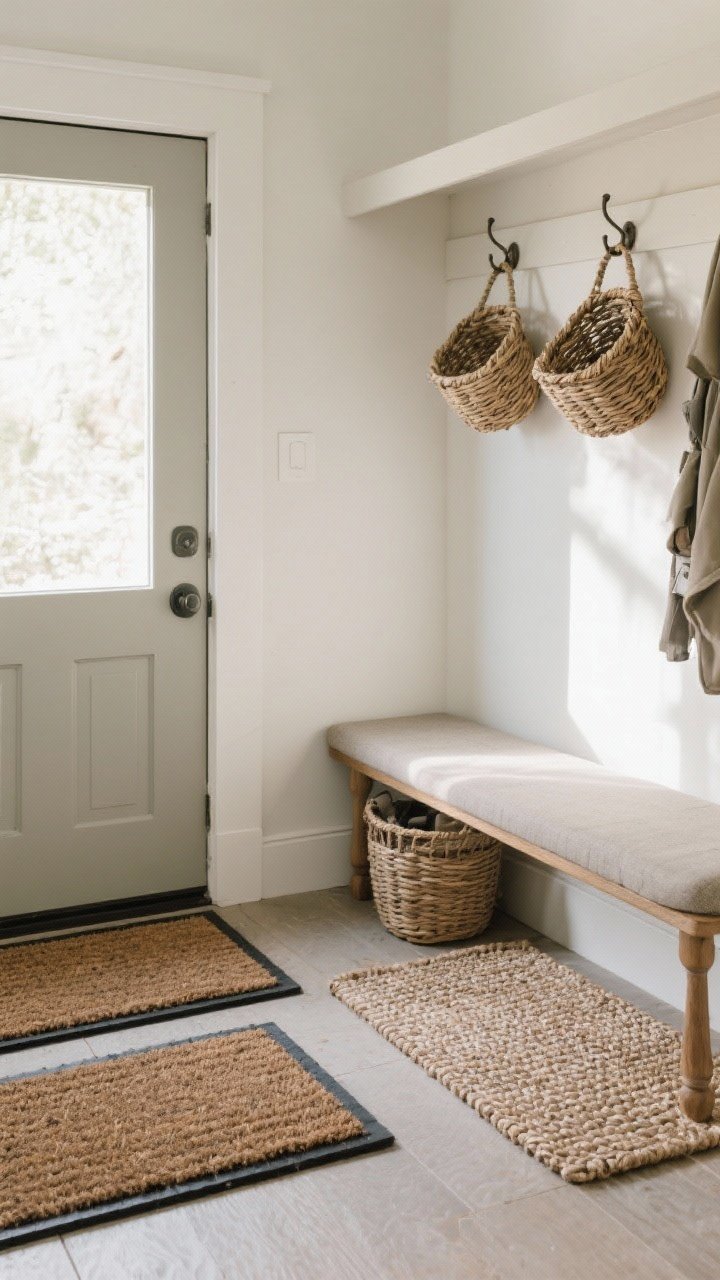
If you’ve got a mini mudroom situation (hooks, small bench, baskets), use two small rugs to define zones—one by the door, one under the bench. It’s like zoning for small spaces, but make it pretty.
Why it works
- Separates the wipe zone from the drop zone.
- Flexible: move or swap mats seasonally.
- Great for weirdly shaped entries or corner layouts.
Pro tips
- Use a coir or rubber-backed mat by the door for grit.
- Place a softer woven mat under the bench for comfort.
- Match palettes so the two mats look intentional, not random.
8. Choose Washable Rugs (If You Have Kids, Pets, or Weather)
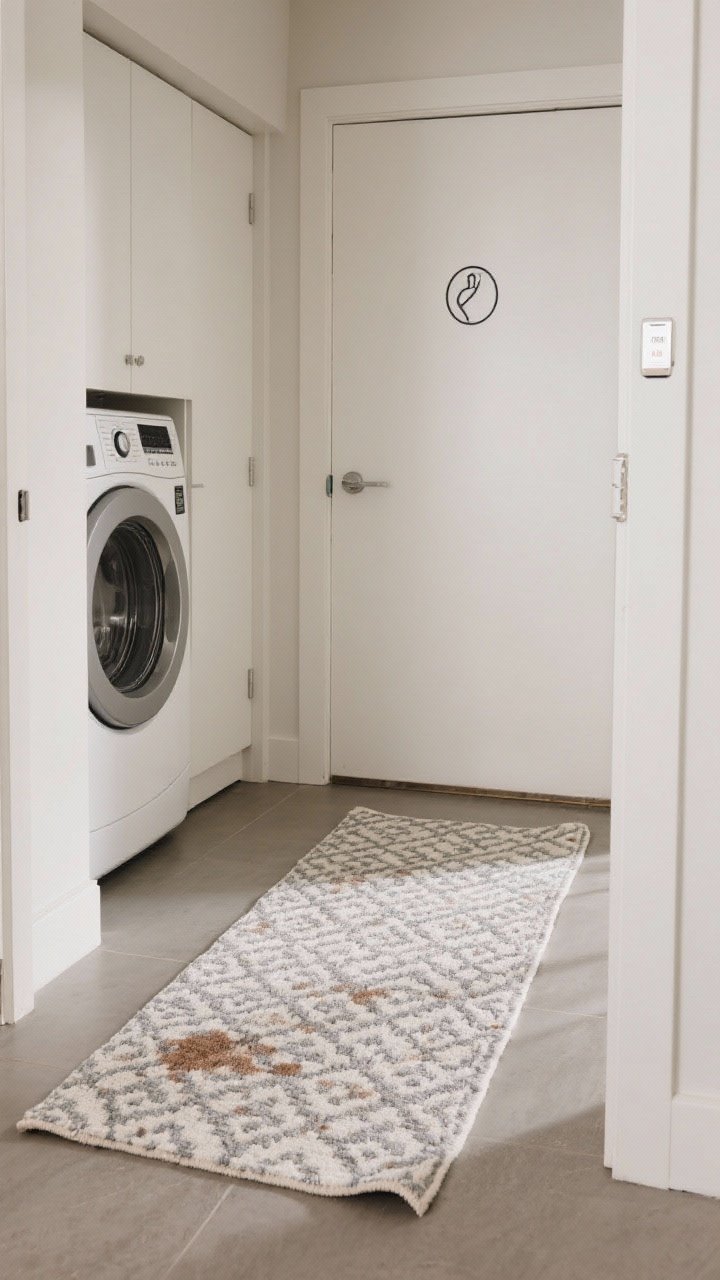
Let’s be real: life happens at the entry. A machine-washable rug is a sanity-saver. Toss it in, dry it, lay it back down—done.
Why it works
- Perfect for apartments with no mudroom buffer.
- Budget-friendly to replace or rotate patterns.
- Low pile means door-friendly and trip-resistant.
Pro tips
- Stick to sizes you can actually fit in your machine (2′ x 3′, 2.5′ x 7′).
- Choose printed styles that hide stains better than solids.
- Air-dry flat to prevent curling corners.
9. Add Color That Echoes Your Next Room
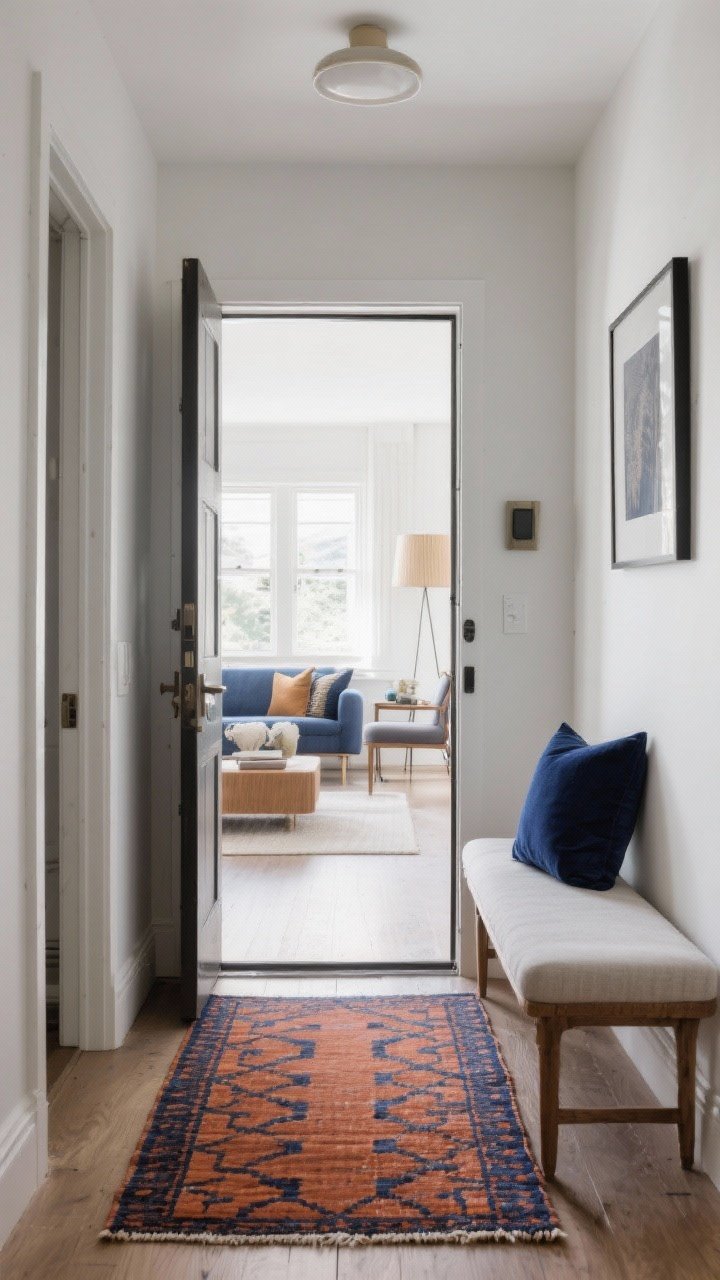
Your entry should hint at what’s ahead. Use a rug to pull in colors from your living room or hallway artwork so the whole space feels cohesive (aka designer-level).
Why it works
- Creates a visual thread from entry to main rooms.
- Makes small spaces feel curated, not random.
- Color helps distract from limited square footage.
Pro tips
- Pick one color to repeat—like navy, terracotta, or moss green.
- Don’t overdo it. A riff on the color, not a perfect match, looks more natural.
- Tie it together with a matching pillow on the bench or a framed print.
10. Go Graphic With Black-and-White Patterns
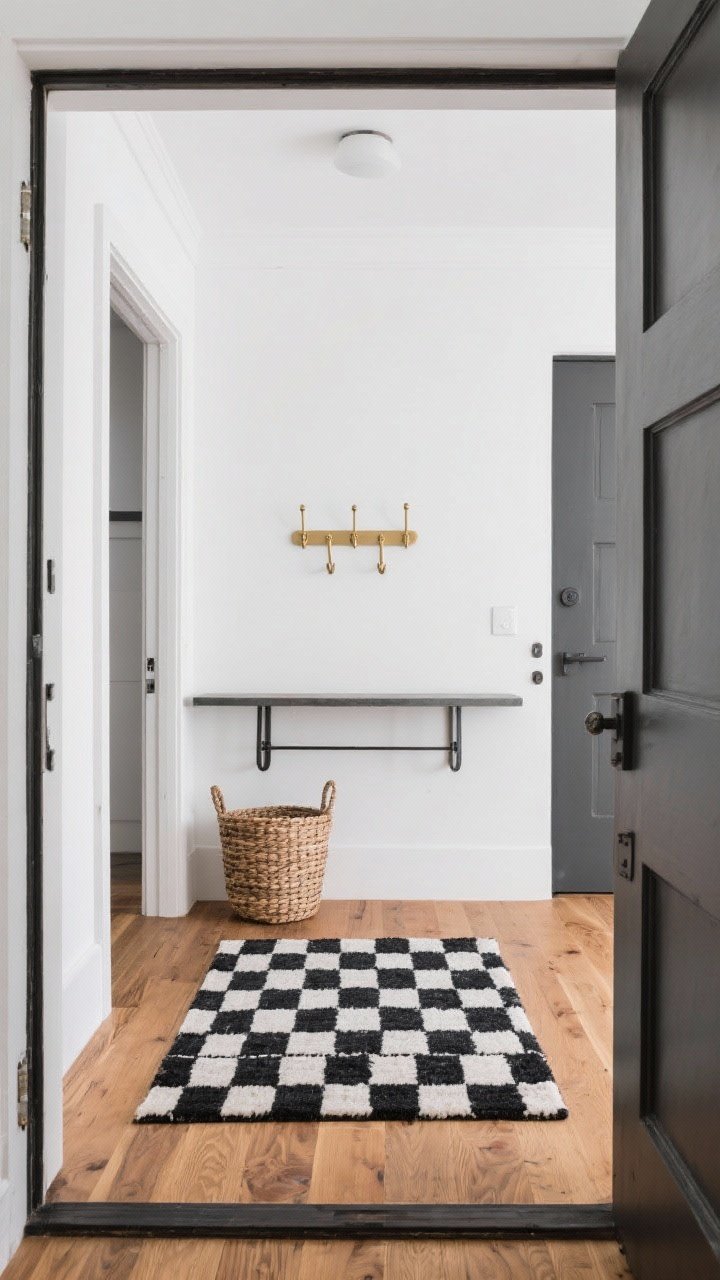
Small entry, big impact. A black-and-white patterned rug makes your foyer feel modern, crisp, and intentional—especially with clean lines and simple hardware.
Why it works
- High contrast = visual pop without extra color.
- Plays nicely with wood tones and metal finishes.
- Graphic patterns hide spills and shoe marks.
Pro tips
- Try chevrons, grids, or mini-checks for a timeless look.
- Balance with warm textures: a woven basket, wood stool, or brass hooks.
- Keep the walls simple so the rug can be the star.
11. Embrace Cozy With Plush (But Practical) Pile
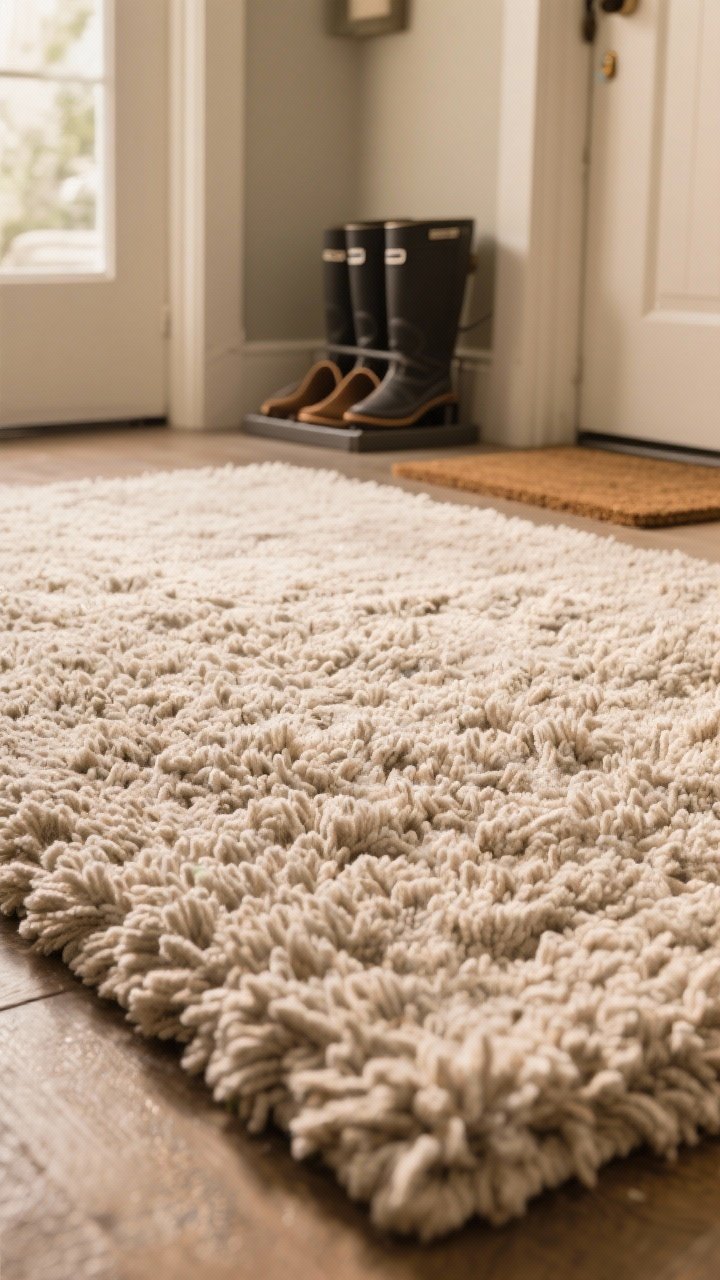
Yes, you can do a soft rug in the entry—just be smart about it. A dense, low-to-medium pile with stain-resistant fibers brings hotel-lobby vibes without the maintenance panic.
Why it works
- Instant coziness in a high-traffic area.
- Feels amazing if you’re the shoes-off-at-the-door type.
- Sound-absorbing in echo-prone small spaces.
Pro tips
- Look for solution-dyed or treated fibers (nylon, PET).
- Stick to low or clipped pile to avoid trapping debris.
- Keep a boot tray nearby so the plush stays plush.
12. Size It Right (The Make-or-Break Move)
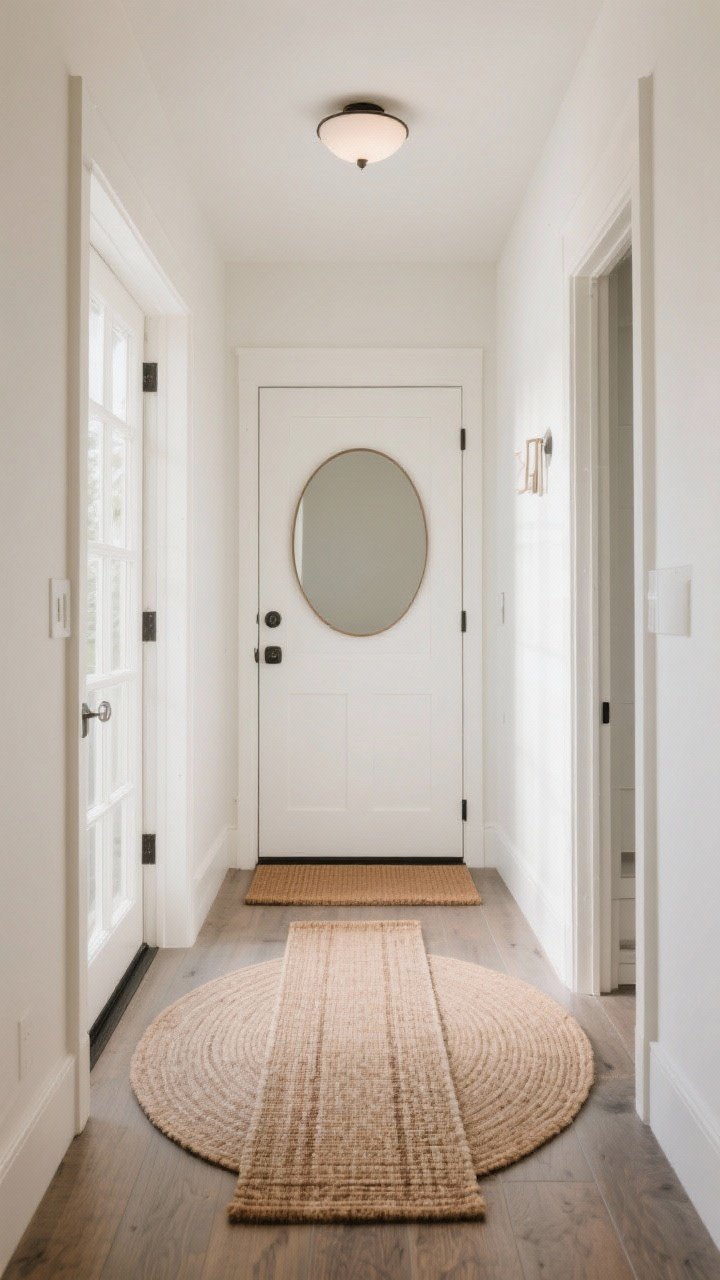
The wrong size rug can throw off the whole entry. The right size makes everything look intentional, grounded, and balanced. It’s the most important detail, TBH.
Quick sizing guide
- By the door: Leave 2–4 inches of floor showing on each side of a small mat.
- Under a console: Rug should be as wide as the console or slightly wider.
- Runner length: Aim to fill most of the hall without hitting the thresholds.
- Round rugs: Center with the lighting or mirror for symmetry.
Don’t forget
- Use a rug pad to prevent slipping and protect floors.
- Check the door swing path before you commit.
- Measure twice—order once. Returns are a pain.
Bonus Styling Tips for Small Entry Rugs
- Mirror magic: A mirror above the console reflects light and makes the rug area feel larger.
- Lighting counts: A statement flush mount or sconce will make even a tiny rug look chic.
- Contain the chaos: Trays, hooks, and a slim bench keep clutter off the rug (and out of your sightline).
- Seasonal swap: Rotate toppers or washable rugs by season—lighter tones in spring/summer, moodier in fall/winter.
Material Cheat Sheet
- Jute/Sisal: Textured, durable, neutral; can be scratchy but looks elevated.
- Polypropylene/PET: Indoor/outdoor tough, stain-resistant, door-friendly.
- Cotton: Soft, often washable; best in low-traffic or as a topper.
- Wool: Naturally stain-resistant and luxe; use low pile for entries.
Cleaning and Care Essentials
- Weekly quick clean: Shake out or vacuum on low suction to keep grit from settling.
- Spot treatment: Blot (don’t rub) with mild soap and water; test first.
- Rotation: Rotate 180° every few months to balance wear and sun fade.
- Mats matter: A tough doormat outside + pretty rug inside = cleaner floors.
Small entryways don’t have to be boring or chaotic. With the right rug—whether it’s layered, vintage, graphic, or washable—you can turn that “just a pass-through” area into a moment. Start with your layout, pick a size that fits, and choose a material that can handle your daily life. Then add a mirror, a few hooks, and boom: instant foyer glow-up. You’ve got this.