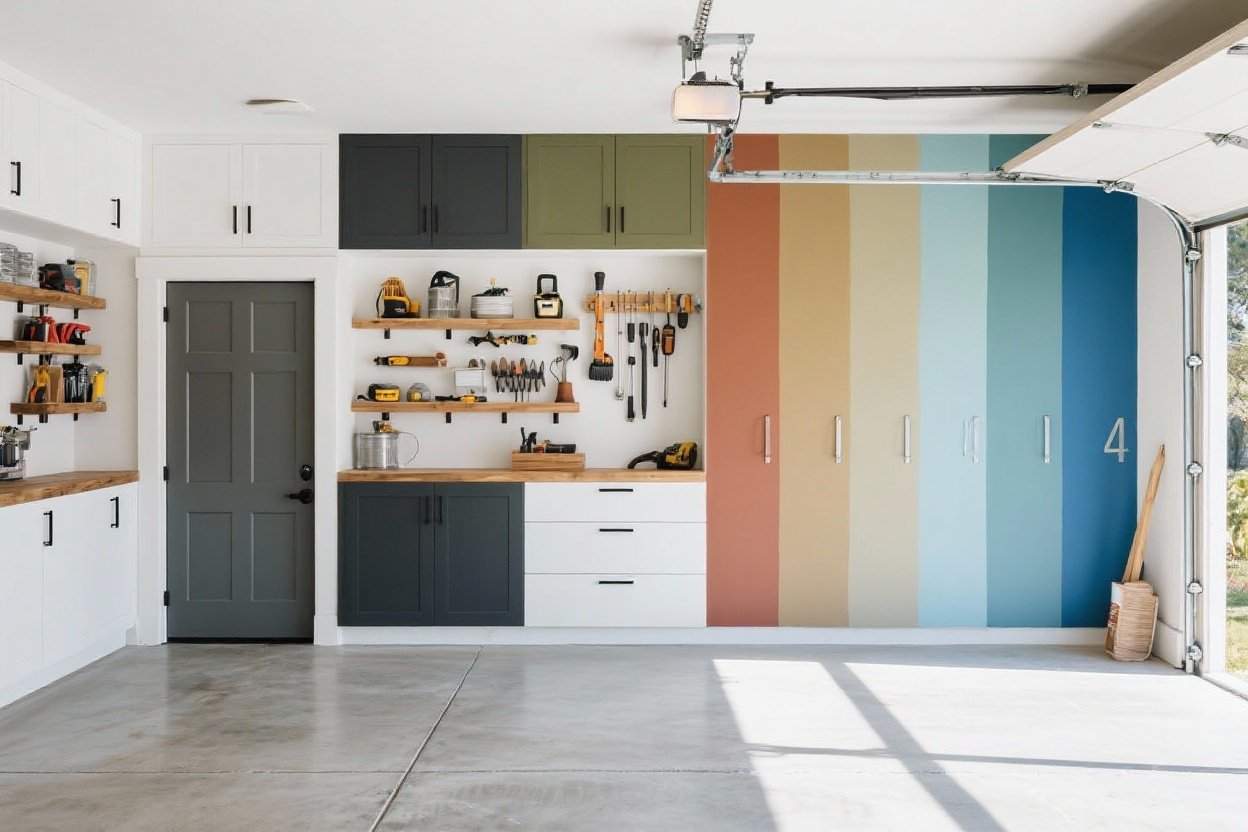
14 Garage Paint Color Ideas That Instantly Upgrade Your Curb Appeal
Let’s be honest: most garages look like an afterthought. But a smart paint color? That can turn your garage from “meh” to “wow, whose house is that?” Whether yours is a workshop, home gym, or a glorified storage unit (no judgment), the right color sets the tone.
These 14 garage paint color ideas aren’t just trendy—they’re practical, low-maintenance, and seriously good-looking.
1. Crisp White-On-White Minimalism
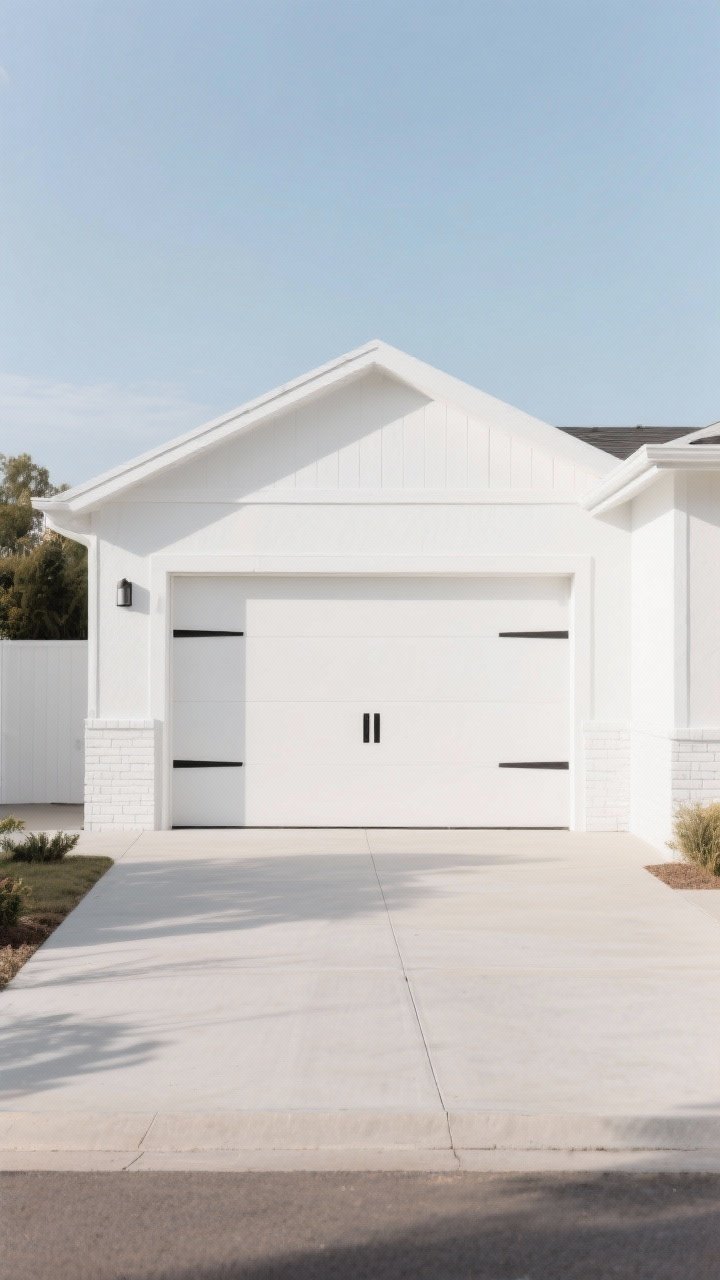
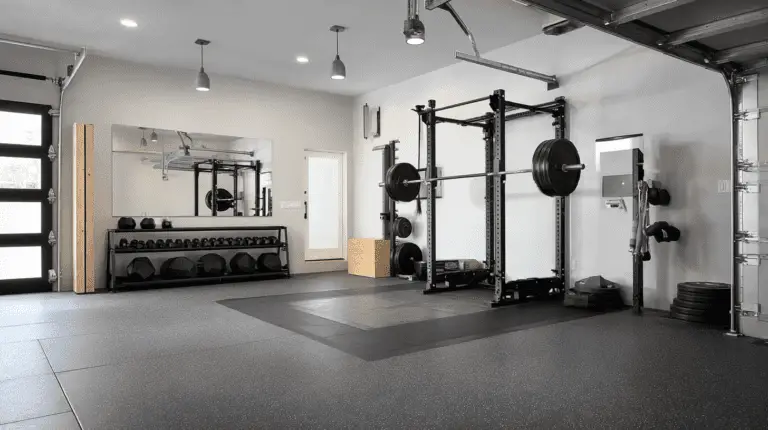
Clean, bright, and shockingly chic. A white garage—door, walls, and trim—feels modern and makes everything look bigger. It also amplifies natural light, which is a win if you tinker with tools or park in a tight space.
Why It Works
- Reflects light for a safer, brighter workspace.
- Pairs with any exterior, from traditional to modern.
- Looks luxe without trying.
Pro Tips
- Choose a washable satin or semi-gloss finish for doors/walls.
- Use a slightly warmer white (think Swiss Coffee) to avoid a hospital vibe.
- Add contrast with matte black hardware so it doesn’t feel flat.
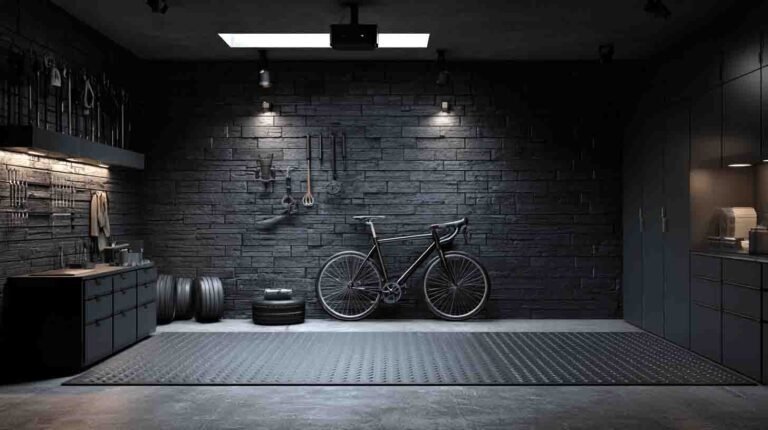
2. Charcoal Gray With Black Trim Drama
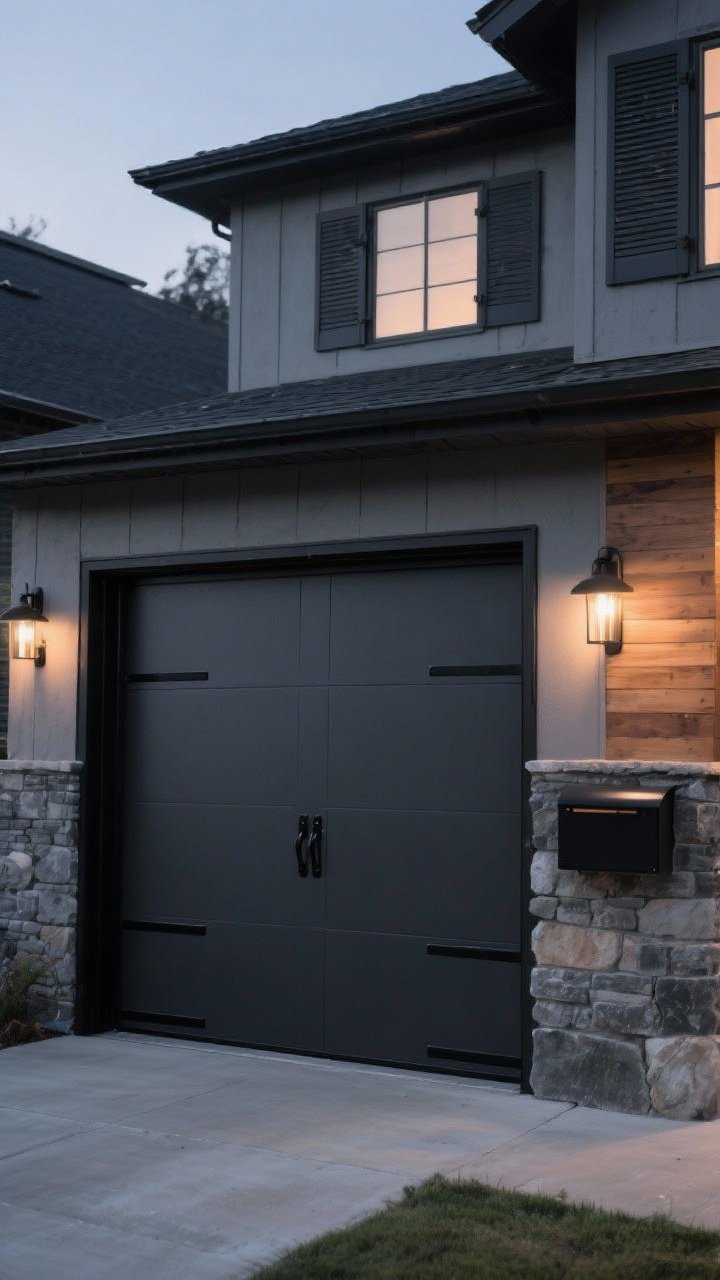
Want modern curb appeal with a little mystery? Go for a deep charcoal garage door, then add black trim and hardware for a subtle, architectural edge. It’s sleek without screaming for attention.
Why It Works
- Hides dirt and smudges—low-maintenance for the win.
- Plays nicely with stone, wood, and metal accents.
- Makes lighter siding look brighter and fresher.
Pro Tips
- Stick to a soft charcoal (not pure black) to avoid a heat magnet.
- Balance with warm outdoor lighting to prevent a bunker feel.
- Repeat the color on your mailbox or shutters for cohesion.
3. Warm Greige for Effortless Harmony
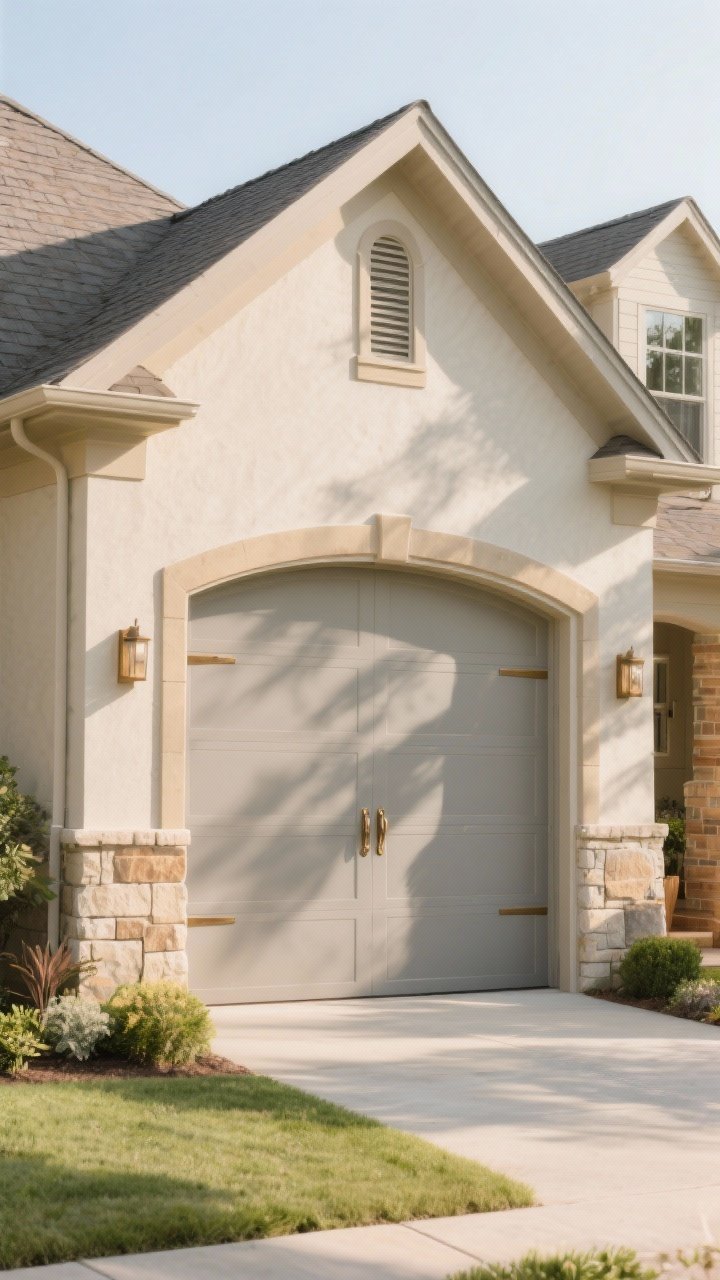
If your house has tans, creams, or stones, greige is your secret weapon. It blends easily with warm materials and gives your garage a polished, high-end look. It’s the “I woke up like this” of exterior colors.
Why It Works
- Neutral but not boring—subtle warmth adds depth.
- Perfect backdrop for landscaping and wood accents.
- Great across all architectural styles.
Pro Tips
- Test in shade and sun—greige can shift a lot.
- Pair with bronze or brass hardware for an elevated vibe.
- Match the undertone to your roof and stone (warm vs. cool).
4. Soft Sage Green for Nature-Loving Calm
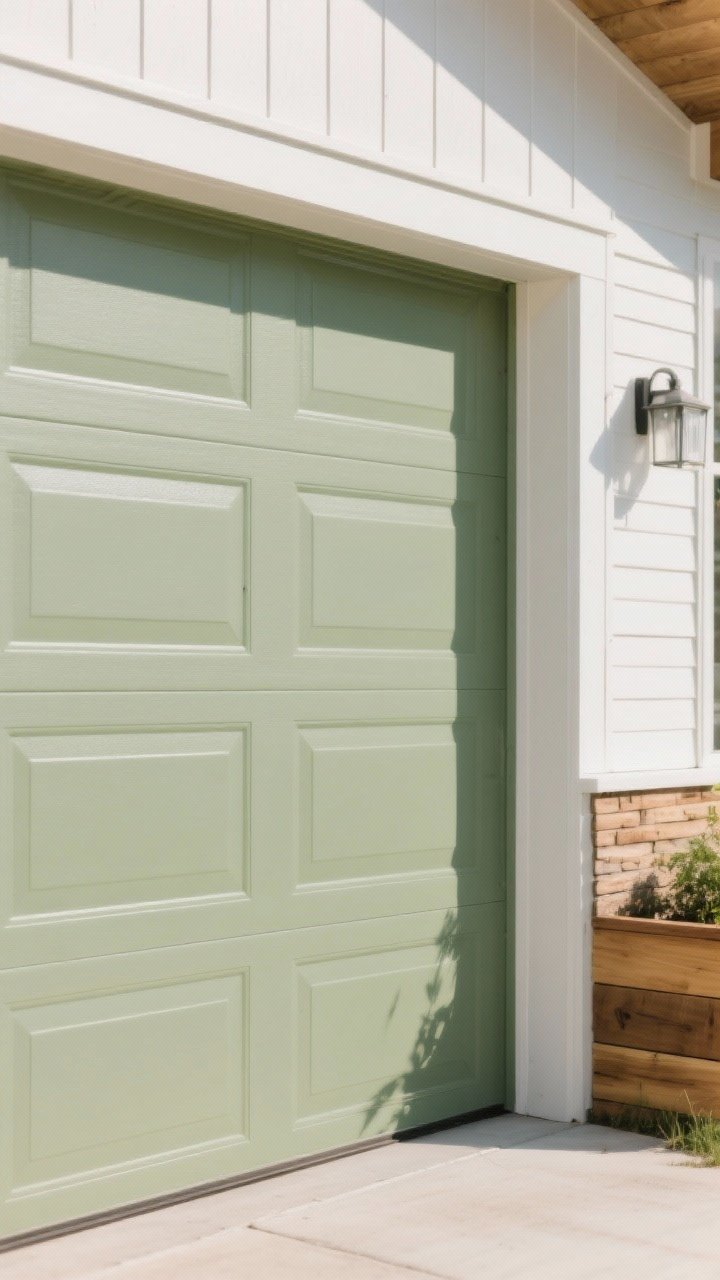
Sage green on a garage door is a quiet flex. It blends into landscaping, looks incredible with natural wood, and gives off “I garden on weekends” energy—even if you don’t.
Why It Works
- Earthy and serene without reading too bold.
- Complements brick, cedar, and white siding beautifully.
- Timeless yet current—this green isn’t going anywhere.
Pro Tips
- Use a matte or satin finish to keep it soft and organic.
- Pair with warm wood slats or planters for texture.
- Try a slightly deeper shade if your home gets strong light.
5. Navy Blue With Brass Accents
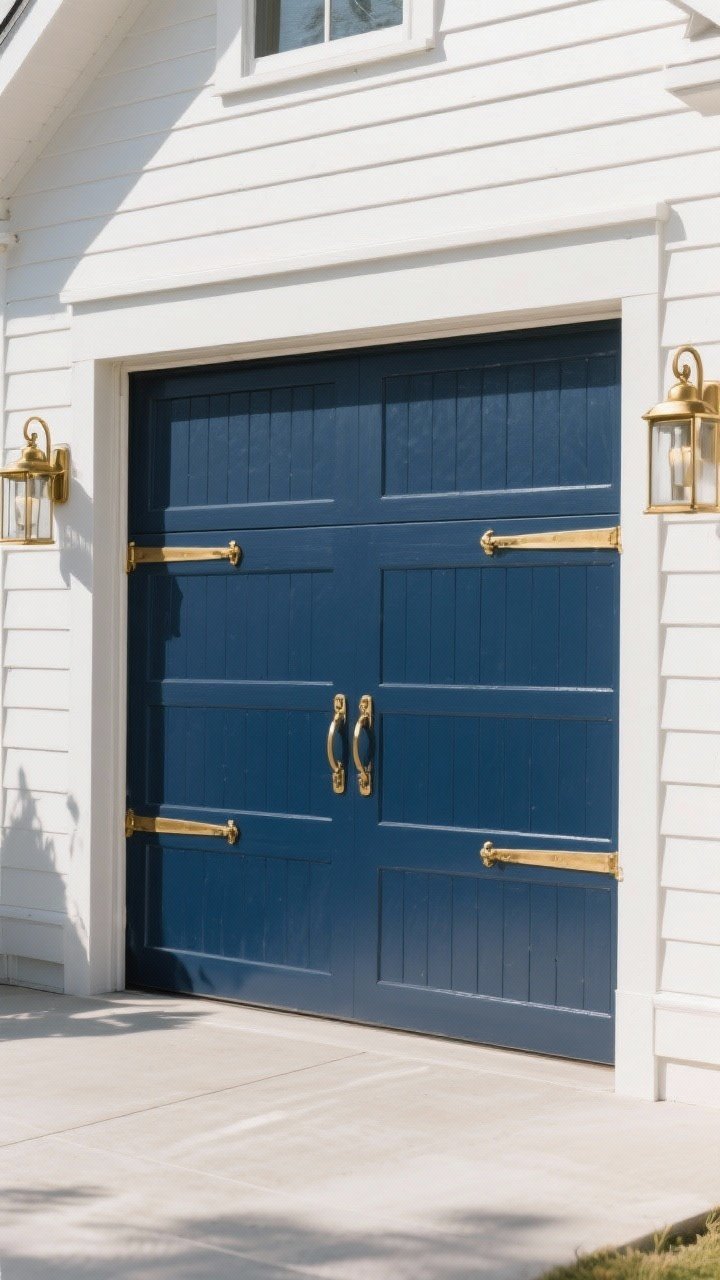
Navy on a garage door? Chef’s kiss. It’s nautical, classic, and bold without being shouty. Add brass carriage lights or handles to nail that refined coastal or transitional look.
Why It Works
- High-contrast drama against white or light siding.
- Looks premium and polished.
- Works year-round—cozy in winter, fresh in summer.
Pro Tips
- Choose a navy with gray undertones to avoid royal blue vibes.
- Balance with warm metal finishes (brass, bronze).
- Consider color-matching your front door for cohesion.
6. Black Door, White Trim: Classic and Confident
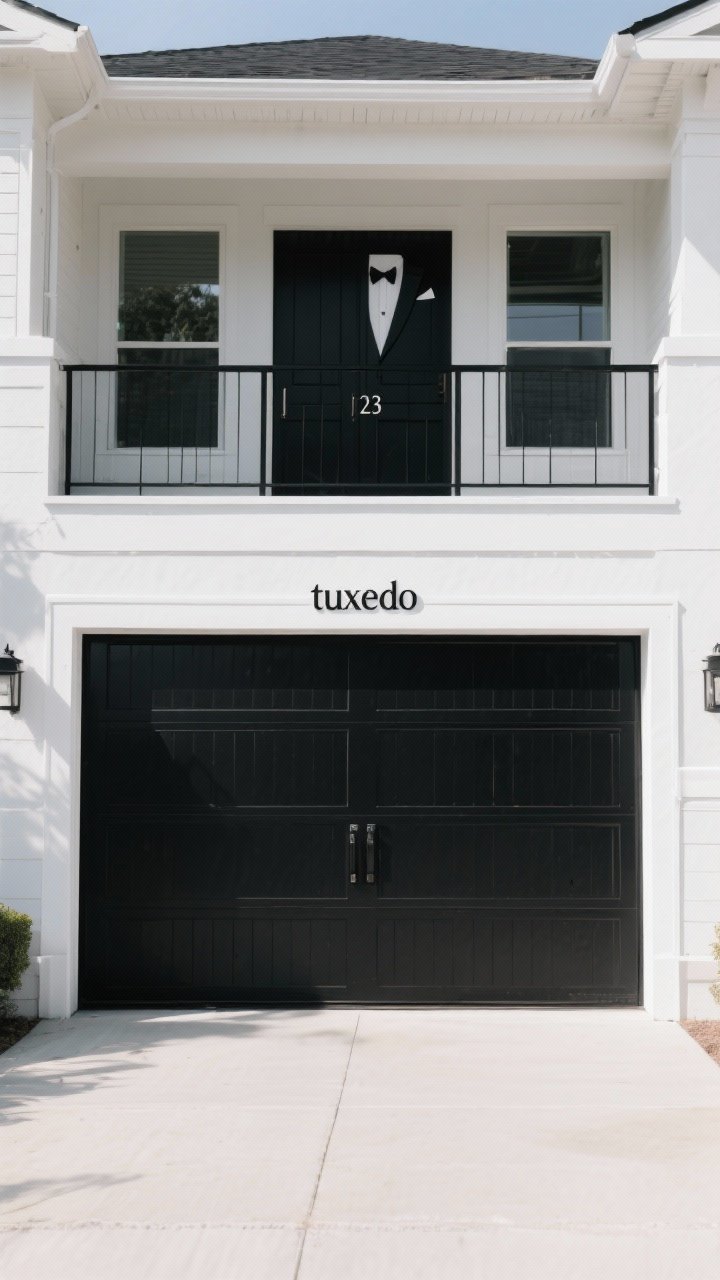
This combo never misses. A black garage door framed with crisp white trim creates instant contrast and architectural definition. It’s the tuxedo of exteriors—always in style.
Why It Works
- High-contrast look sharpens your facade.
- Hides the day-to-day scuffs.
- Complements modern and traditional homes alike.
Pro Tips
- Use a UV-resistant paint to prevent fading.
- Go semi-gloss for wipeability without mirror shine.
- Repeat black on railings or house numbers for balance.
7. Desert Taupe With Terracotta Undertones
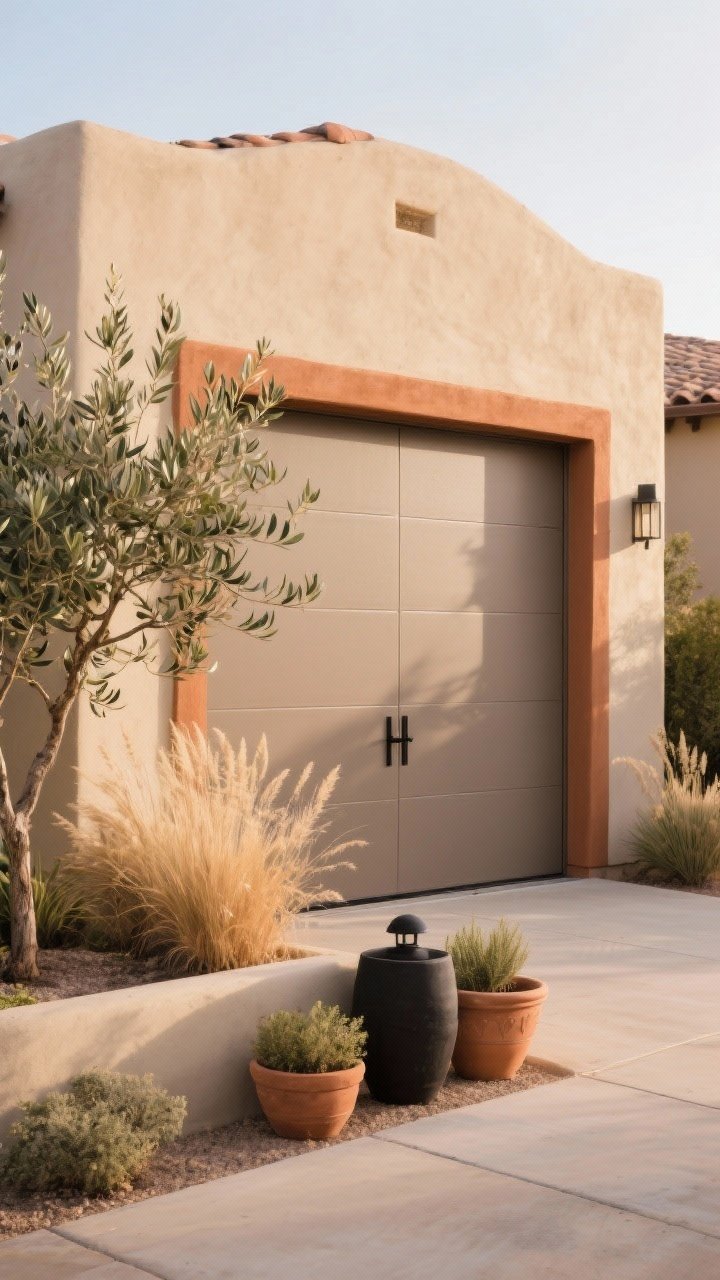
Warm, earthy taupe is trending for a reason. It adds depth without feeling heavy and pairs beautifully with Mediterranean, stucco, or modern farmhouse styles. Think: sun-baked vibes, minus the dust.
Why It Works
- Cozy warmth without leaning orange.
- Fantastic with clay planters and black fixtures.
- Softens sharp architectural lines.
Pro Tips
- Choose a taupe with a hint of red for terracotta synergy.
- Use slightly darker trim to keep it from skewing beige.
- Layer landscaping—olive trees, grasses—for a California feel.
8. Slate Blue-Gray for Subtle Sophistication
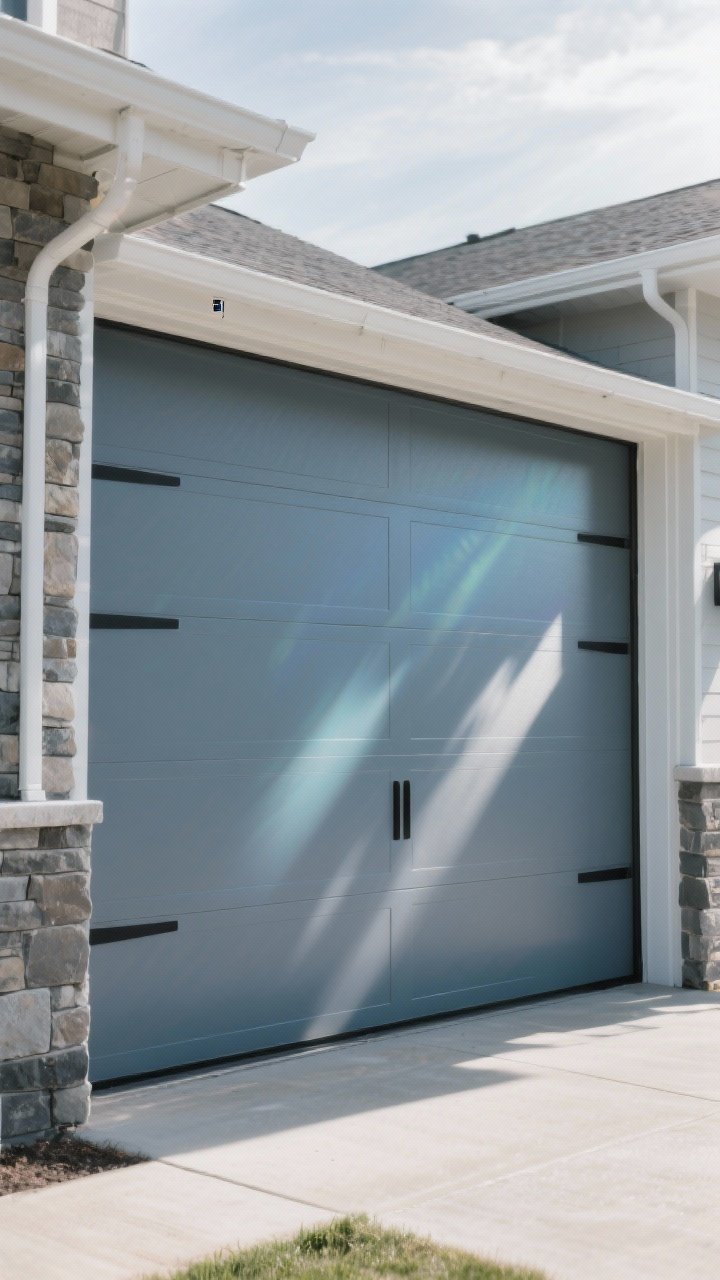
If you’re color-curious but cautious, slate blue-gray is your gateway shade. It reads neutral in shade and soft blue in sun. Translation: it’s interesting, but it won’t start a neighborhood debate.
Why It Works
- Chameleon color that shifts with light.
- Pairs with black, stone, and white trim.
- Gives older siding an instant refresh.
Pro Tips
- Test on the sunniest panel of your garage.
- Contrast with crisp white gutters and fascia.
- Use a satin finish to keep it refined.
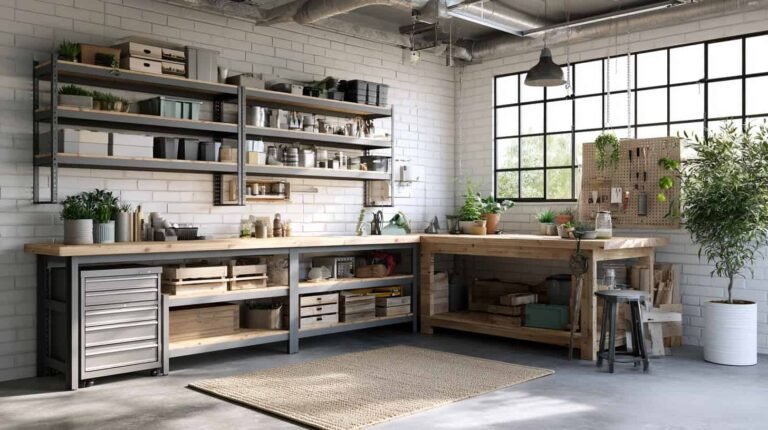
9. Olive Drab for Rugged, Workshop Energy
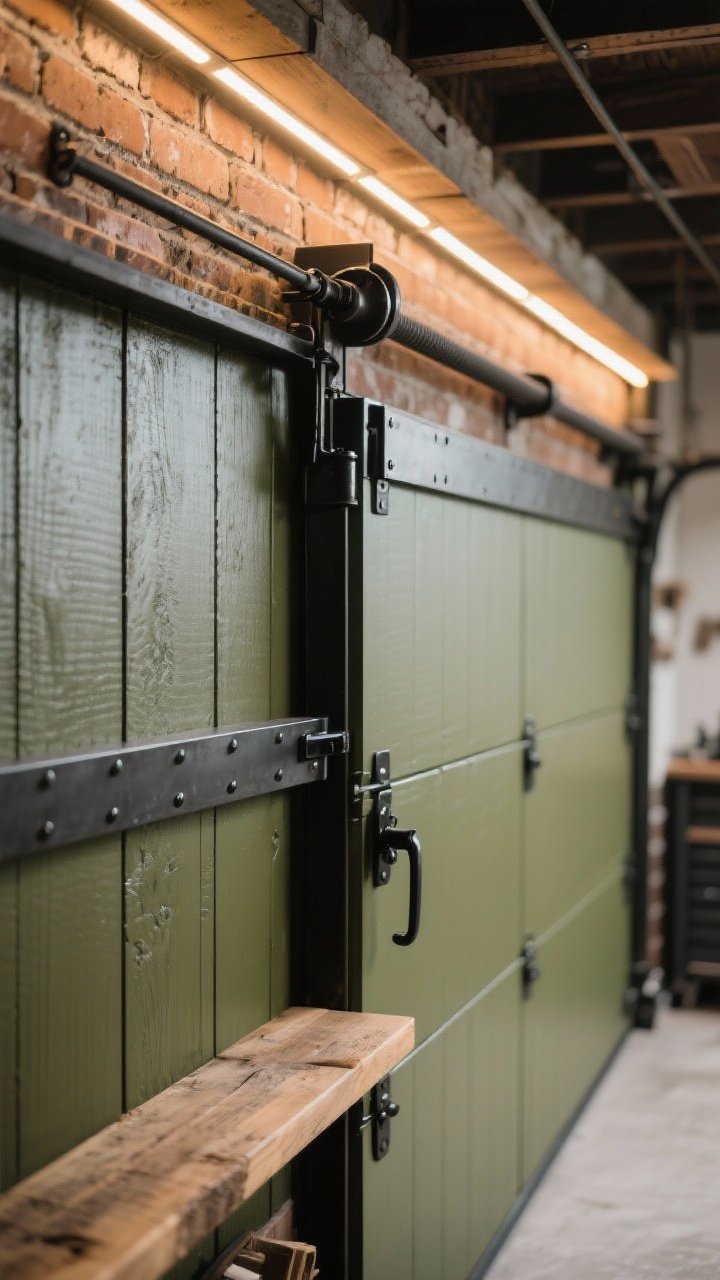
Ready to lean into your garage’s utility? Olive drab brings military-chic meets craftsman vibes. It’s practical, hides dust, and looks insanely good with galvanized metal and raw wood.
Why It Works
- Durable-looking and unfussy.
- Blends with nature and asphalt equally well.
- Perfect for homes with board-and-batten or brick details.
Pro Tips
- Add matte black hardware for industrial polish.
- Use the color inside too—on shelves or pegboard—for continuity.
- Accent with warm LED strip lighting in the soffit.
10. Two-Tone Paneling for Instant Architecture
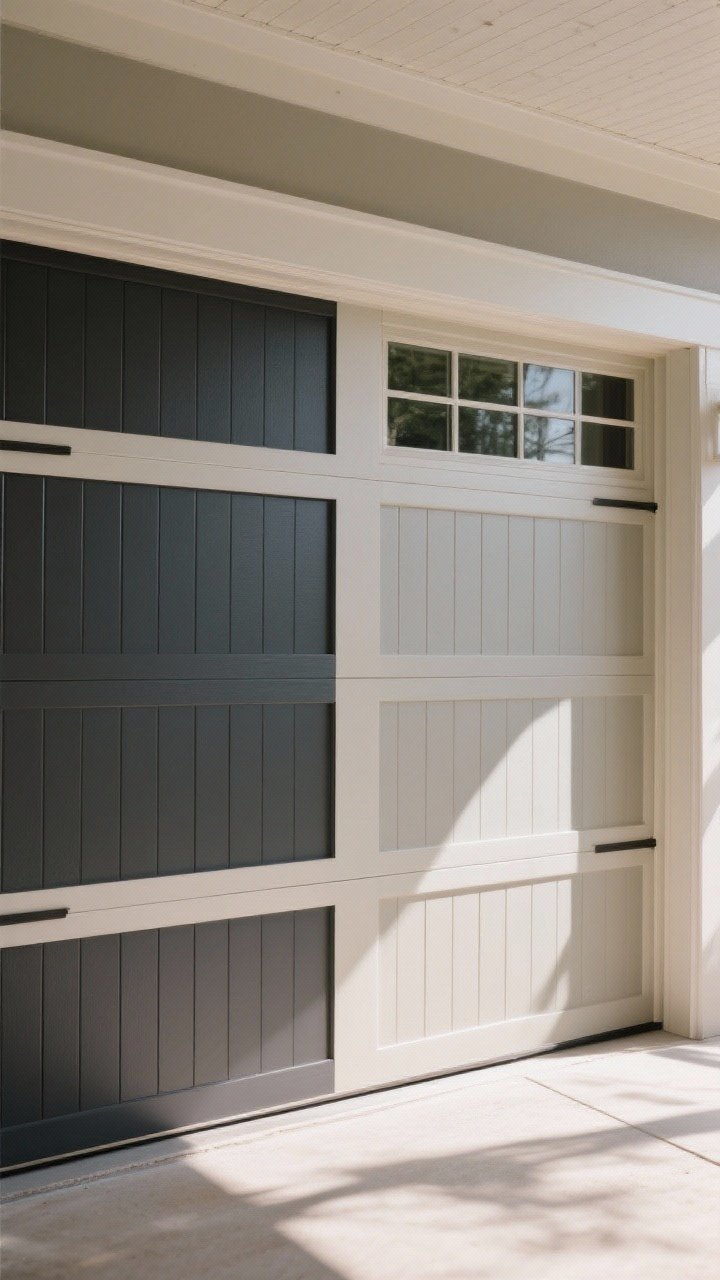
No fancy door required—paint can fake it. Use a darker base color for the main panels and a slightly lighter shade for the rails and stiles. Suddenly your flat door looks custom and dimensional.
Why It Works
- Adds depth without replacing the door.
- Lets you echo your home’s trim and siding palette.
- Creates a high-end custom look on a budget.
Pro Tips
- Keep the two colors within 2–3 shades of each other.
- Tape carefully and use a small angled brush for clean lines.
- Consider a third accent on windows/muntins if your door has them.
11. Warm Wood Stain (Or Faux) for Natural Texture
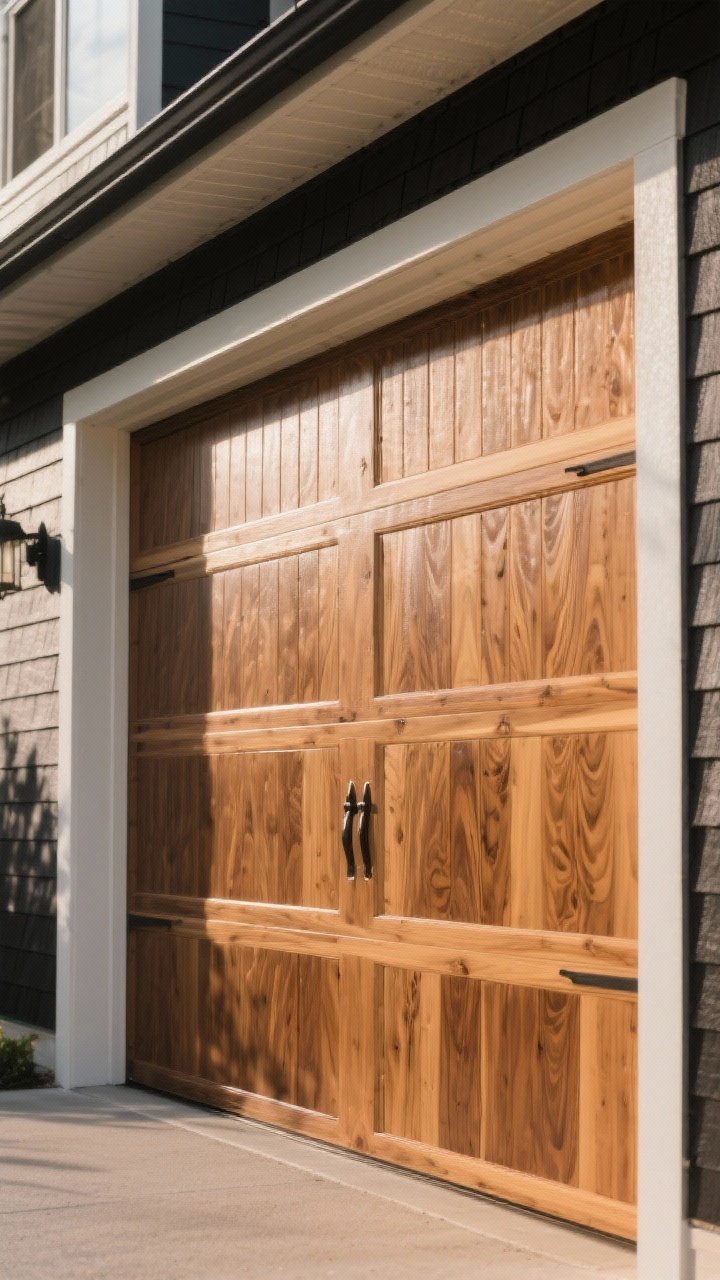
Love the look of wood but have a steel or fiberglass door? You can faux it. A medium walnut or cedar stain tone brings warmth and texture that paint alone can’t match.
Why It Works
- Elevates curb appeal instantly.
- Plays well with black, charcoal, or white exteriors.
- Softens modern homes and warms up traditional ones.
Pro Tips
- For real wood: use an exterior spar urethane topcoat.
- For faux: base coat in tan, then glaze with a gel stain using a graining tool.
- Match the tone to your porch or fence for cohesion.
12. High-Contrast Trim and Frame Highlight
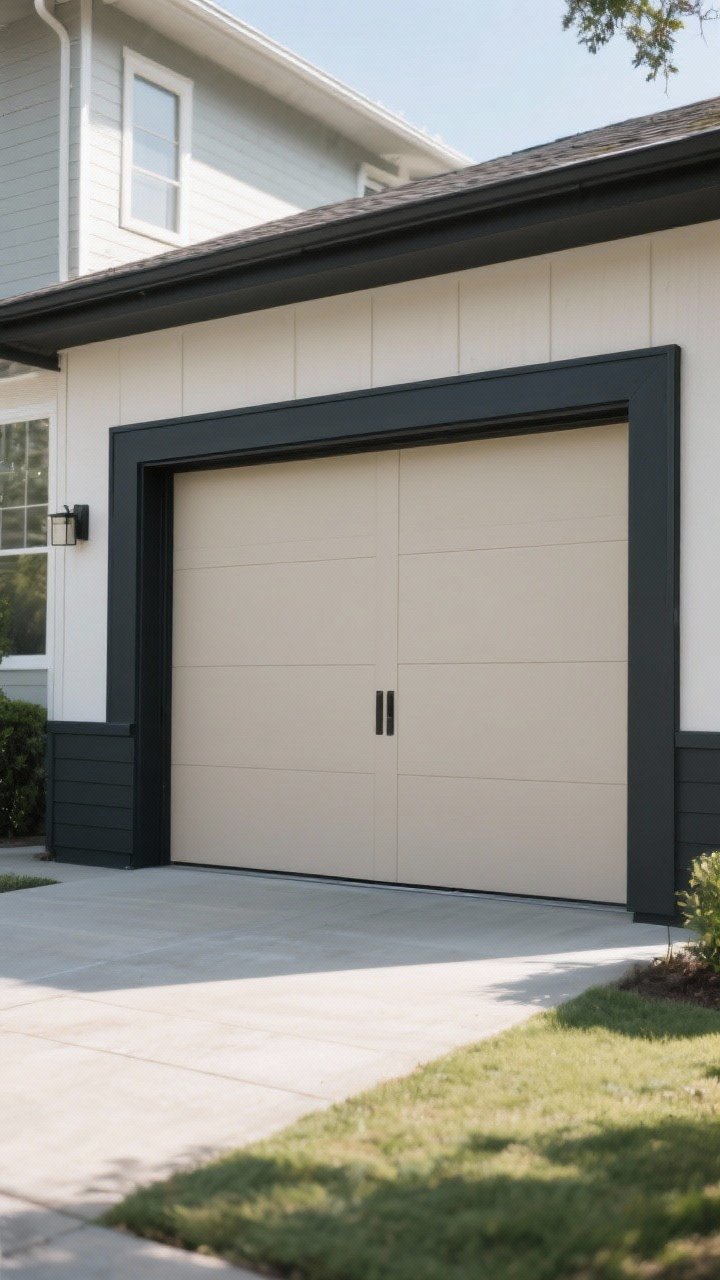
Sometimes the door color is fine—it’s the frame that needs love. Painting the garage surround in a contrasting color creates a built-in “picture frame” effect. It’s subtle but super effective.
Why It Works
- Defines the opening and adds structure.
- Works on any door style or color.
- Can help a wide garage feel more proportionate.
Pro Tips
- Dark frame with light door = modern, crisp vibe.
- Light frame with dark door = classic, balanced look.
- Keep the header the same color as the sides for continuity.
13. Sunny Buttery Cream for Welcoming Warmth
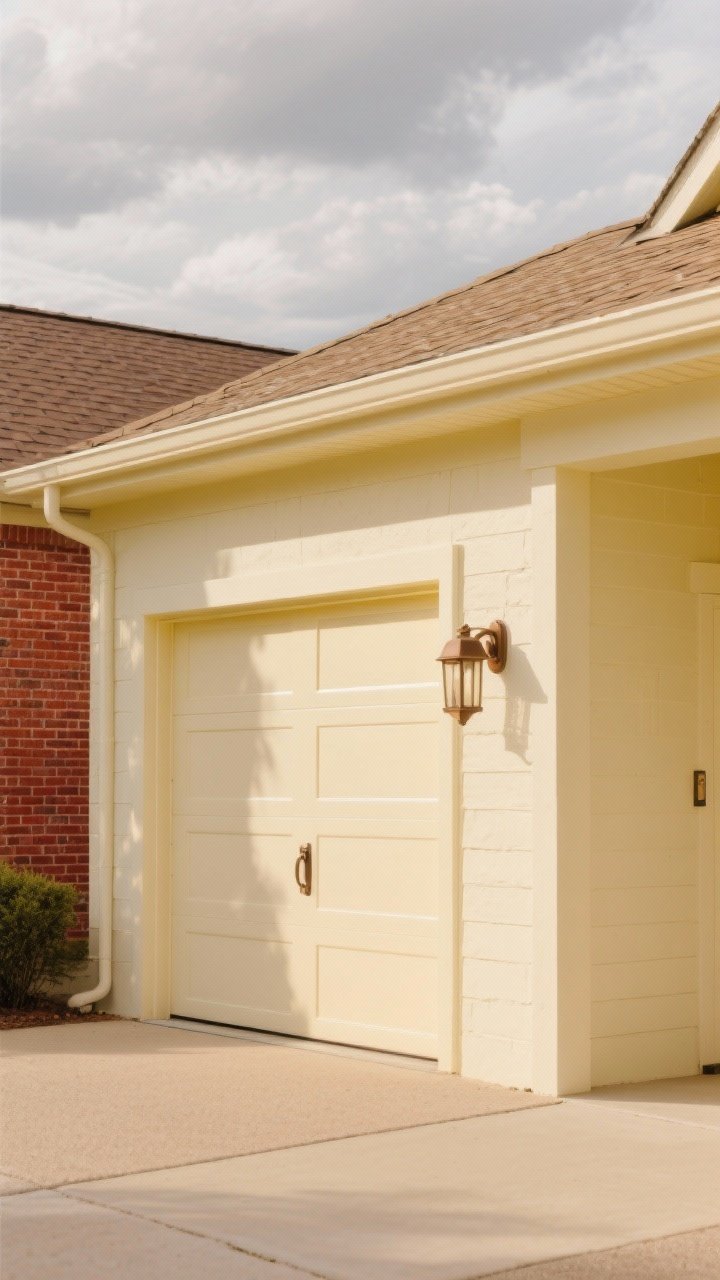
If white feels stark, go for buttery cream. It’s soft, sunny, and ridiculously welcoming—like your garage is giving your neighbors a polite smile.
Why It Works
- Warmer alternative to white without going yellow.
- Great in cloudy climates to brighten your facade.
- Balances red brick and warm roof shingles.
Pro Tips
- Choose a cream with muted undertones to avoid banana vibes.
- Pair with oil-rubbed bronze hardware for warmth.
- Use on interior walls too for a cohesive garage makeover.
14. Graphite With Wood Accents for Modern Luxe
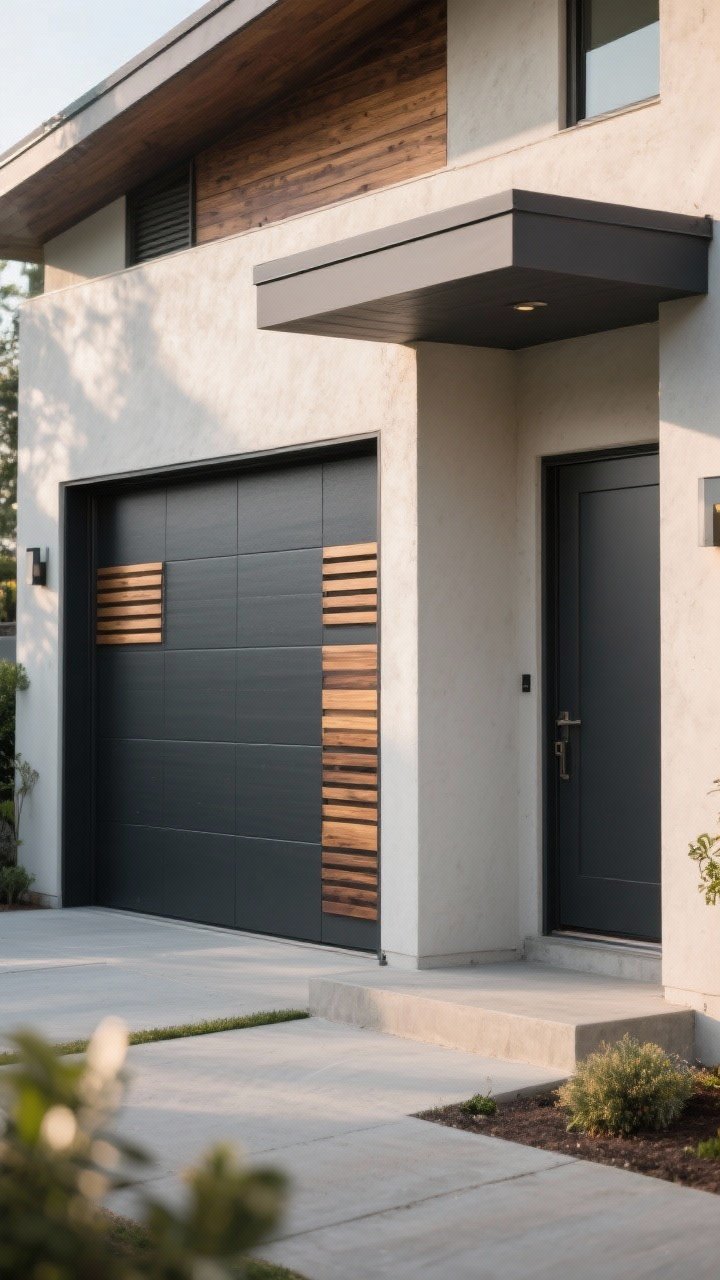
If you want your garage to look designer, try a deep graphite door with wood details—like cedar battens, slatted panels, or even wood-look vinyl trim. It’s sophisticated, modern, and very “architect’s home.”
Why It Works
- High-end contrast that feels curated.
- Pairs with concrete, stucco, and minimalist landscaping.
- Hides wear while the wood brings warmth.
Pro Tips
- Seal real wood with a UV-protective finish to prevent graying.
- Repeat the wood tone on your address plaque or porch posts.
- Use a color-matched graphite on the side door for continuity.
Choosing the Right Finish (FYI)
- Satin: Best all-around. Slight sheen, hides imperfections, easy to clean.
- Semi-Gloss: Durable and wipeable, great for doors in rainy or dusty areas.
- Matte/Flat: Trendy, but less durable outdoors. Save it for trim accents or protected areas.
Color Pairing Cheat Sheet
- Red Brick Homes: Navy, charcoal, creamy white, sage.
- Stucco/Spanish: Desert taupe, warm cream, terracotta-adjacent browns, black trim.
- Modern Farmhouse: White door + black trim, greige, warm wood, graphite.
- Coastal: Slate blue-gray, soft sage, navy with brass.
Prep and Application Tips
- Clean the door first—degrease and rinse. Paint hates dirt.
- Lightly sand and use a bonding primer on metal or fiberglass doors.
- Paint in shaded conditions between 50–85°F to avoid flash drying.
- Roll large panels, then back-brush for a pro finish. Two thin coats beat one thick coat.
- Don’t forget weather seals and trim—they deserve paint too.
Small Upgrades That Make Your Paint Pop
- Hardware glow-up: New handles, hinges, and house numbers.
- Lighting: Add sconces or motion lights that complement your finish.
- Driveway edge: Define with pavers or gravel to frame your newly painted door.
- Planters: Repeat your accent color in plants or pots for cohesion.
Common Mistakes to Avoid
- Skipping primer on slick surfaces—hello, peeling.
- Choosing high-gloss outdoors—it shows every dent and dust speck.
- Forgetting the roof and gutters when choosing colors. They’re part of the palette too.
- Going too dark in intense sun without considering heat absorption.
Bottom line: your garage is a huge chunk of your home’s facade, so treat it like the star it secretly is. Whether you go crisp white, cozy taupe, or daring navy, a thoughtful color choice can transform your curb appeal in a weekend. Pick a lane, grab a roller, and give your garage the glow-up it deserves. IMO, your driveway selfies are about to hit different.