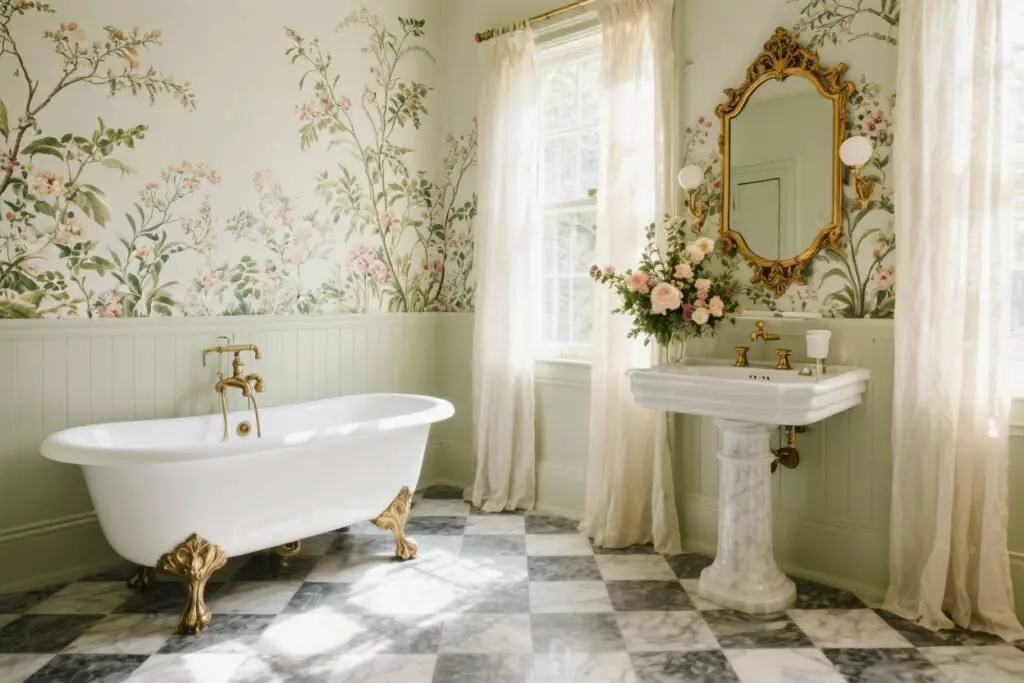

You want drama? Victorian bathrooms deliver it in spades—patterned floors, marble everything, and a little extra “ooh-la-la” around every corner. The trick is taking that ornate vibe and translating it into a bathroom that still feels fresh, functional, and, yes, a little indulgent.
Let’s dive into 12 Victorian bathroom ideas that nail the balance between moody elegance and modern comfort. Grab your tea (or your tile samples). We’re going in.
1. Make a Statement With a Clawfoot Tub
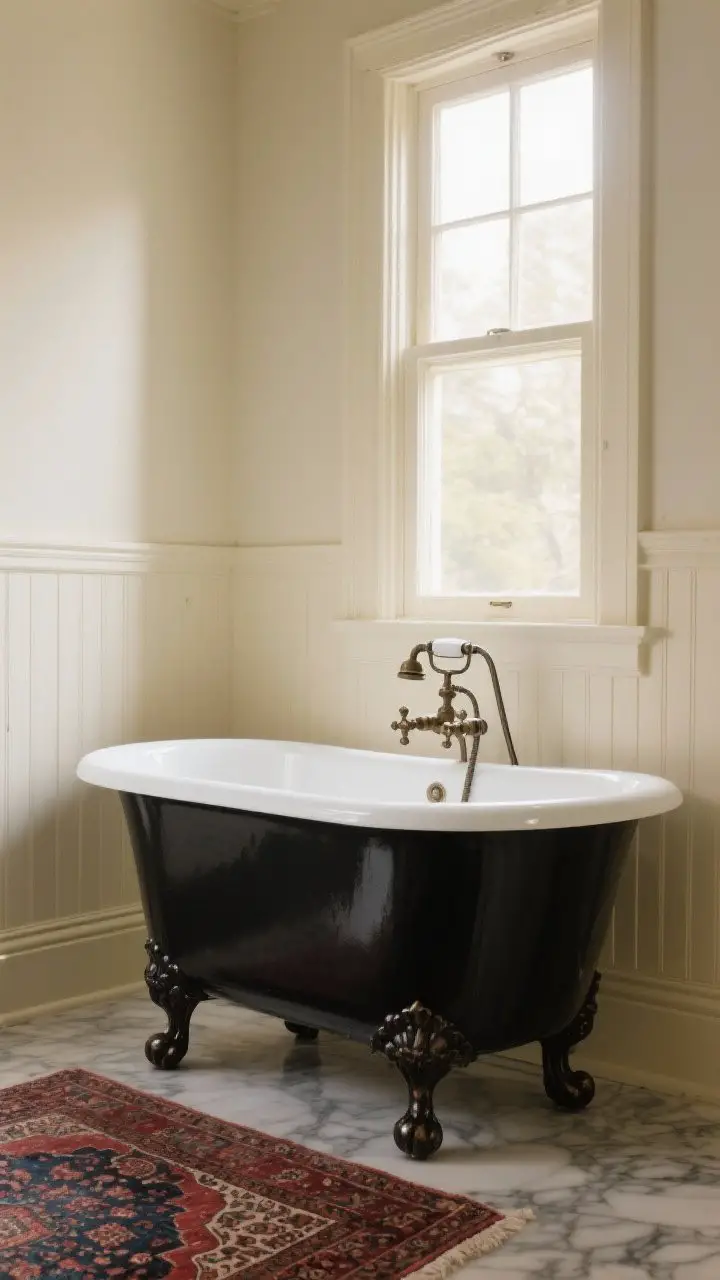
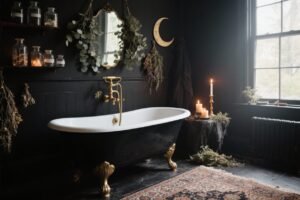
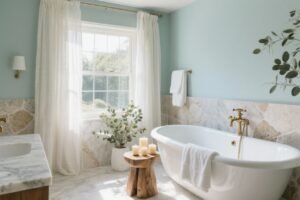
The clawfoot tub is the Victorian bathroom’s Beyoncé—everything else plays backup. Whether you choose classic white, glossy black, or a bold painted exterior, it instantly anchors the room with old-world charm.
What to Look For
- Roll-top edges add a soft, romantic silhouette.
- Ball-and-claw feet or lion’s paw feet bring sculptural detail.
- Cast iron holds heat beautifully; acrylic is lighter and easier to install.
Style Tips
- Position the tub near a window with a dramatic waist-height wainscot behind it.
- Add a freestanding tub filler with cross handles and a handheld sprayer for peak nostalgia.
- Layer a small Persian-style rug underfoot. Practical? Somewhat. Chic? Absolutely.
2. Go All-In on Patterned Floors
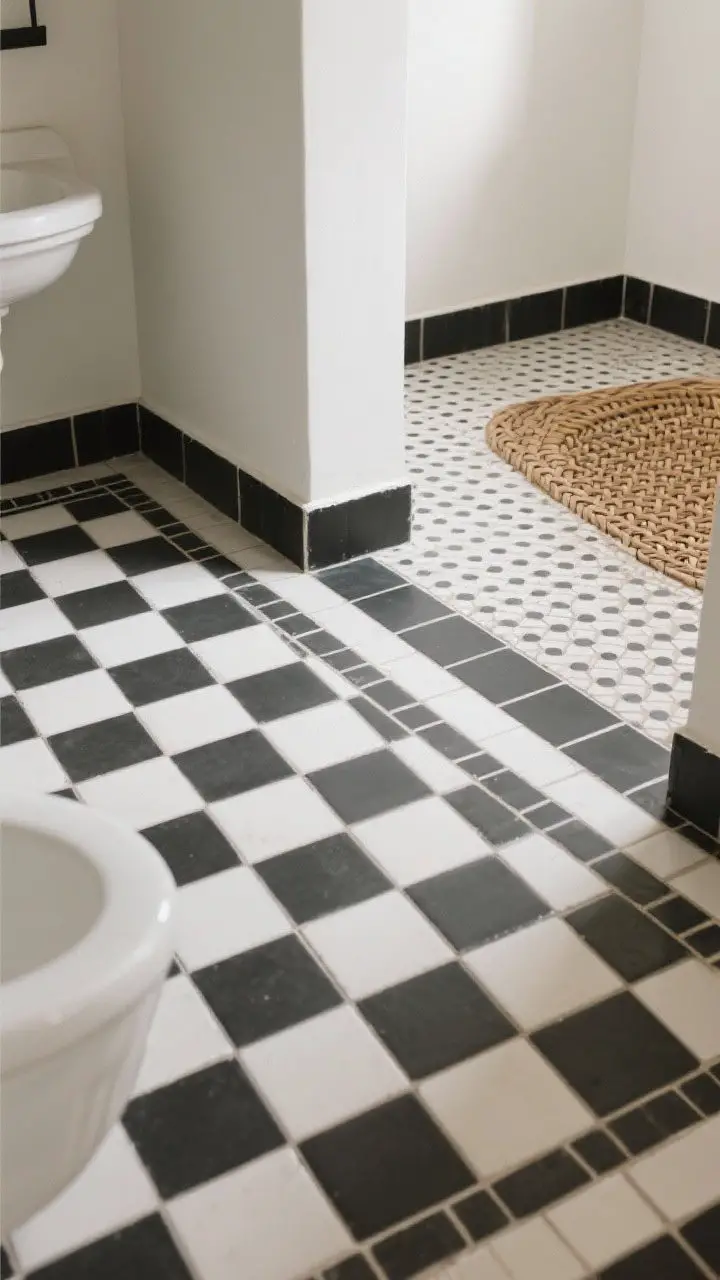
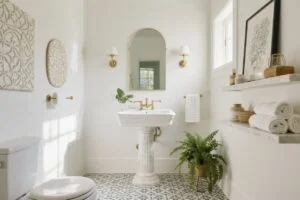
Victorian floors love a pattern moment. Think black-and-white checkerboard, intricate encaustic tiles, or even classic hex tiles with a border. The floor is where you can be extra without overwhelming the room.
Design Directions
- Try a basketweave or dot-and-hex mosaic for small bathrooms—subtle but elegant.
- Frame the floor with a contrasting tile border to mimic period details.
- Pair bold floors with simple walls so things don’t go full circus.
Pro Tip
- Use matte finishes for a more authentic look and better slip resistance.
3. Elevate Walls With Wainscoting and Wallpaper
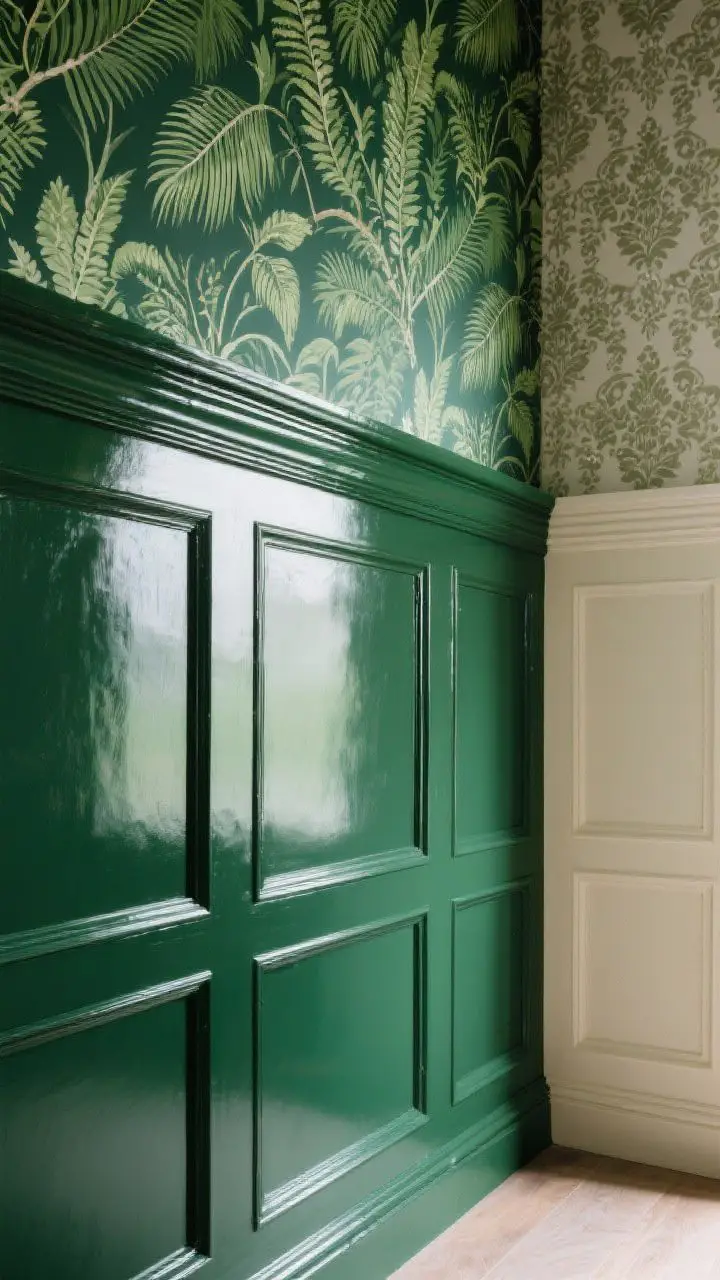
Nothing says Victorian like walls that are actually dressed. Combine beadboard or raised-panel wainscoting with a luxe wallpaper above. The mix feels rich without veering into overly formal.
Winning Combos
- Glossy painted wainscoting in deep green, oxblood, or navy + botanical wallpaper.
- Cream wainscoting + damask or paisley in muted tones for subtle romance.
Practical Notes
- Choose moisture-resistant wallpaper or use a sealer in high-splash zones.
- Cap the wainscot with a substantial chair rail for an authentic profile.
4. Choose a Furniture-Style Vanity
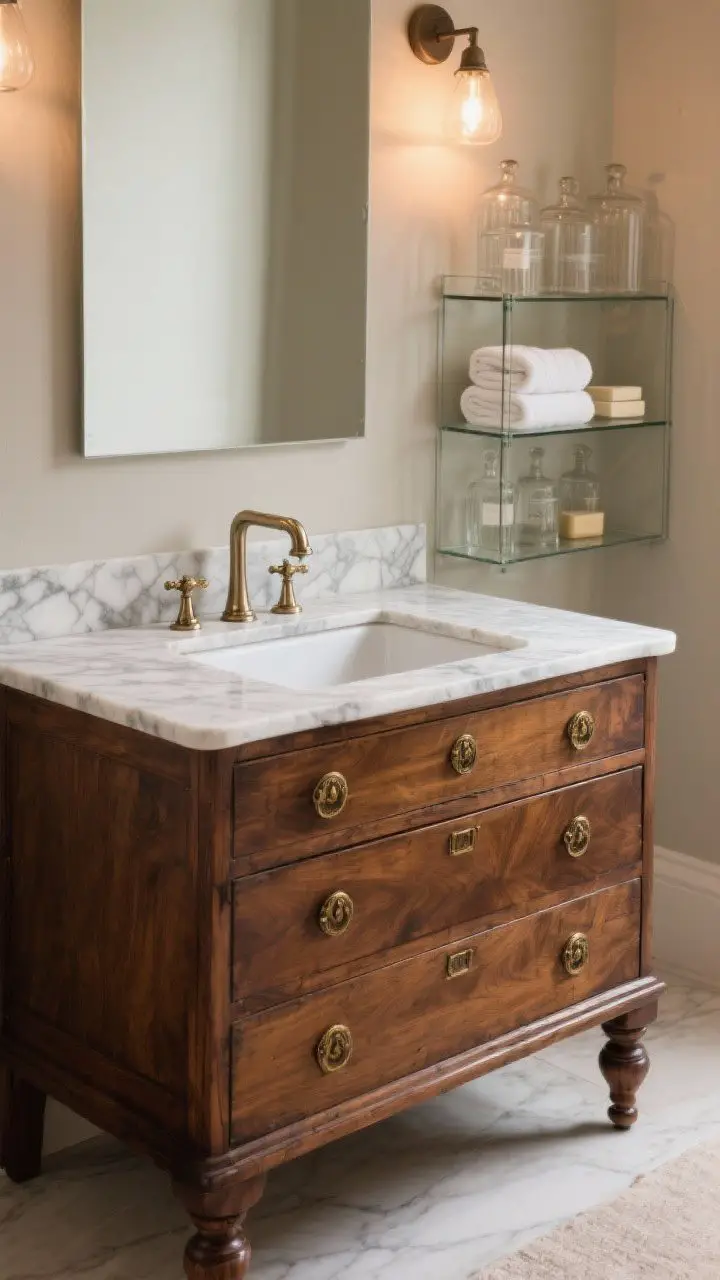
Victorian bathrooms didn’t have built-in cabinets—so bring in a furniture-style vanity. Think turned legs, inset panels, and rich wood tones (walnut, mahogany) or a painted finish with aged brass hardware.
How to Nail the Look
- Convert a vintage dresser into a vanity with a marble or soapstone top.
- Opt for undermount sinks for a cleaner edge or a vessel sink for extra drama.
- Stick with polished nickel, antique brass, or oil-rubbed bronze for hardware.
Storage Hack
- Use glass-front cabinets or apothecary shelves to store towels and soaps.
5. Layer Ornate Mirrors and Sconces
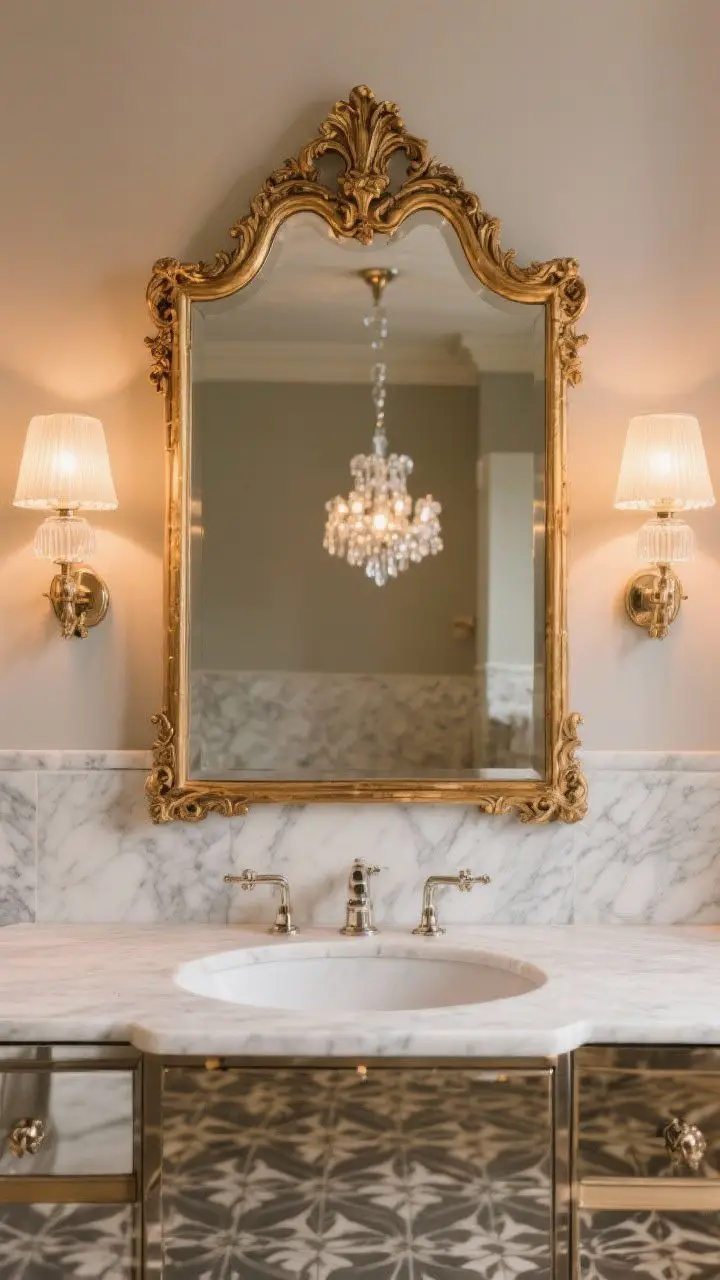
Victorian style thrives on reflective surfaces and warm lighting. A gilded or carved mirror over the vanity instantly elevates the room. Balance it with warm, layered lighting—wall sconces flanking the mirror are a must.
Lighting Game Plan
- Choose milk glass shades or pleated fabric sconce shades for softness.
- Use warm bulbs (2700–3000K) to flatter skin tones and finishes.
- Add a petite pendant or mini chandelier over the tub if ceiling height allows.
Mirror Moves
- Go oversized to reflect patterned floors or that gorgeous tub.
- Double up with twin mirrors over a double vanity for symmetry.
6. Embrace Rich, Moody Paint Colors
Color in a Victorian bathroom should whisper “opulence” not “dentist’s office.” Lean into jewel tones and inky neutrals—they make white fixtures pop and gold hardware glow.
Shades to Try
- Deep forest green, aubergine, Prussian blue
- Warm taupe, charcoal, or claret red for a cocooning vibe
Finish Matters
- Use semi-gloss on wainscoting and trim; eggshell/satin on walls for wipeability.
- Contrast with crisp white ceilings to keep the room feeling tall.
7. Bring In Marble, But Mix the Cuts
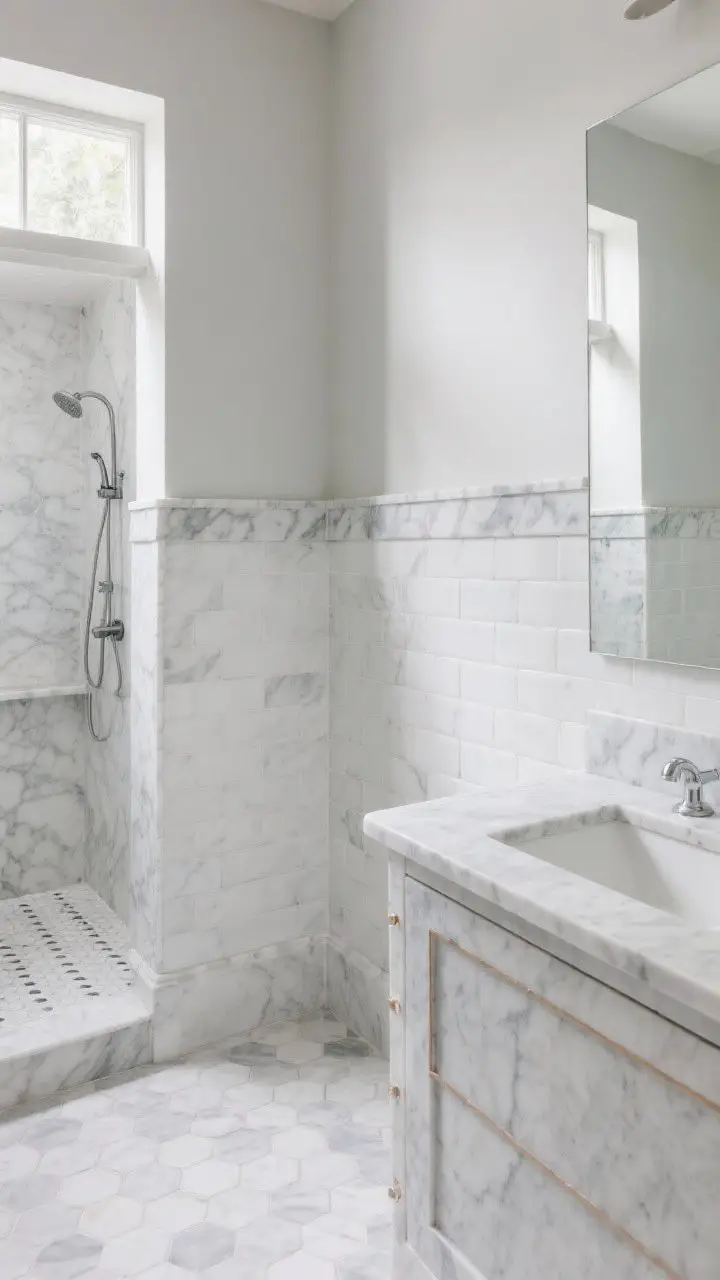
Marble is a Victorian love affair that still looks timeless. To avoid monotony (and, FYI, to keep costs sensible), mix different cuts and scales.
Material Mix
- Marble subway tile on the walls + hex mosaic on the floor.
- Marble slab vanity top with marble chair rail or pencil trim as accents.
- Use ceramic lookalikes in wet zones if maintenance worries you.
Care Tips
- Seal marble on install and annually; wipe spills quickly to avoid etching.
- Choose honed finishes if you prefer a softer, less precious look.
8. Add Victorian Fixtures With Modern Plumbing Smarts
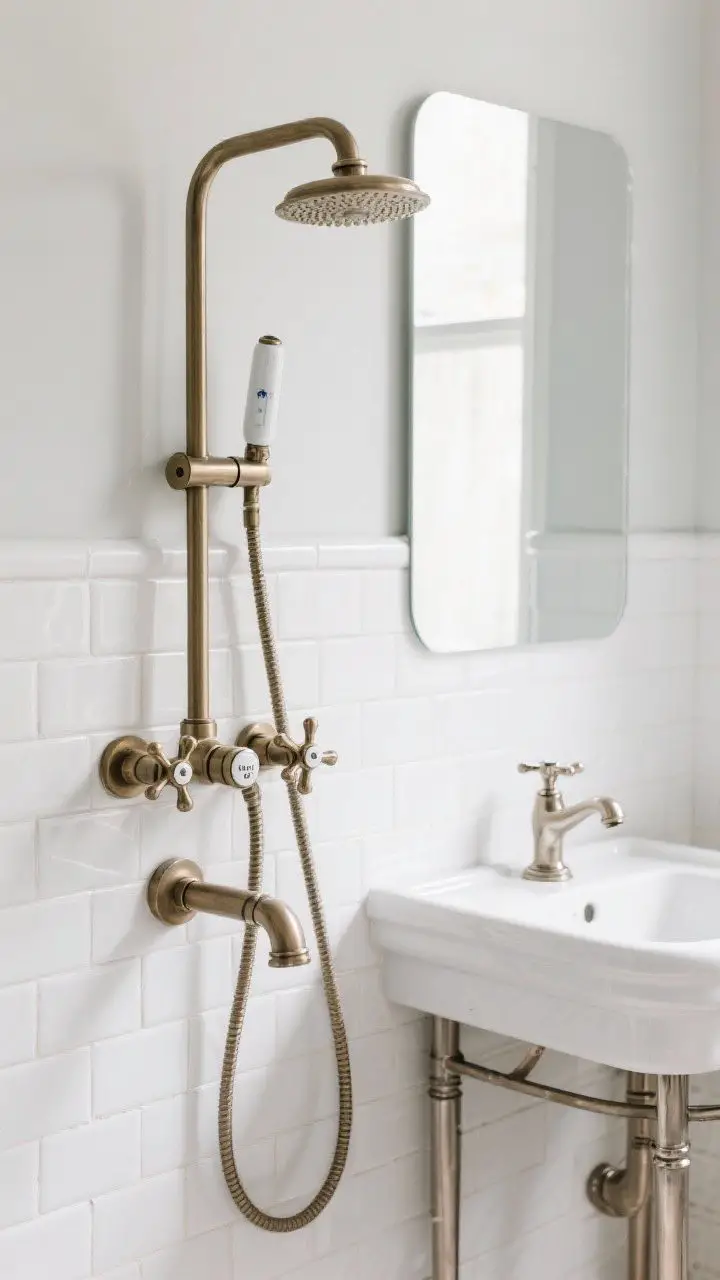
You want the aesthetic, not 19th-century plumbing woes. Choose period-style faucets and shower sets that meet modern performance standards. Cross handles, porcelain levers, and exposed shower risers are all fair game.
Hardware Hits
- Exposed thermostatic showers look vintage but deliver steady temps.
- Go polished nickel for an authentic warm glow that ages gracefully.
- Pair with a ceramic console sink if you’re short on space.
Compatibility Note
- If retrofitting, confirm valve compatibility behind the wall before ordering fancy trim.
9. Use Lace, Linens, and Layered Textiles
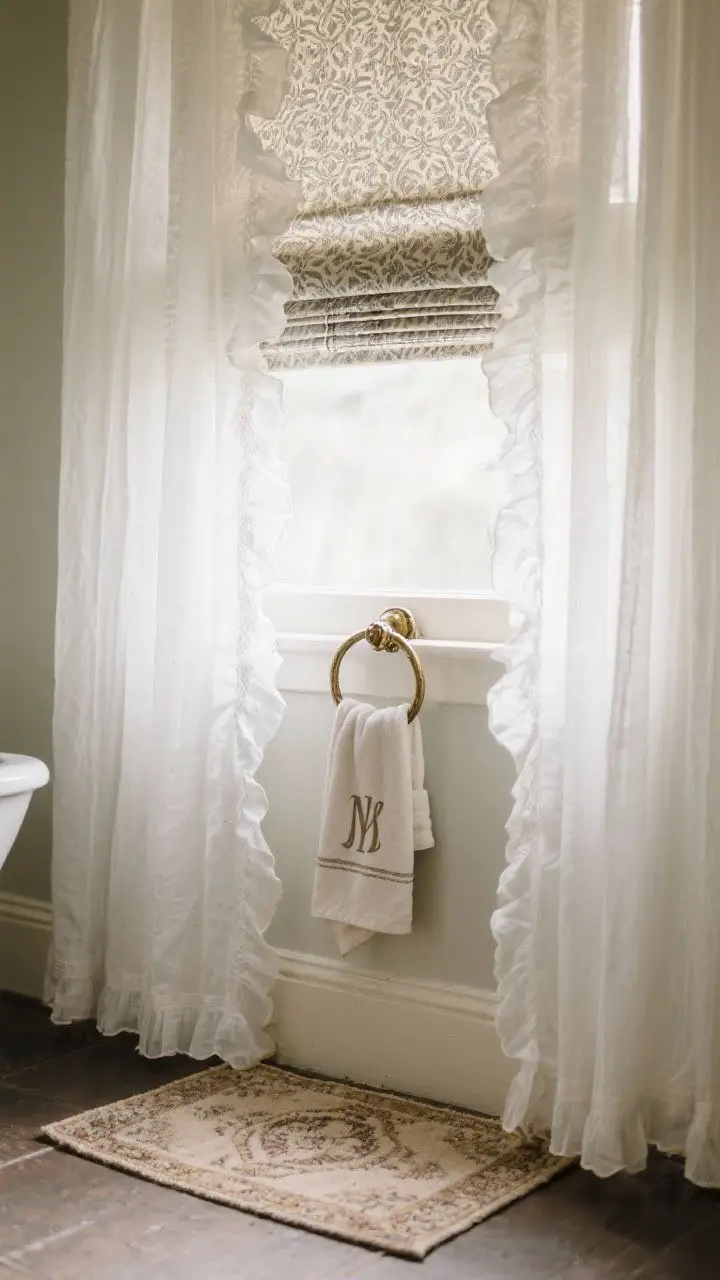
Victorian bathrooms feel soft because they layer textiles like it’s their job. Think ruffled or pleated café curtains, monogrammed linen hand towels, and a plush rug or two.
Where to Add Texture
- Window dressings: Sheers under a patterned roman shade for privacy and romance.
- Shower curtain: A fabric outer curtain with a liner gives a rich, drapery-like look.
- Bath mat upgrade: Try a small vintage rug; use a rug pad to prevent slips.
Care Reminder
- Choose cotton-linen blends for durability and easy laundering.
10. Curate Antique Accessories and Apothecary Details
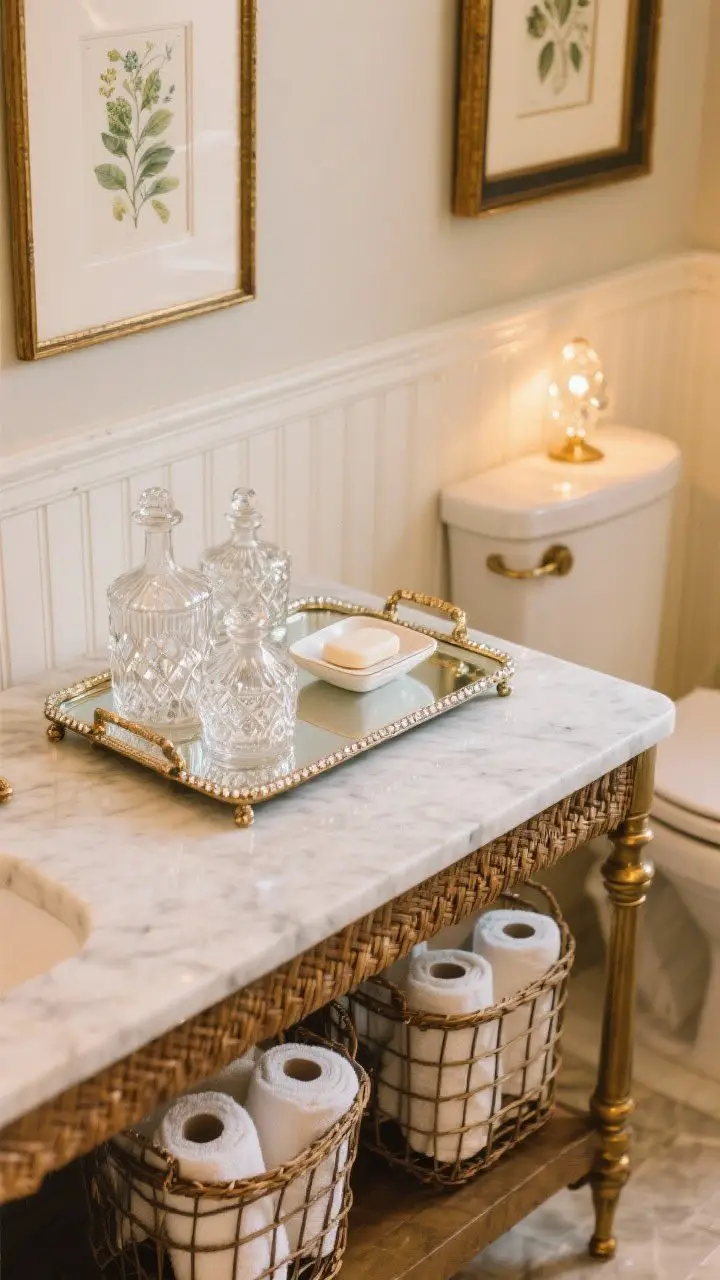
This is where the personality comes in hot. Display cut-glass bottles, porcelain soap dishes, and vintage trays. A few curated pieces go a long way—no one wants a museum bathroom.
Styling Ideas
- Group bottles on a marble or mirrored tray for instant polish.
- Hang framed botanical prints or Victorian silhouettes over the wainscoting.
- Use wicker or wire baskets for toilet paper and towels—function with flair.
Smart Sourcing
- Check estate sales, Etsy, and antique shops. Look for solid brass and real crystal.
11. Build a Moody Shower With Heritage Tile
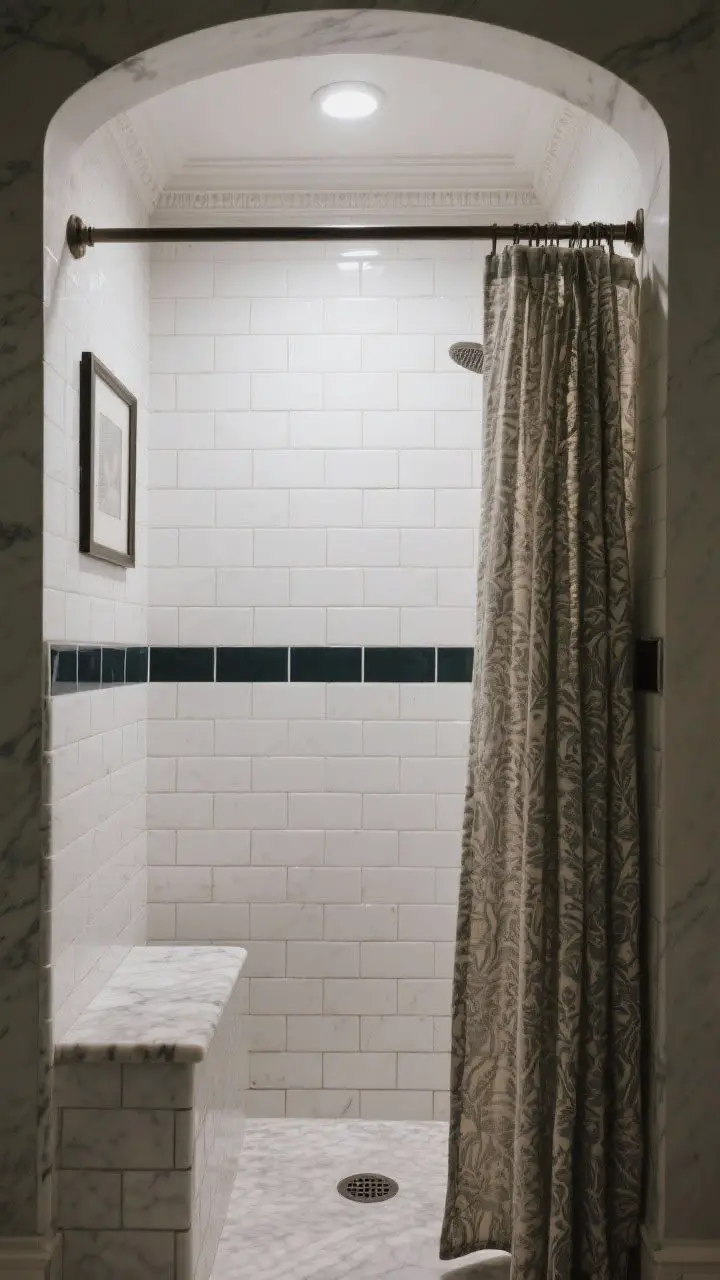
A Victorian-inspired shower can be absolutely stunning. Use subway tiles with dark grout, add a tile border, and cap it with crown molding or marble trim for that finished, period look.
Design Details
- Run a picture-rail height border in a contrasting tile for old-house vibes.
- Swap a full glass enclosure for a curtain on a ceiling-mounted rod if space is tight.
- Install a small corner seat in marble to elevate the daily routine.
Drain + Slope FYI
- Linear drains look modern; a center round drain feels more traditional. Either way, confirm proper slope so water doesn’t go rogue.
12. Crown It With Millwork and Ceiling Jewelry
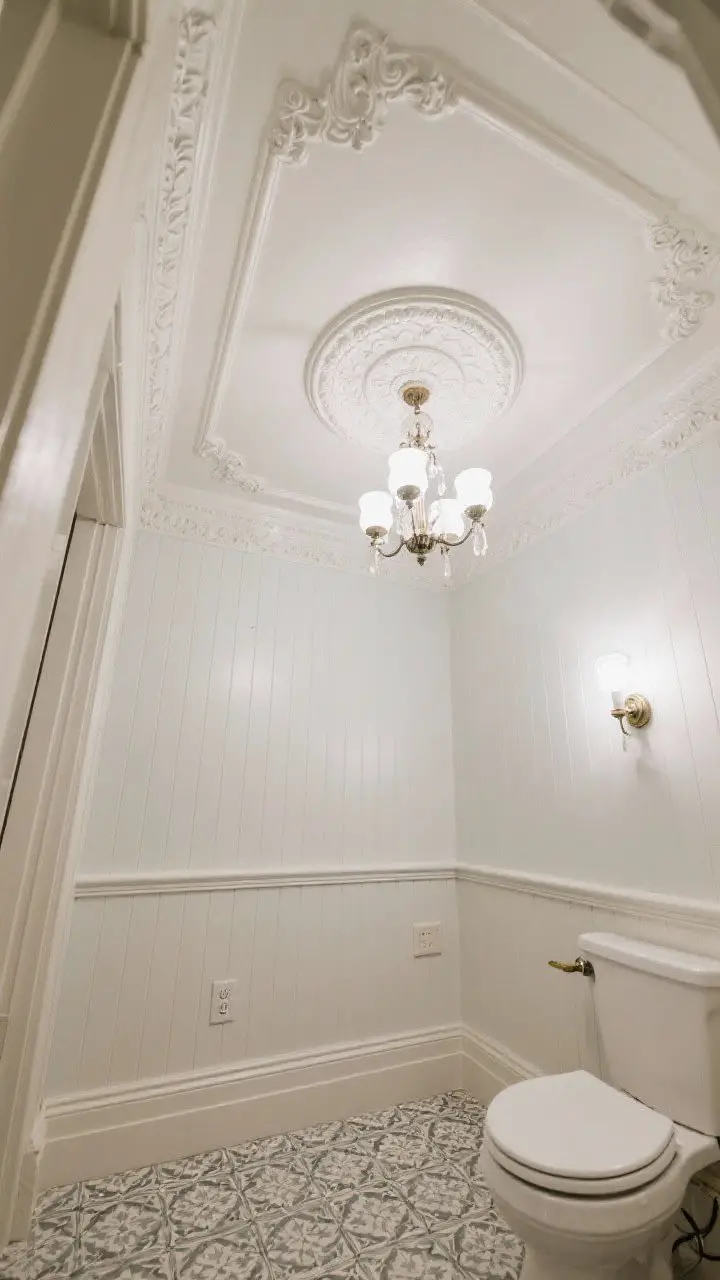
The ceiling is the sleeper hit of the Victorian bathroom. Add substantial crown molding, a ceiling medallion, and a petite chandelier (rated for damp locations, please) to pull everything together.
Architectural Add-Ons
- Use picture rail molding to display art without drilling tile or plaster.
- Install baseboards with a tall profile—it grounds patterned tile floors.
- Consider a painted or beadboard ceiling for instant charm.
Safety + Scale
- Choose fixtures with a damp or wet rating and install on a GFCI circuit.
- Keep chandelier diameter proportional: roughly room width + length (in feet) = inches.
Conclusion
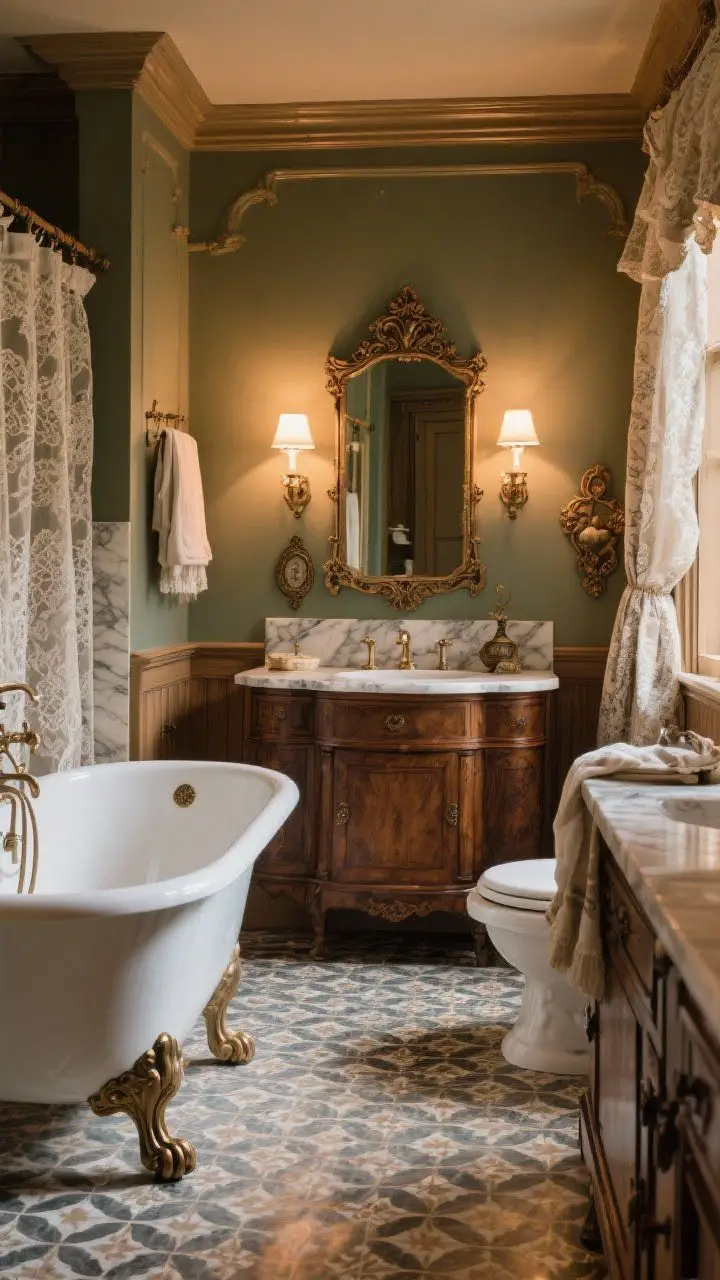
Victorian bathrooms aren’t about being fussy—they’re about layering texture, craftsmanship, and romance to create a space that feels special. Start with one hero piece (clawfoot tub, patterned floor, or a furniture-style vanity), then build from there with color, millwork, and lighting. The result? A bathroom that looks like it’s been loved for a century—but works perfectly for right now.
Go ahead—draw that bath, light the sconces, and revel in your daily dose of drama. You earned it.