15 Eclectic Dining Room Ideas That Guests Won’t Stop Talking About
Ready to give your dining room a little personality transplant? Eclectic style is the ultimate mix-and-match magic—pulling together pieces you love from different eras, colors, and textures into a space that feels uniquely you. The trick is making it look intentional, not chaotic (we’re going for curated-cool, not thrift-store detonation).
Below are 15 eclectic dining room ideas that’ll help you layer color, contrast, and character like a pro. Bookmark them, steal them, tweak them—your call.
1. Start With a Statement Table
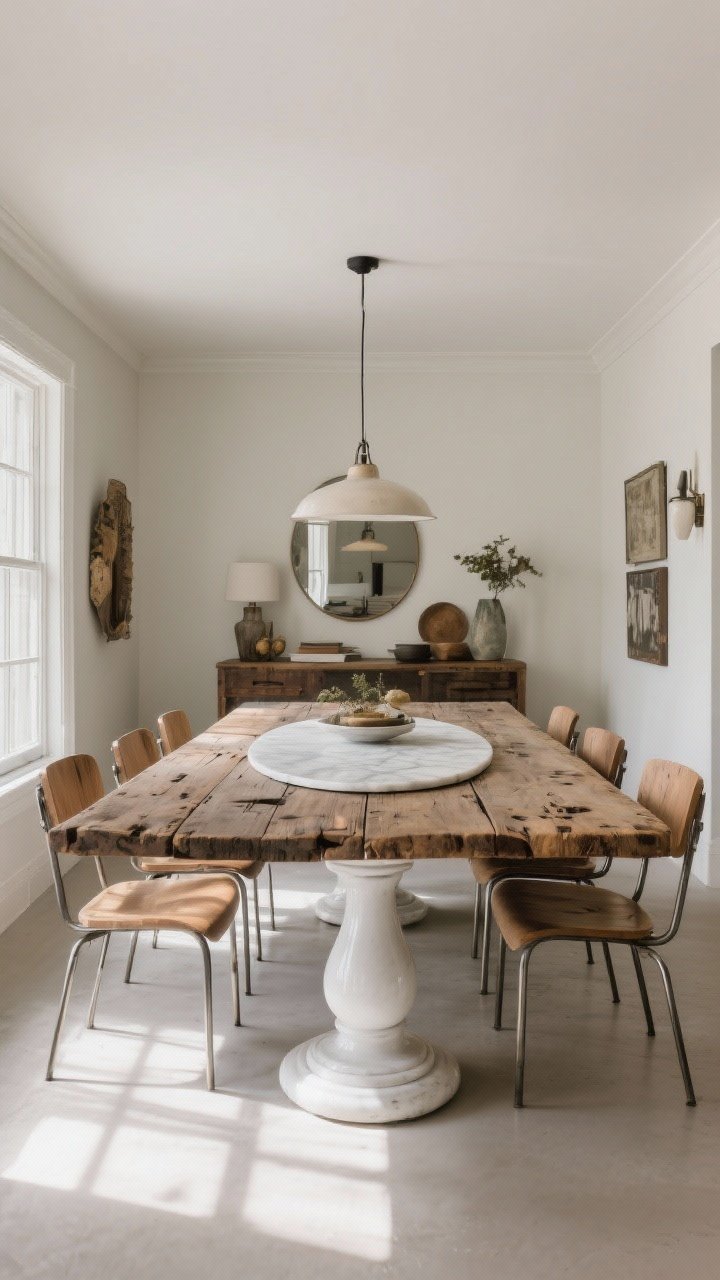
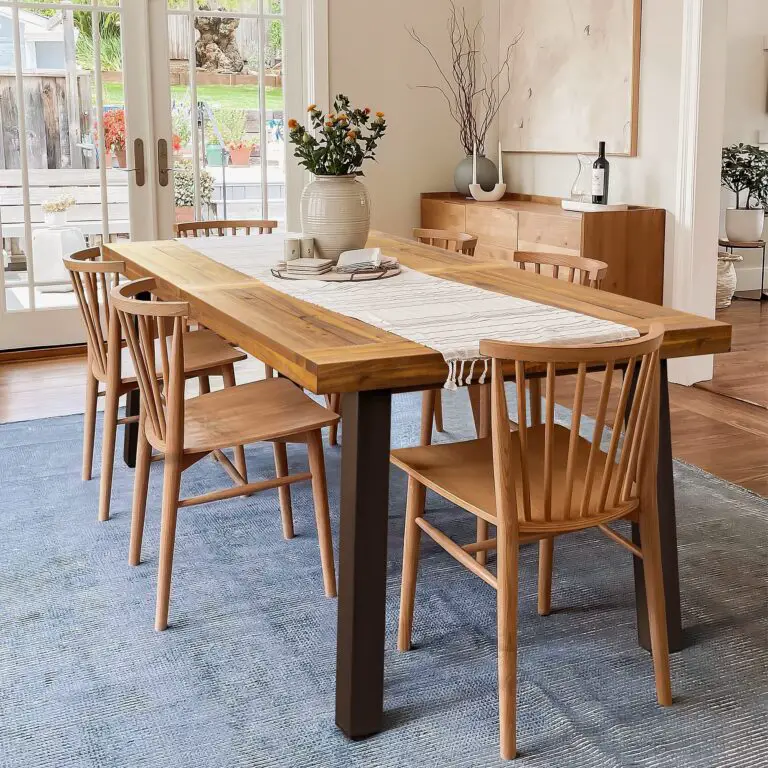
Think of your dining table as your anchor. It sets the tone for everything else, so go bold—a chunky farmhouse table, a glossy pedestal base, or a vintage marble top. The table doesn’t have to match anything else. In fact, it shouldn’t.
How to Choose
- Shape matters: Round softens angular rooms; rectangular suits long spaces.
- Material mix: Wood table + metal chairs = instant eclectic balance.
- Patina power: Scratches and dings on vintage wood add character and calm.
Pro tip: If you’ve got a simple table, layer on personality with chairs and lighting. You can always dress up a basic base.
2. Mix and Match Chairs Like a Fashion Stylist
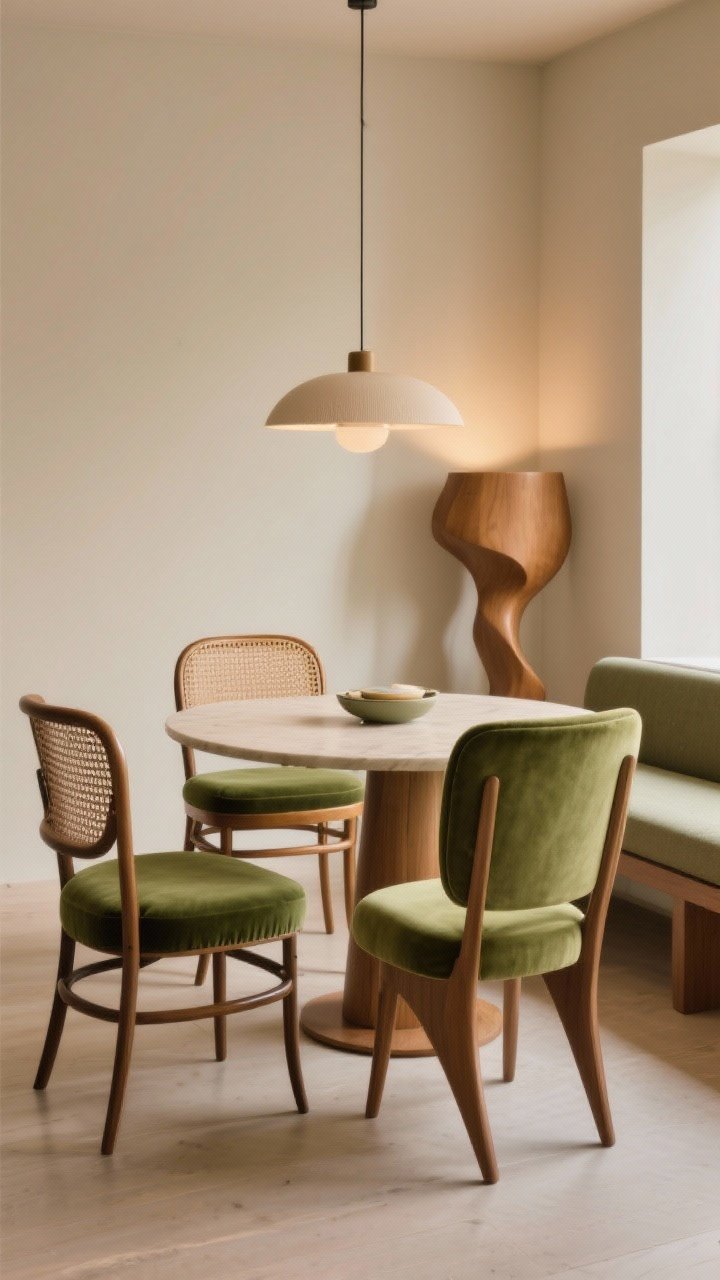
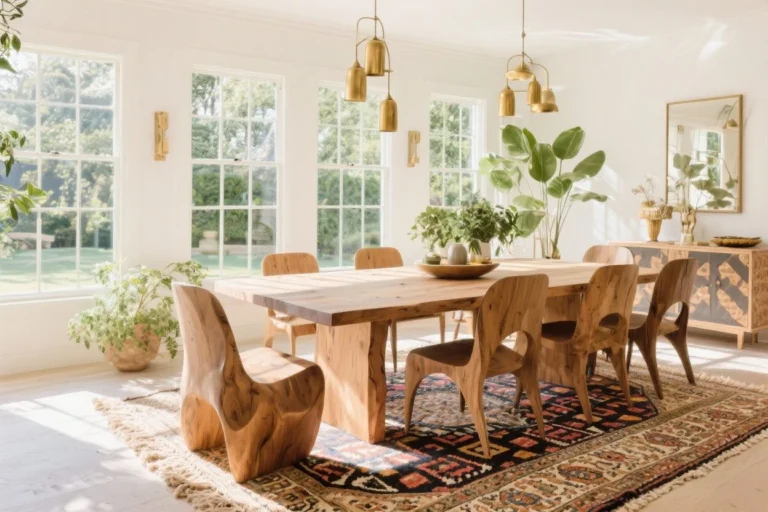
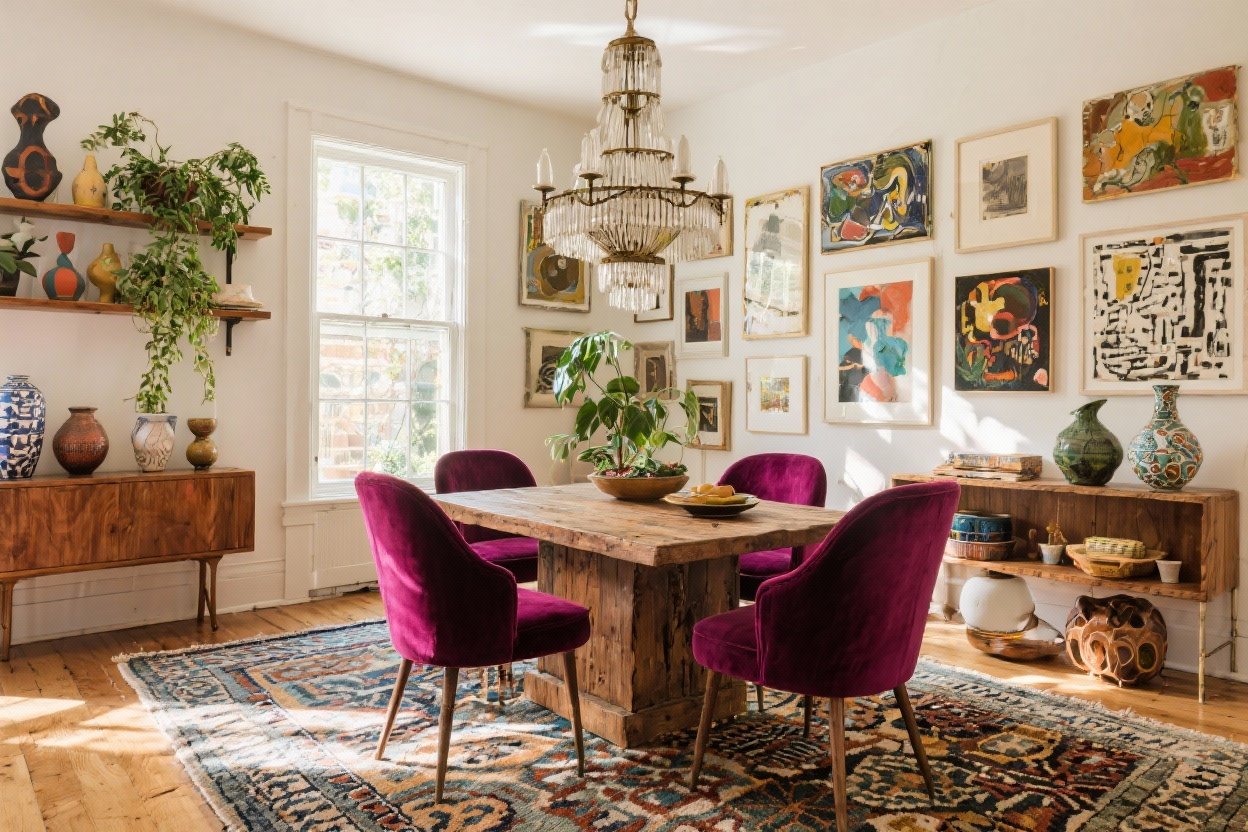
This is where eclectic truly shines. Combine different chair styles around the same table for a collected vibe—think caned bentwoods, velvet upholstered seats, and a sculptural end chair. Keep something cohesive to avoid chaos.
Make It Cohesive
- One common thread: Keep color, height, or material consistent.
- Try the “2-2-2” method: Two of three chair types for rhythm without matchy-matchy vibes.
- Add a bench: A bench on one side adds variety (and seats more people).
FYI: Mismatched chairs don’t have to cost much—mix budget finds with one or two designer icons for instant cred.
3. Layer a Rug That Breaks the Rules
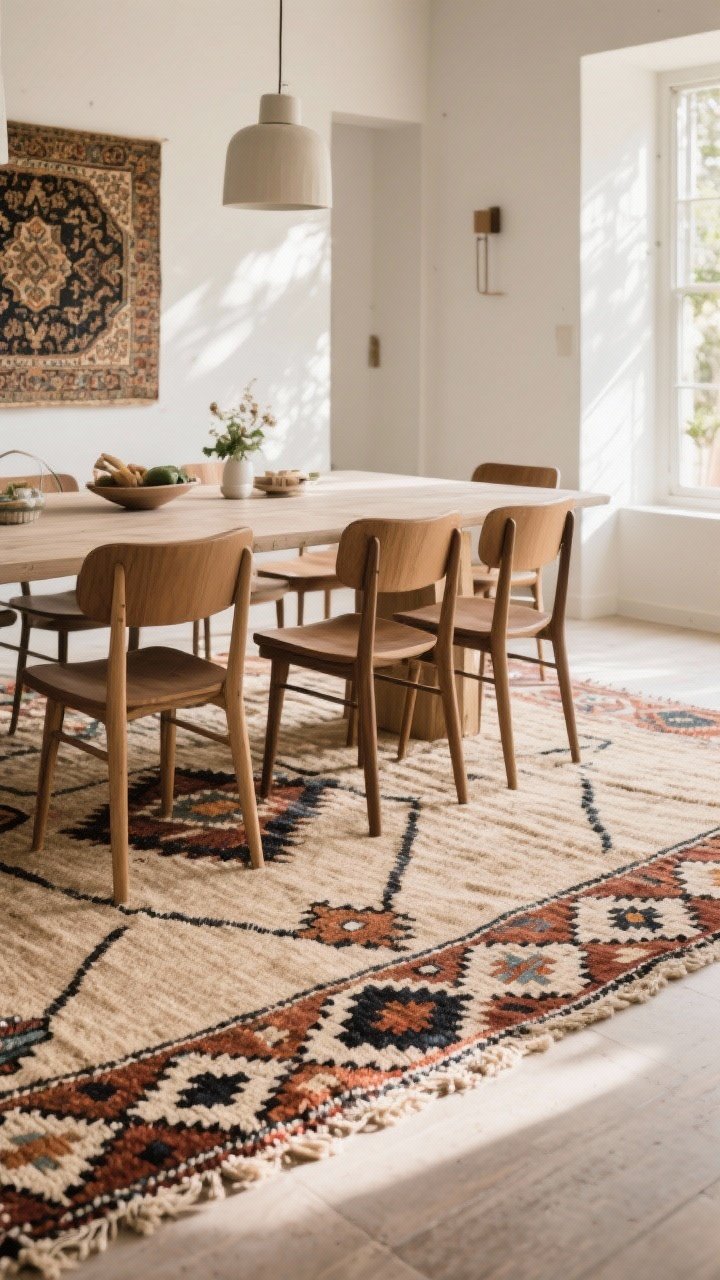
Rugs ground the room and telegraph your personality. A kilim with geometric patterns, a vintage Persian, or a washed-out Moroccan style are all perfect for layering texture and history. Don’t be afraid of color or pattern here.
Rug Rules (That You Can Bend)
- Size up: Chairs should sit fully on the rug—even when pulled out.
- Pattern play: If your chairs are busy, keep the rug simpler (or vice versa).
- Go flatweave: Easier to clean and chairs glide smoothly.
Bonus move: Layer a smaller vintage rug over a big jute base for texture without losing scale.
4. Create a Gallery Wall That Feels Collected
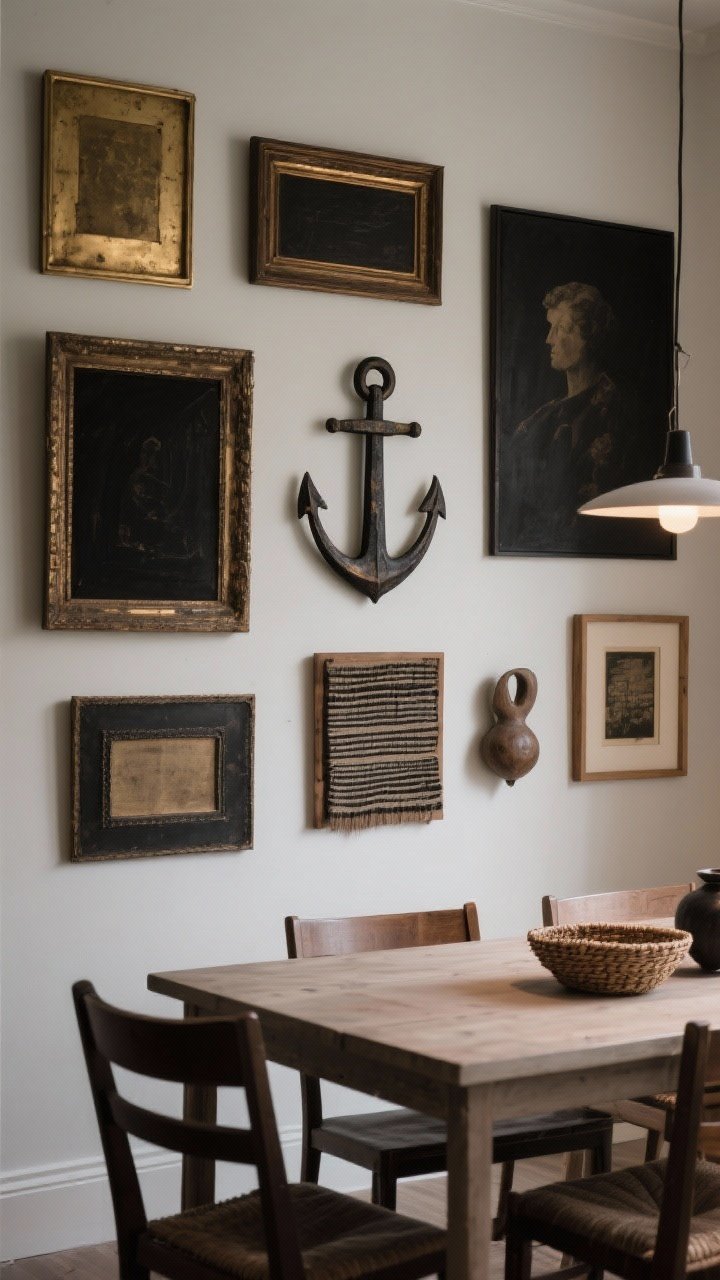
The right art wall can make a dining room feel gallery-chic. Mix paintings, sketches, textiles, and even sculptural pieces. The key? Don’t hang everything at the same height—let the cluster breathe.
Curate Like a Pro
- Anchor piece: Start with one larger artwork and build around it.
- Frame variety: Mix metals, wood, and black frames for dimension.
- Add oddballs: A woven basket, plate, or vintage mirror breaks up the rectangles.
IMO, dining rooms are perfect spots for moody art. It makes dinner feel like an event.
5. Layer Lighting With Drama and Warmth
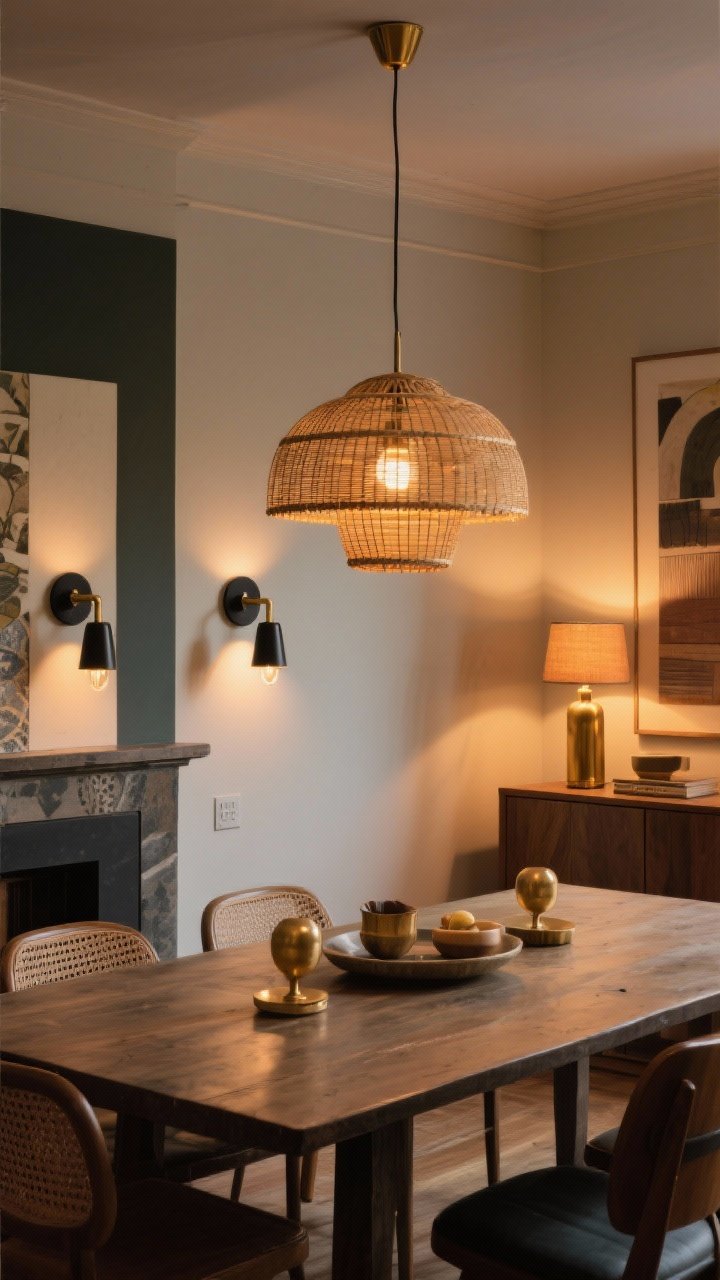
Good lighting is half the vibe. Start with a sculptural pendant or chandelier, then add wall sconces and a lamp on a sideboard. Ambient light should be warm, dimmable, and layered.
Lighting Ideas
- Statement pendant: Rattan dome, mid-century globe cluster, or an artful chandelier.
- Wall sconces: Plug-in sconce pairs add symmetry and glow.
- Dimmer switch: Non-negotiable. Bright for brunch, moody for dinner.
Mix metal finishes for a collected look—brass pendant + black sconces = chef’s kiss.
6. Add a Bold Wallpaper or Color-Drenched Wall
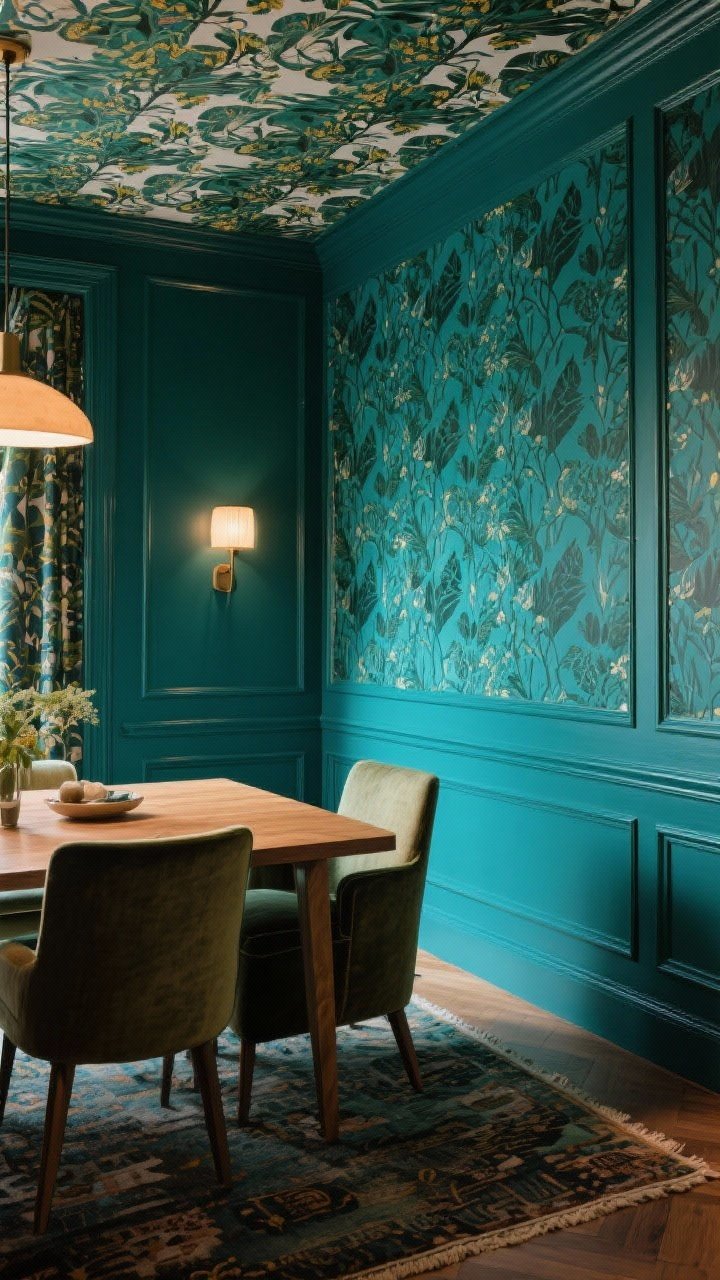
Wallpaper turns your dining room into an experience. Try botanical, toile, geometric, or mural-style designs. If that’s too much, paint the walls—and maybe the trim—one saturated hue for a jewel-box vibe.
Color Play
- Try tone-on-tone: Walls and trim in the same color feel rich and intentional.
- Ceiling treatment: Paint or wallpaper the ceiling for an unexpected twist.
- Pair patterns wisely: If the wallpaper is busy, keep rugs and upholstery more solid.
Don’t forget: Peel-and-stick wallpaper is your commitment-phobe BFF.
7. Style a Sideboard With Personality
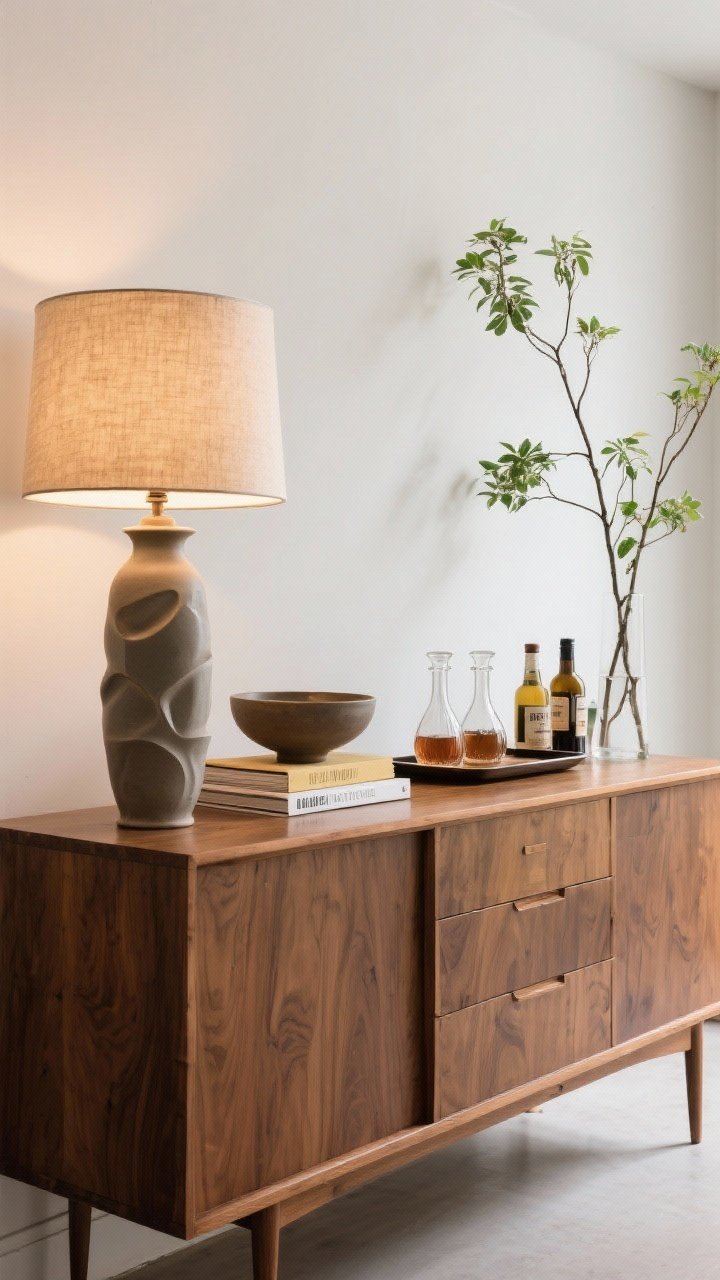
Sideboards are the unsung heroes—storage + styling surface in one. Vintage credenzas, apothecary-style cabinets, or mid-century pieces give you form and function. Decorate the top like a mini gallery.
What to Style On Top
- Layer heights: A tall lamp, stacked books, and a sculptural bowl.
- Bar setup: Trays, decanters, and a few bottles make it functional and fancy.
- Greenery: Branches in a ceramic vase = instant life and height.
Inside? Hide linens, candles, serving ware, and the chaotic collection of napkin rings you definitely don’t need but also won’t toss.
8. Mix Metals, Woods, and Finishes
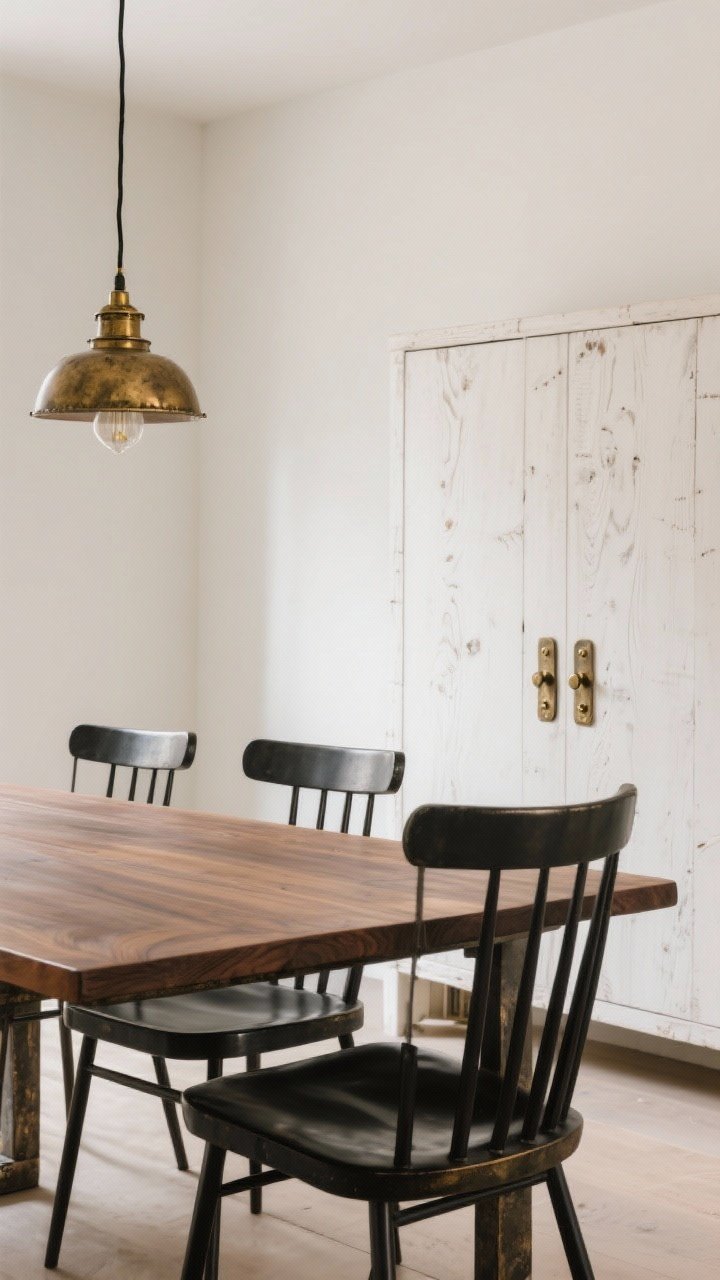
Eclectic rooms thrive on variety. Pair blackened steel with aged brass, walnut with whitewashed oak. The mix makes everything feel layered—not like you bought a matching set (because you didn’t).
How to Mix Without Mess
- Limit to three metals: One dominant, one secondary, one accent.
- Repeat each finish: If you introduce chrome, show it up twice.
- Embrace patina: Slightly imperfect finishes keep the vibe relaxed.
FYI: You don’t need to match your light fixture to your cabinet hardware. That’s a myth.
9. Bring in Unexpected Seating
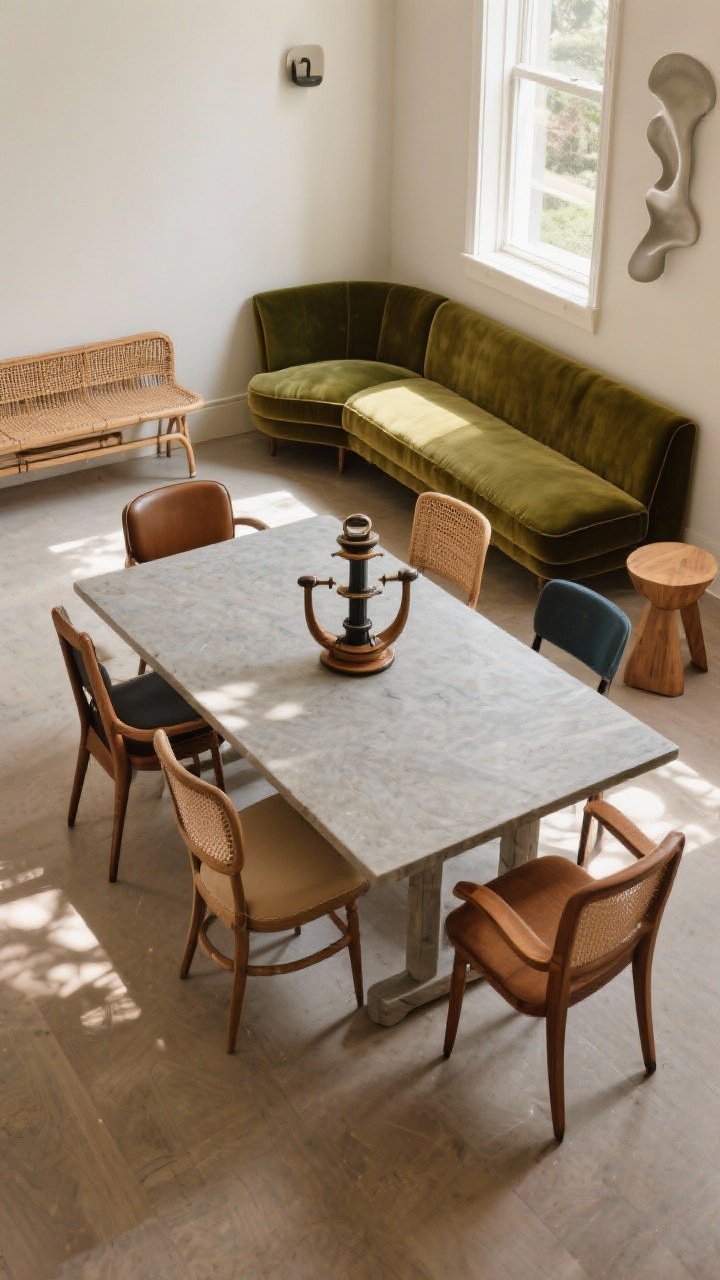
Chairs are great, but a little surprise never hurts. Add a velvet settee, a rattan bench, or a sculptural stool. It’s functional and makes your dining room feel collected over time.
Smart Seating Combos
- Settee + chairs: Cozy on one side, formal on the other.
- Two captains chairs: Upholstered head chairs add gravitas.
- Stackable spares: Keep sleek spares in a corner for extra guests.
If you go upholstered, consider performance fabrics. Red wine is not your friend.
10. Layer Textiles for a Richer Story
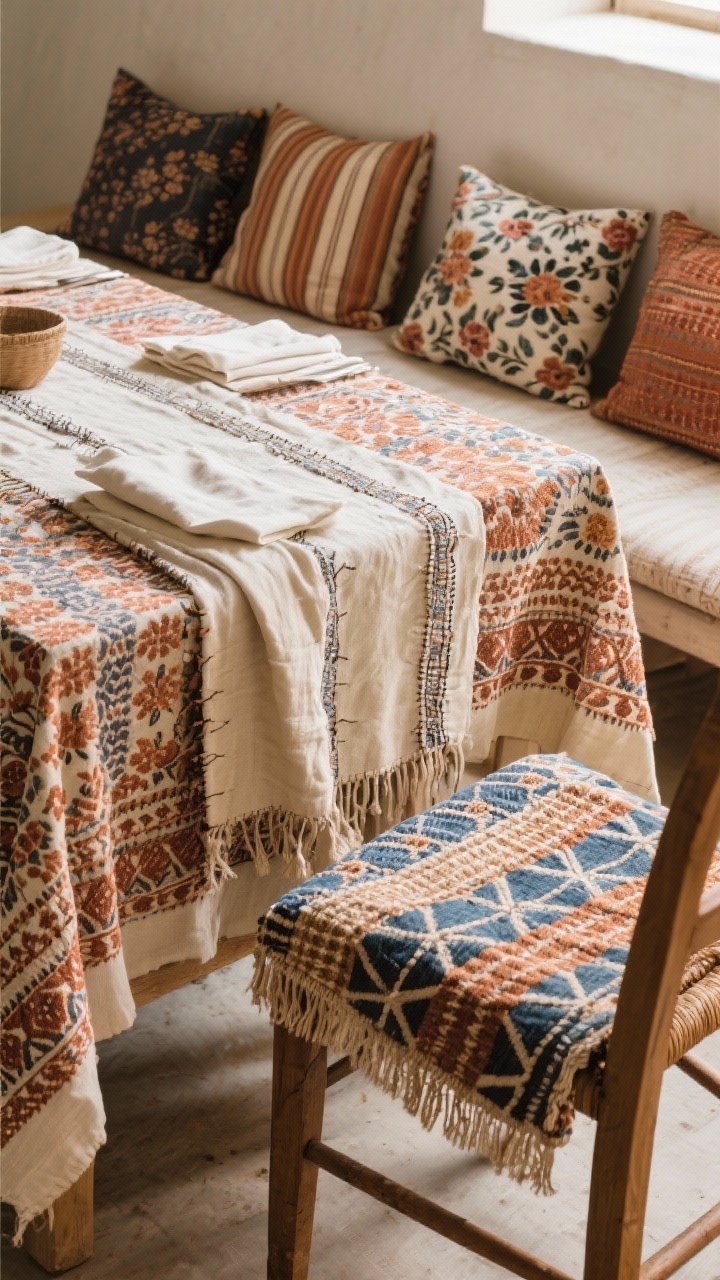
Textiles are your secret sauce. Throw a patterned tablecloth over the table, drape a kantha over a bench, add seat cushions in a contrasting fabric. It’s instant warmth and personality.
Fabric Finds That Work
- Mixed prints: Stripe + floral + geometric can work if colors relate.
- Natural fibers: Linen runners, cotton napkins, wool throws for texture.
- Chair covers: Slipcovers on just the head chairs = eclectic elegance.
Keep a stack of napkins with mismatched patterns. It’s charming and forgiving when guests spill—because they will.
11. Show Off Collected Ceramics and Glassware
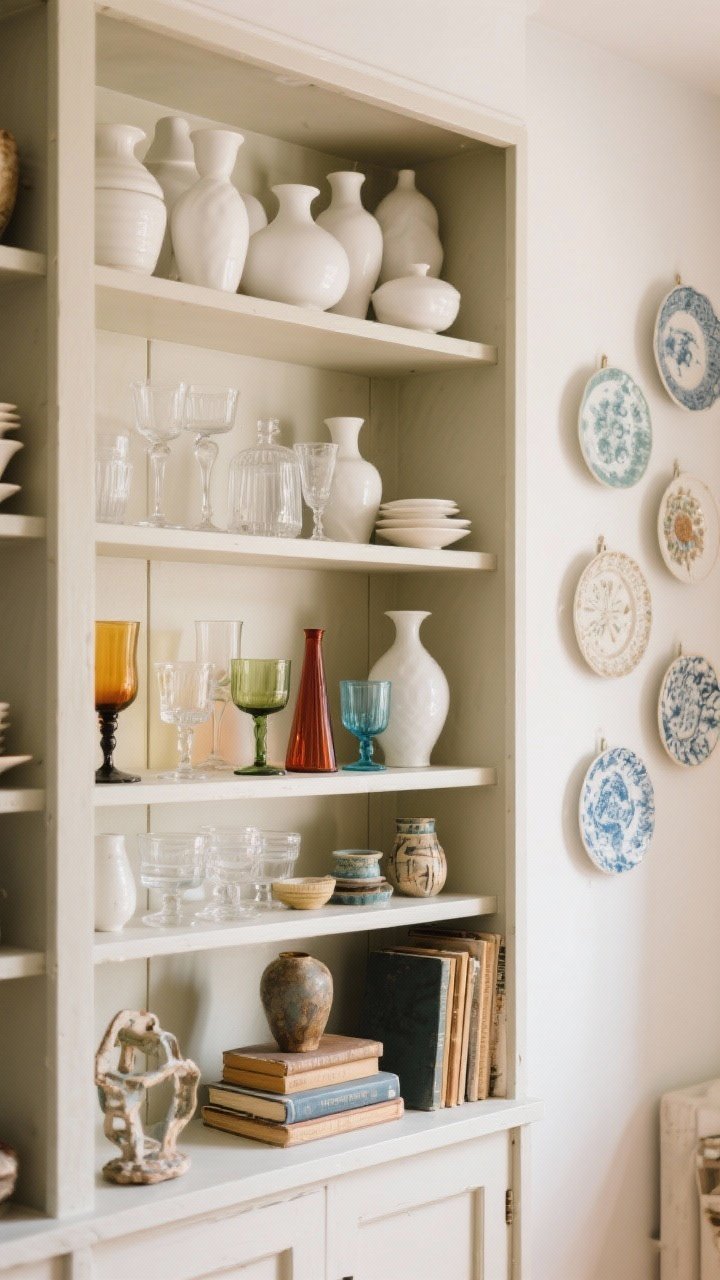
Eclectic style celebrates the things you love, not just the things that match. Display ceramics, glassware, and interesting serveware in an open hutch or on a wall shelf. Function doubles as art.
Display Like a Stylist
- Group by color or material: All white ceramics together? Chic.
- Vary the heights: Risers or stacked books create levels.
- Mix old and new: Flea market finds next to sleek modern vases.
Pro move: Hang a row of pretty plates on the wall. Grandma chic, but make it cool.
12. Add Plants, Branches, and Natural Elements
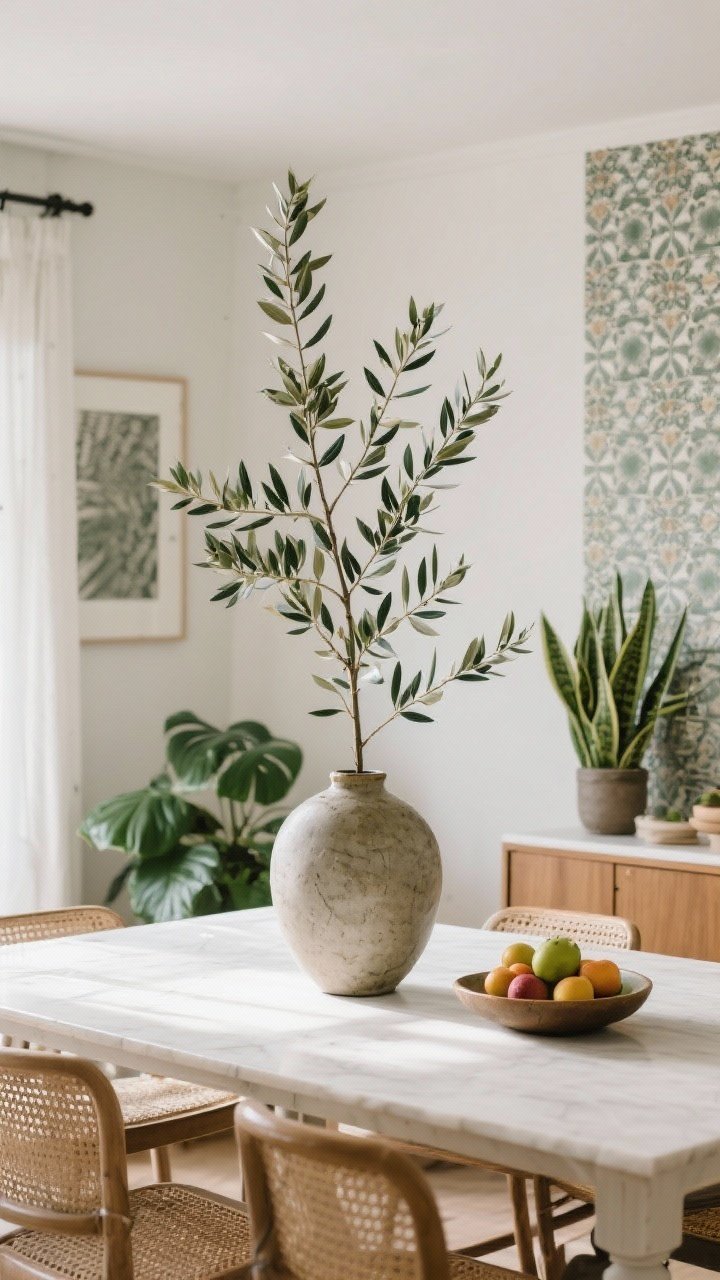
Nature is the ultimate stylist. A single tall branch in a giant vase can change the entire room. Add potted plants, dried grasses, or a bowl of seasonal fruit to bring life and movement.
Greenery That Works Hard
- Low maintenance: ZZ plant, snake plant, or pothos.
- Statement branch: Eucalyptus, olive, or foraged branches in a chunky pot.
- Tabletop restraint: Keep centerpieces low during meals for sightlines.
Bonus: Plants soften hard edges and help balance busy patterns.
13. Play With Scale and Proportion
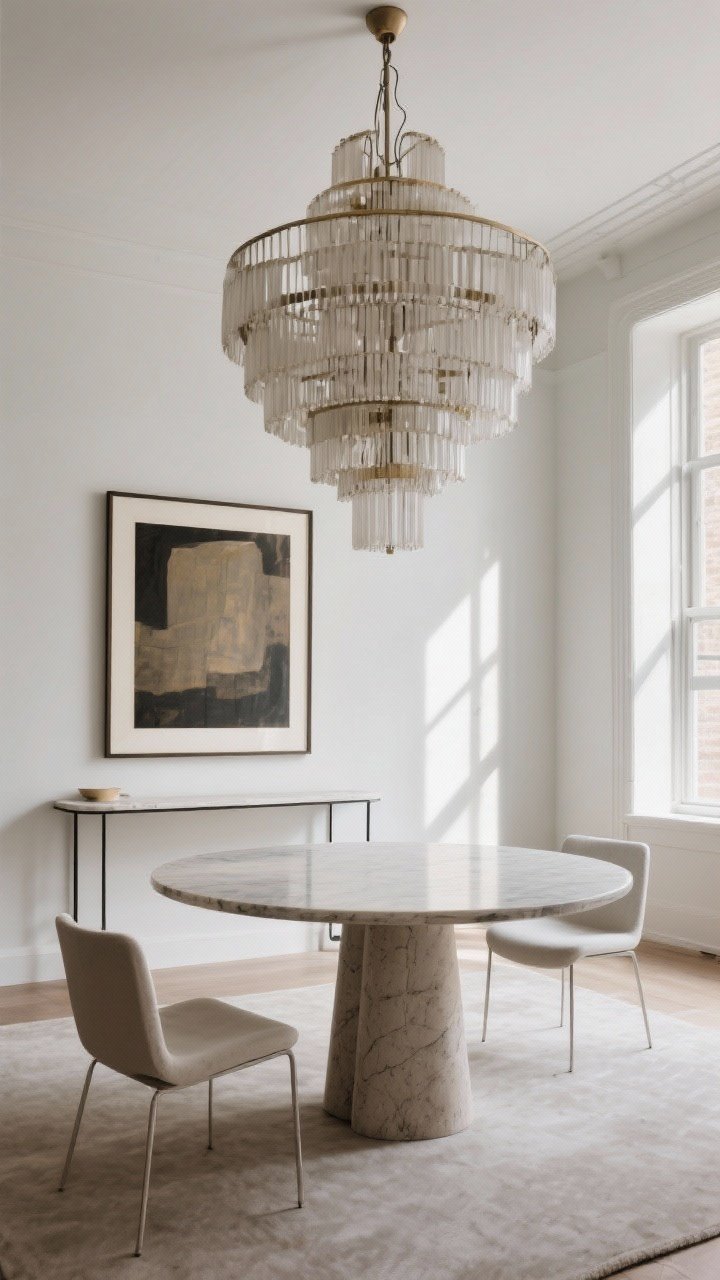
The most eclectic rooms nail scale. Oversized art over a delicate console, a large chandelier over a small round table, or tiny pendant lights over a hefty farmhouse table—the contrast creates visual tension (in a good way).
Scale Swaps to Try
- Go bigger on lighting: When in doubt, size up.
- Large art, simple frame: Keeps statement pieces clean and modern.
- Chunky legs + slim chairs: Balance heavy with airy.
Don’t worry about perfection. You’re building a vibe, not a diagram.
14. Add a Touch of Shine (But Not Too Much)
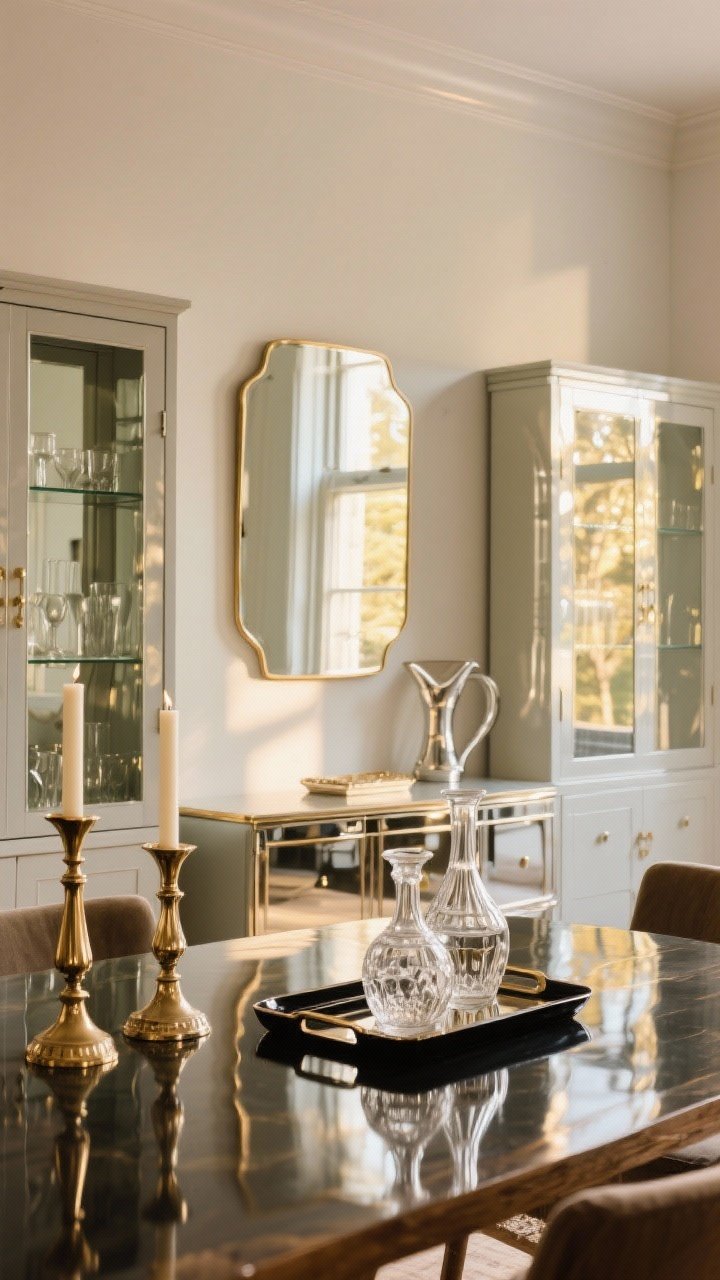
A little sparkle goes a long way. A mirror, glass-front cabinets, metallic candlesticks, or a lacquered tray can bounce light and elevate the mood. Shiny accents keep the eclectic mix from feeling heavy.
Where to Add Shine
- Mirrors: Opposite a window to double your daylight.
- Candlelight: Taper candles in mismatched holders = instant atmosphere.
- Glass moments: Vintage decanters or colored glass bottles on a tray.
Just don’t turn it into a disco ball situation. One or two glossy elements are enough.
15. Create a Ritual-Focused Tablescape
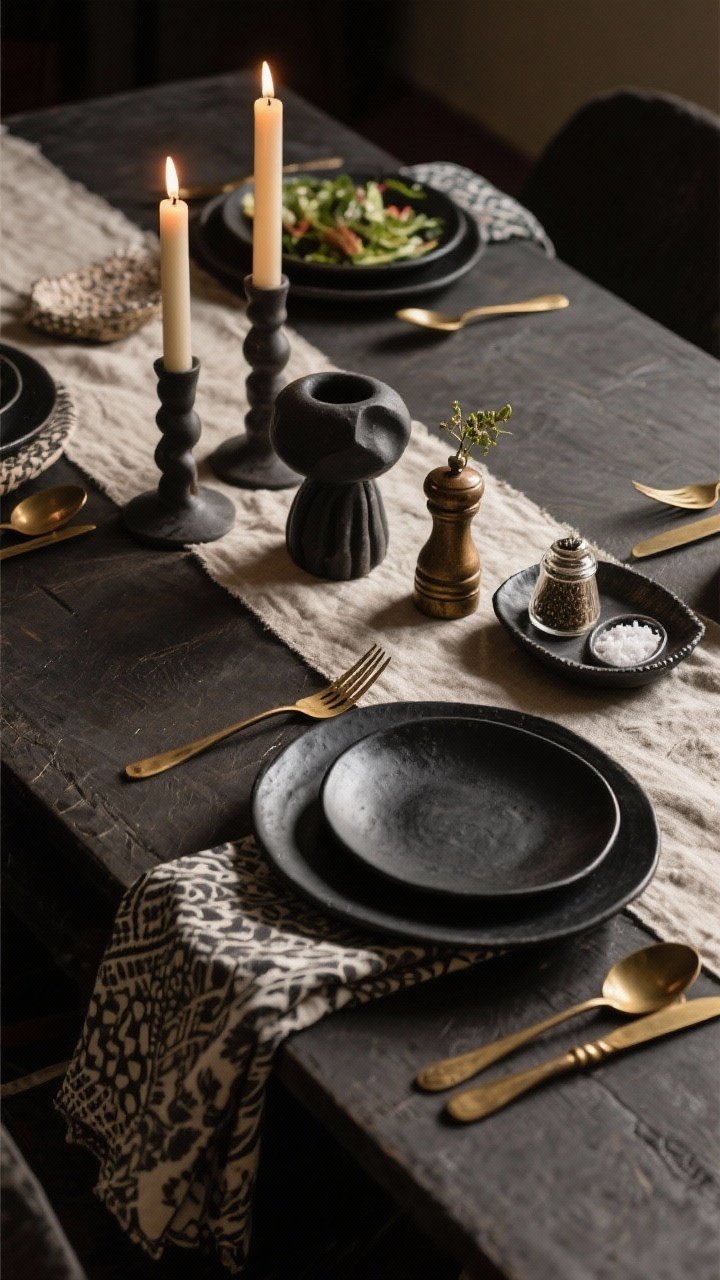
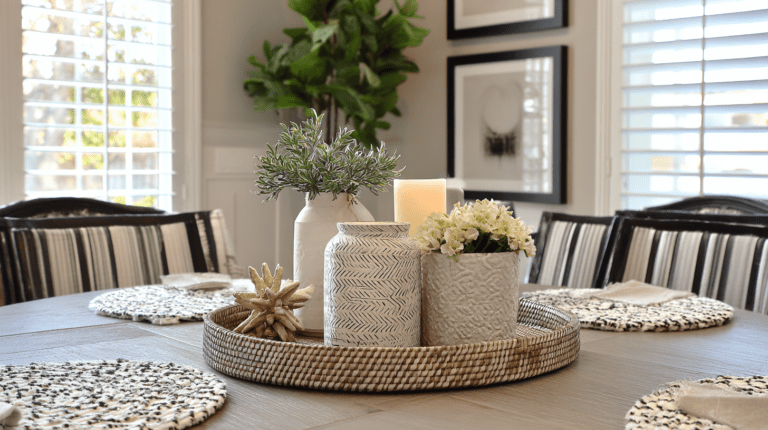
Eclectic isn’t just about looks—it’s about how the space feels when you use it. Build a tablescape that invites lingering: layered plates, textured linens, a sculptural centerpiece, and candles you actually light.
Set the Mood
- Layered place settings: Charger + dinner plate + salad plate for dimension.
- Mixed metals: Brass flatware with black stoneware is a vibe.
- Scent strategy: Use unscented candles at dinner so the food takes the spotlight.
Keep a tray ready with salt cellars, pepper mills, and a tiny vase. It’s ritual, but make it easy.
Quick Combos to Copy
- Modern black table + vintage bentwood chairs + Persian rug + brass chandelier
- Whitewashed farmhouse table + velvet captains chairs + rattan pendants + gallery wall
- Marble tulip table + mixed acrylic and wood chairs + graphic wallpaper + linen drapes
Budget-Friendly Eclectic Hacks
- Thrift first: Chairs, art, and vases are gold mines secondhand.
- Paint everything: Mismatched frames, dated sideboards, even chair legs.
- Swap shades: Change lamp shades or pendant globes for a custom feel.
Eclectic dining rooms are about personality, not perfection. Layer slowly, edit ruthlessly, and keep what makes you smile. If it looks like it was collected over time, you nailed it.