12 Dining Room Shelf Decor Ideas That Guests Will Obsess Over
You know that empty shelf in your dining room that’s basically holding dust and a random candle? Let’s fix that. Shelves in the dining room can be more than storage—think personality, texture, and “wow, you live like this?” vibes.
These 12 dining room shelf decor ideas will help you style like a pro without making it look like a staged catalog (because you actually live here).
1. Curate a Statement Vignette
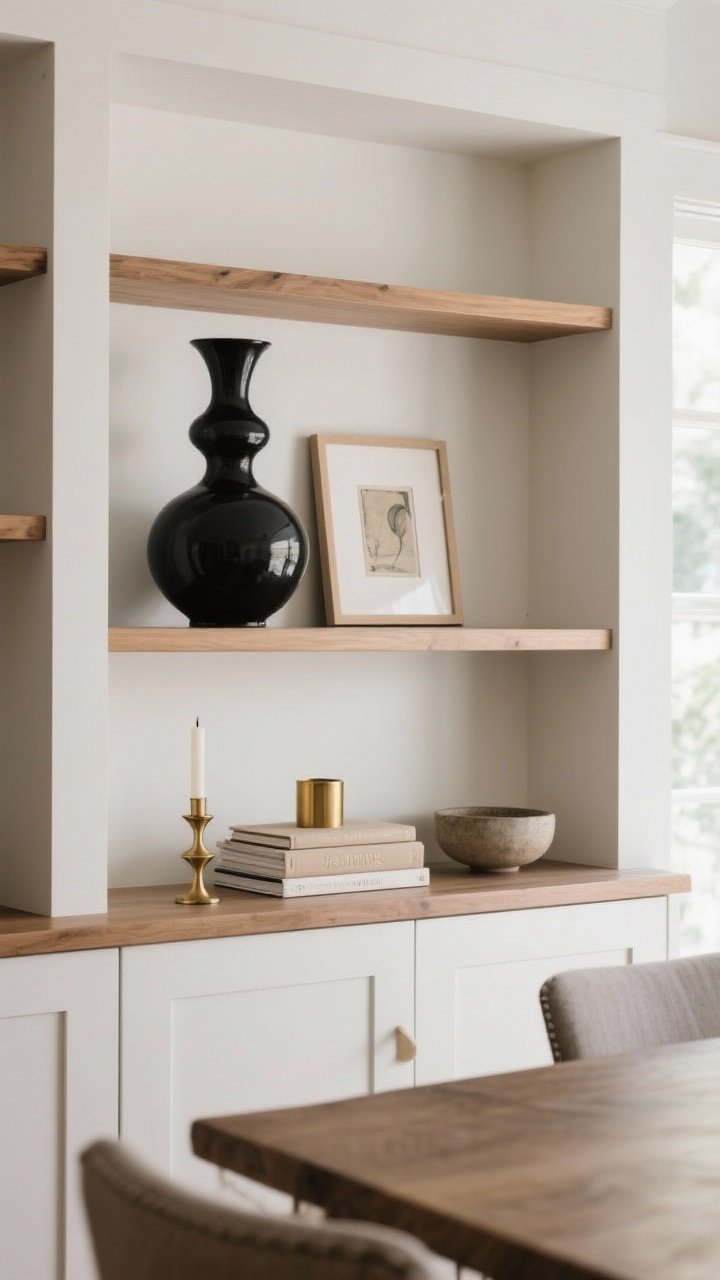
Start strong with one killer vignette per shelf. Think of it like a mini scene—balanced, intentional, and easy on the eyes. Mix heights, shapes, and materials so it doesn’t feel flat or cluttered.
How to Build It
- Anchor piece: A tall vase, sculptural object, or framed art.
- Support players: A stack of books, a small bowl, or a candle.
- Odd numbers: Groups of three or five look naturally balanced.
Pro move: repeat one element—like black accents or brass finishes—so each shelf feels connected without being matchy-matchy.
2. Layer Art in the Back (No Nails Required)
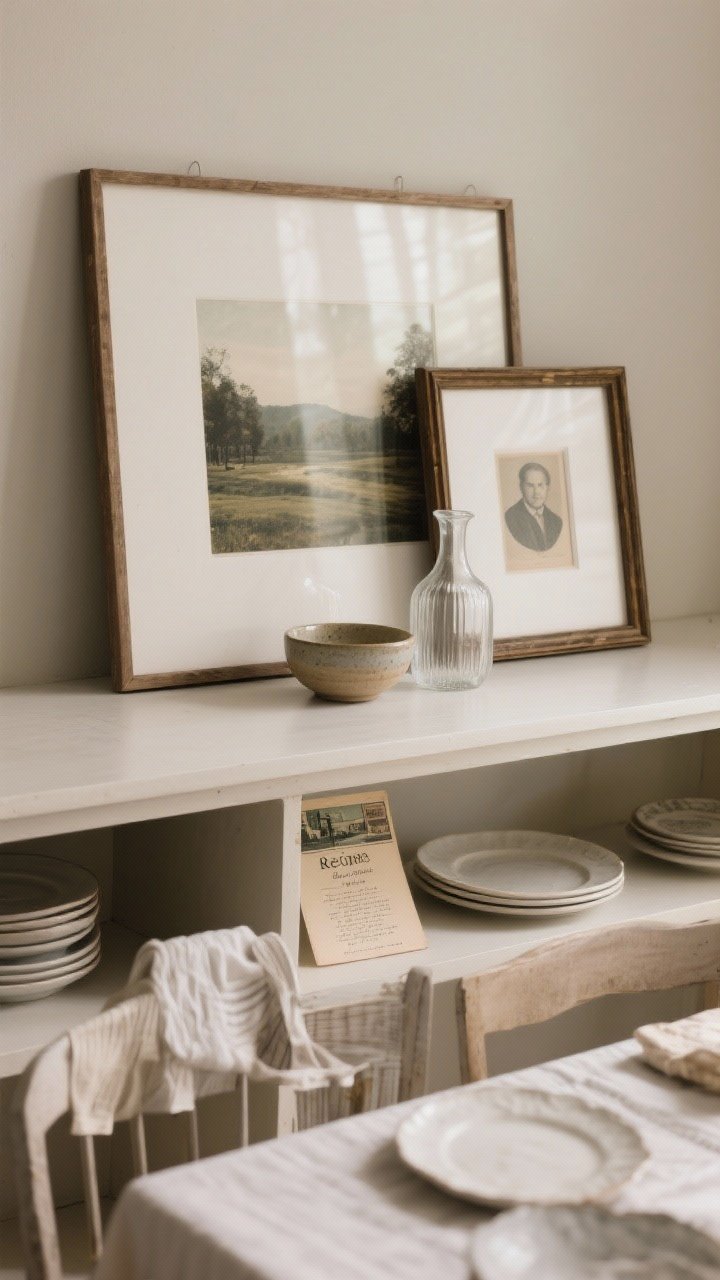
You don’t need a gallery wall to make a statement. Lean framed prints or small canvases against the back of the shelf to create depth and give everything that collected-over-time look.
Quick Tips
- Mix sizes: One medium print behind a smaller object is perfect.
- Vary orientation: Portrait and landscape frames keep it interesting.
- Color story: Tie artwork colors to your dishes or linens for cohesion.
FYI: No need to stress about “perfect” art. Vintage postcards, recipe cards, or fabric swatches in frames totally count.
3. Style With Useful Serveware (That You Actually Use)
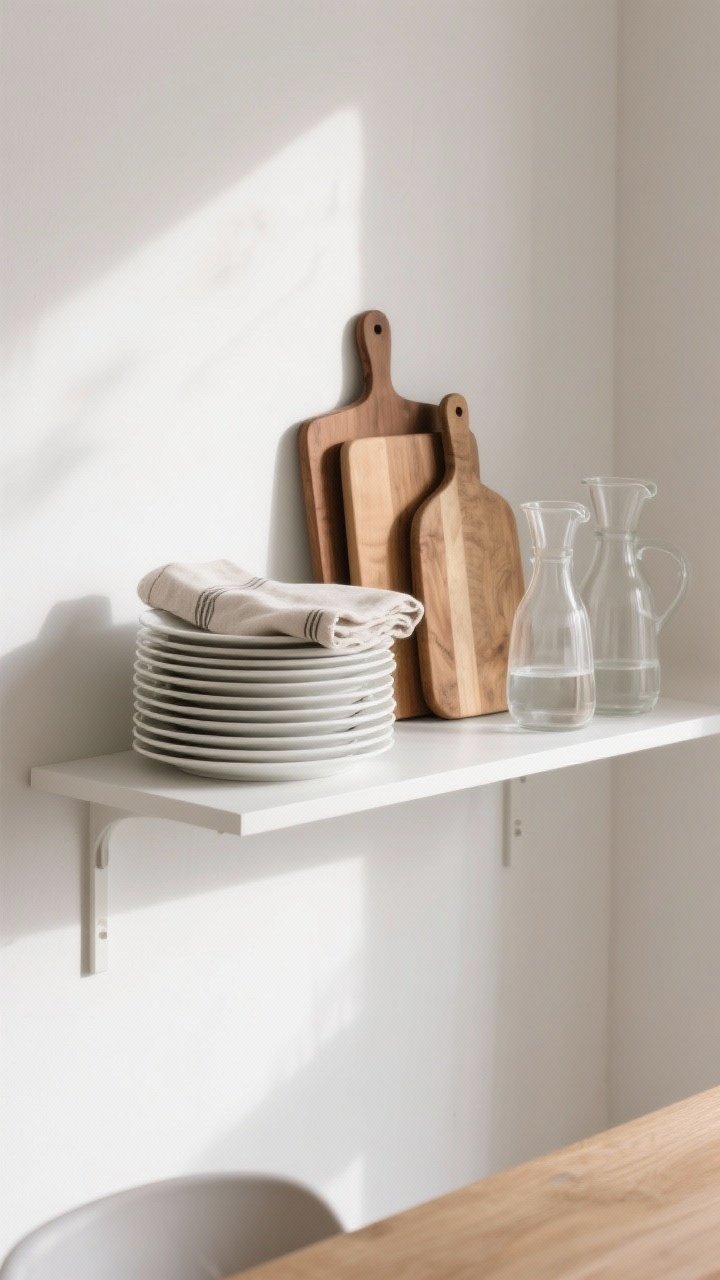
Let your shelf do double duty: pretty and practical. Display your most-used objects so they’re within reach and also look intentional—win-win.
What Works Well
- Stacks of plates with a linen napkin on top.
- Pitchers and carafes—white ceramic or clear glass always look chic.
- Wood boards layered upright for warmth and texture.
Keep it curated. If it doesn’t get used or spark joy (yes, we’re going there), it doesn’t go on the shelf.
4. Mix Materials for Texture and Warmth
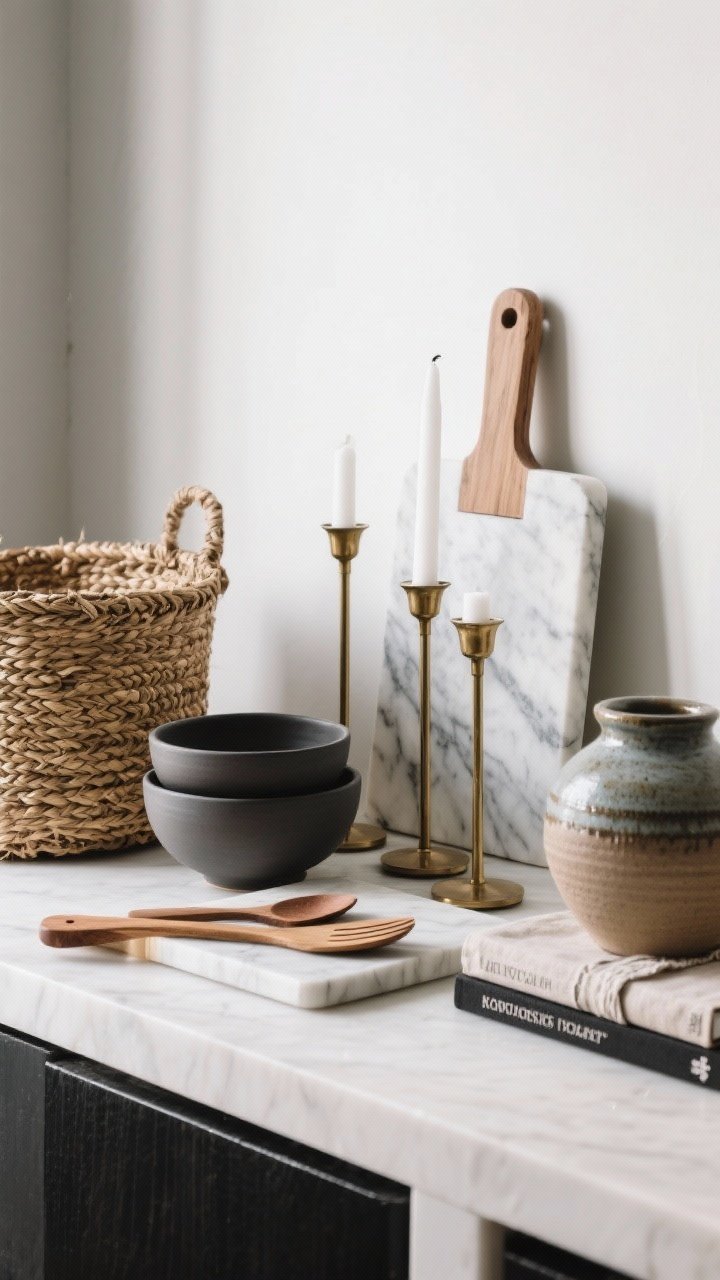
If your shelf feels flat, it’s probably missing texture. Combine smooth, rough, shiny, and matte finishes so the eye has something to dance over.
Try These Combos
- Woven baskets + ceramic bowls + brass candleholders.
- Marble cheese board beside wood utensils.
- Glazed pottery next to linen-wrapped cookbooks.
Stick to two or three tones—like wood, white, and black—to keep it calm, not chaotic.
5. Create a Color Story (Without Going Monochrome)
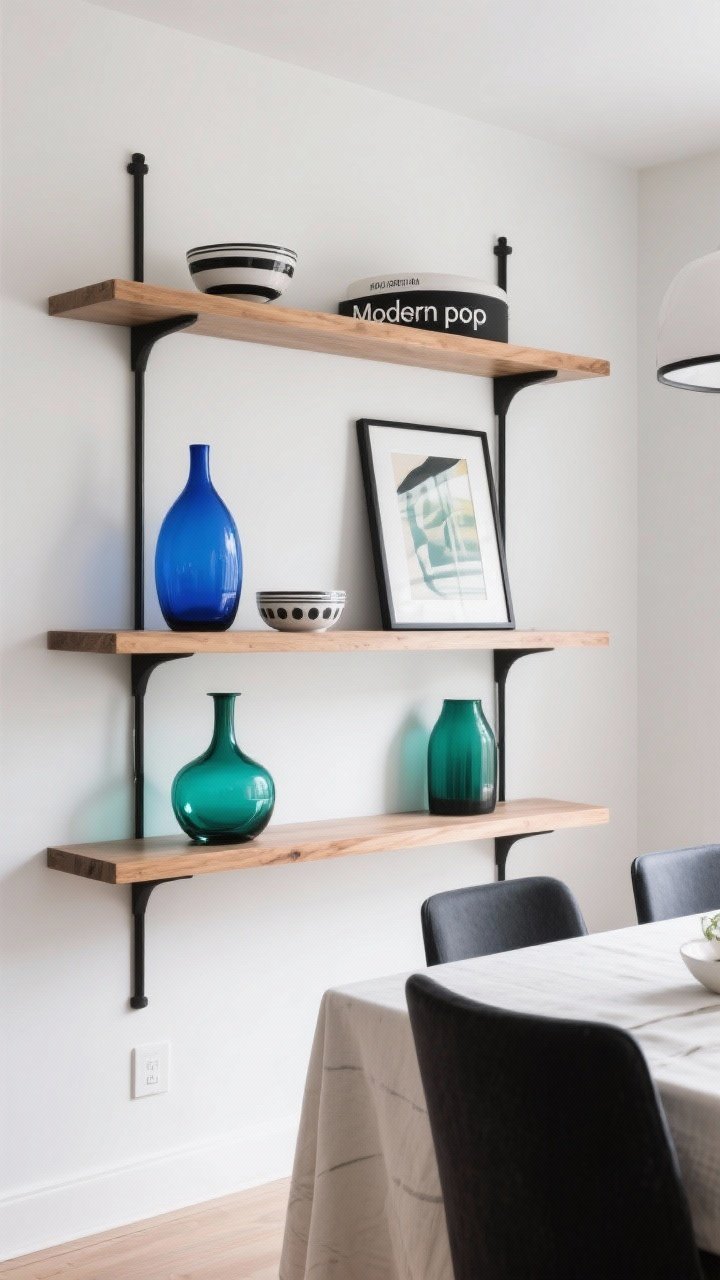
Pick a palette and commit. It doesn’t have to be boring—just cohesive. Think of it like building an outfit: one neutral base, one hero color, and a supporting accent.
Palette Ideas
- Neutral calm: White, tan, light wood, brushed nickel.
- Earthy cozy: Terracotta, olive, cream, warm wood.
- Modern pop: Black, white, natural wood, a hit of cobalt or emerald.
Repeat your accent color at least three times across the shelves so it looks intentional.
6. Add Greenery for Instant Life
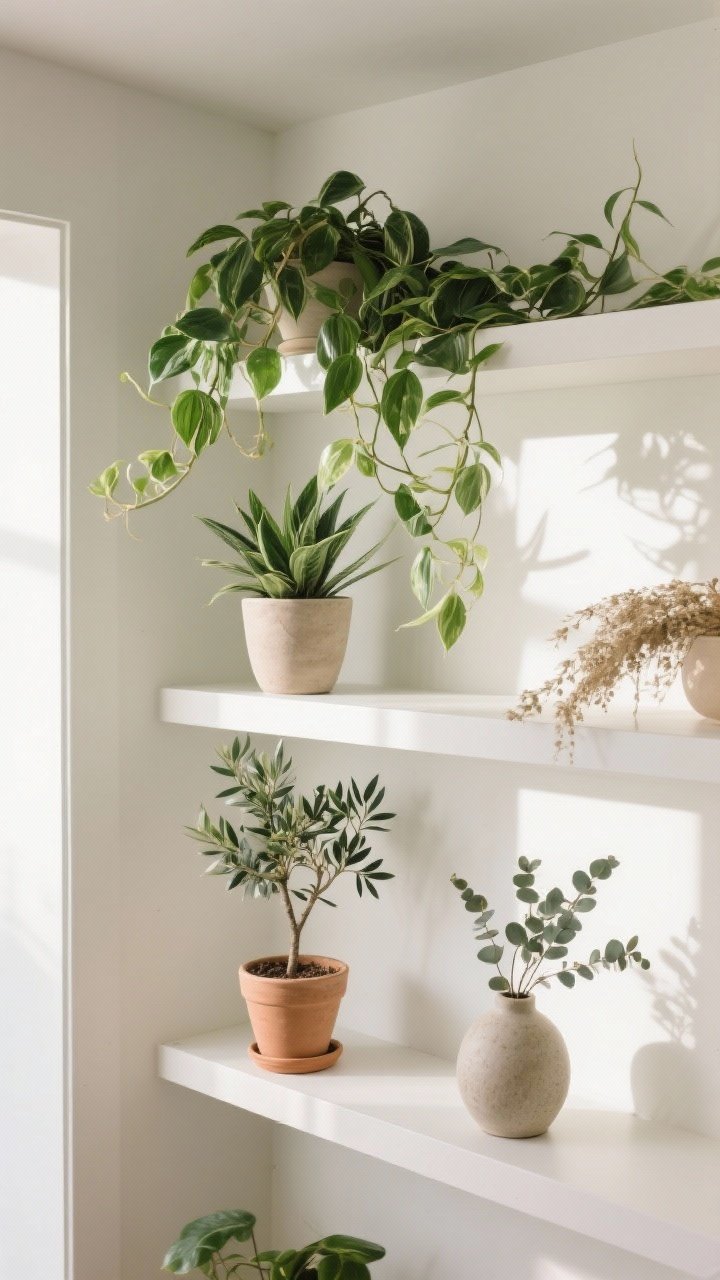
Plants are like magic for shelves—instant energy, softness, and color. Even one trailing vine can make your dining room feel styled and alive.
Plant Picks
- Trailing: Pothos, string of hearts, philodendron.
- Upright: Snake plant, ZZ plant, small olive tree in a pot.
- Low maintenance: Dried eucalyptus or faux stems (no shame).
Place plants at the ends of shelves to frame your display and keep the center airy.
7. Use Books as Your Secret Styling Tool
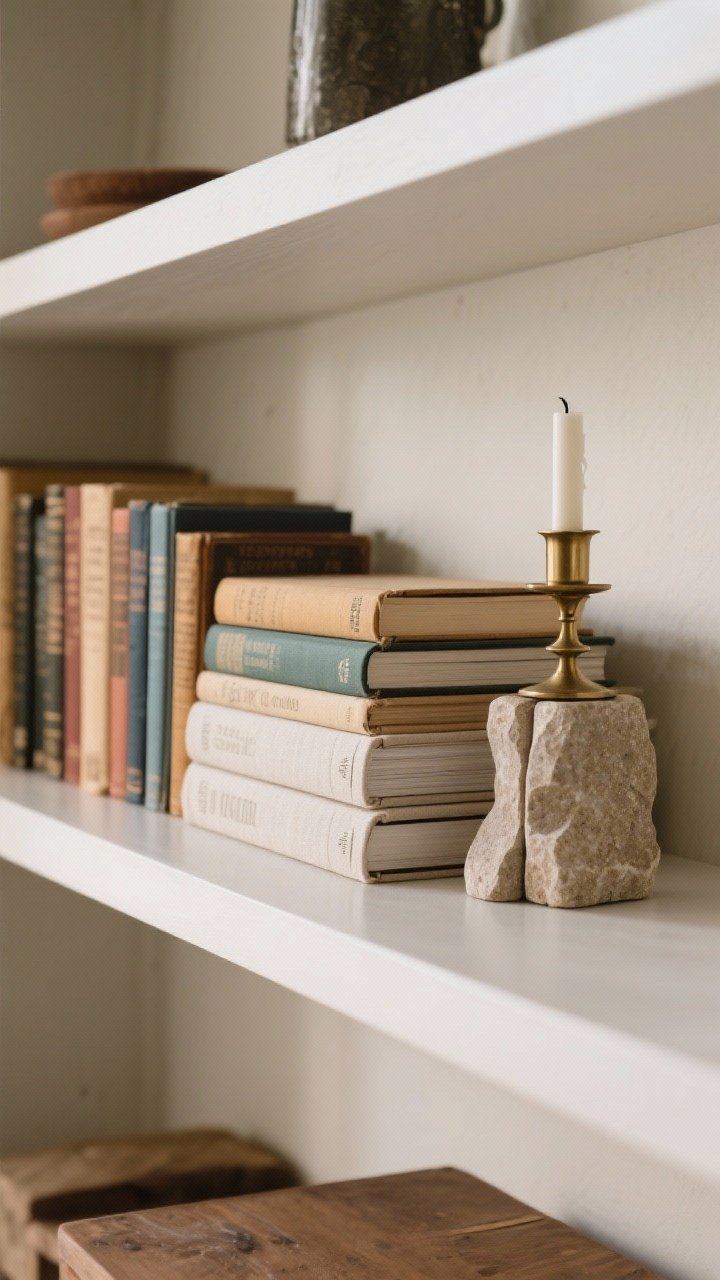
Cookbooks, design books, even pretty vintage hardcovers—books add height and personality instantly. They’re also perfect pedestals to lift smaller items.
Book Styling 101
- Stack horizontally to lift bowls or candleholders.
- Stand vertically with a pretty bookend to break up the shapes.
- Remove dust jackets for a softer, more organic look.
Hot tip: Group by spine color for a clean look or go full rainbow if you want fun and bold.
8. Embrace Negative Space (Let It Breathe)
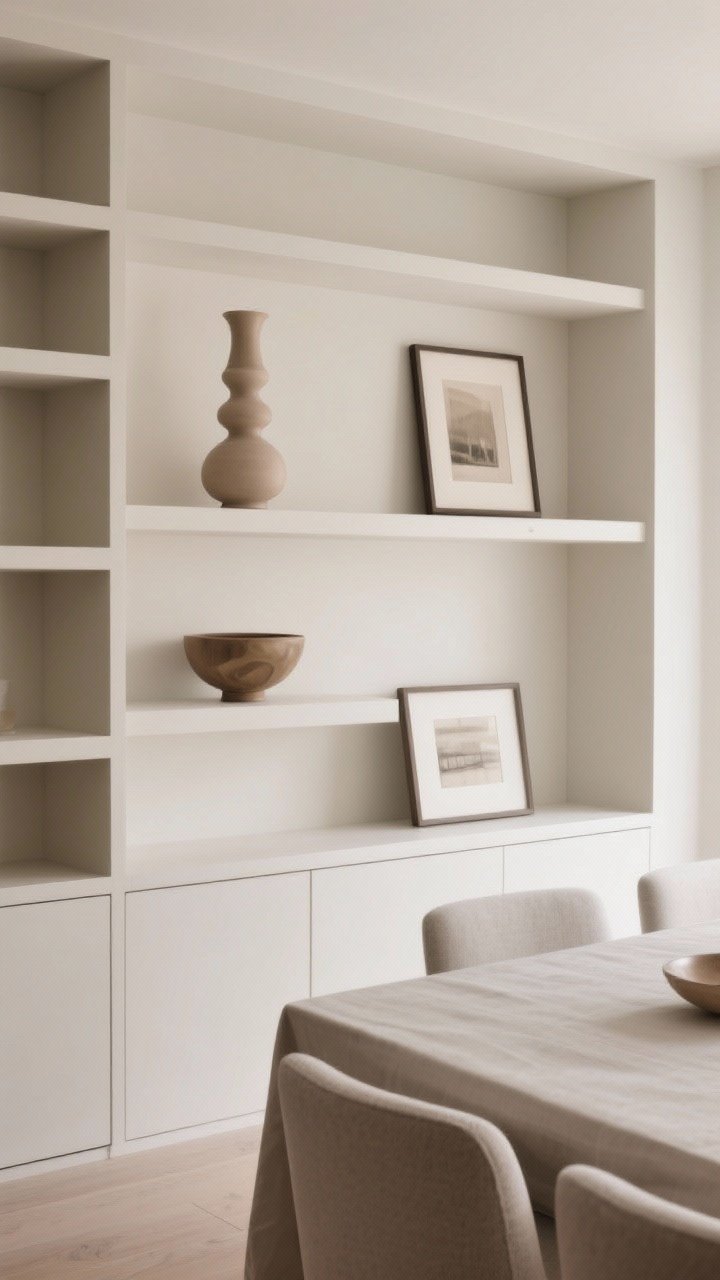
Here’s the truth: the empty space is doing work. When every inch is packed, nothing stands out. Give your best pieces room to shine.
Keep It Balanced
- 60/40 rule: Leave about 40% of each shelf clear.
- Stagger your heights so your eye travels, not gets stuck.
- One “hero” per shelf keeps things focused and calm.
IMO, the most expensive-looking shelves are rarely the most crowded.
9. Bring In Candlelight and Subtle Glow
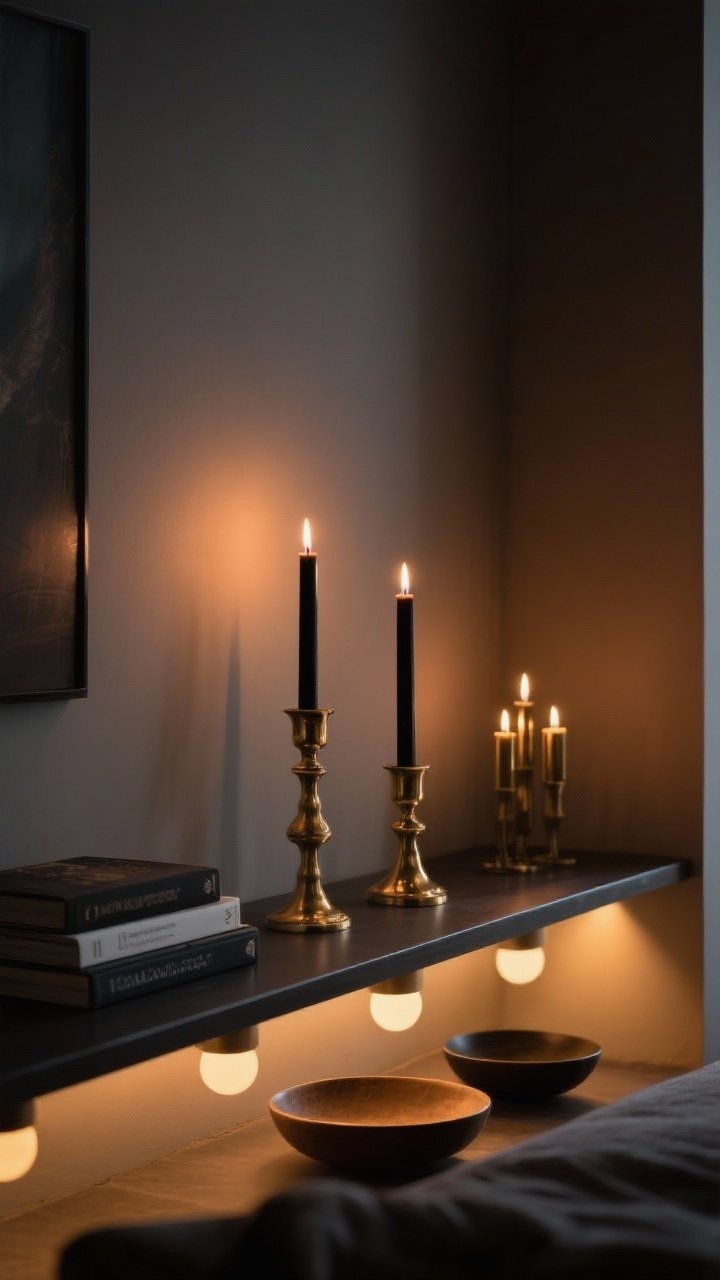
Soft lighting in the dining room is everything. A couple of candles or tiny LED puck lights on the underside of a shelf can make the whole wall feel luxe.
Lighting Ideas
- Brass or black candlesticks for height and shine.
- Taper candles in a color that matches your palette.
- Rechargeable puck lights or LED strips for glow without wiring.
Place candleholders in pairs or trios, and always balance with something lower like a short bowl or stack of books.
10. Showcase Personal Collections (Without the Clutter)
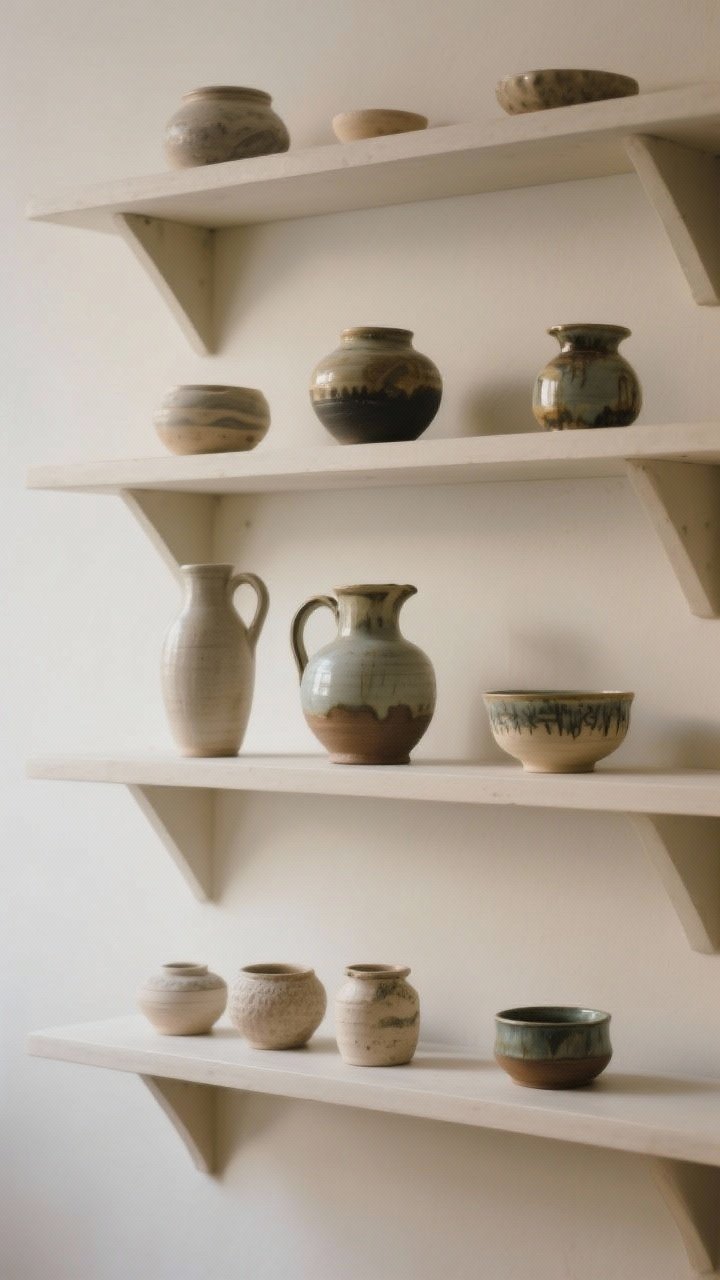
Collections are amazing—until they look like a gift shop. Edit, elevate, and display with intention so your shelves tell your story, not your inventory.
Editing Your Collection
- Choose a theme: Vintage ceramics, travel glassware, or handmade pottery.
- Limit per shelf: 3–5 pieces, max.
- Vary scale: Mix tall, medium, and small to avoid visual monotony.
Rotate pieces seasonally so everything gets a moment—and your shelves always feel fresh.
11. Add Texture With Linens and Baskets
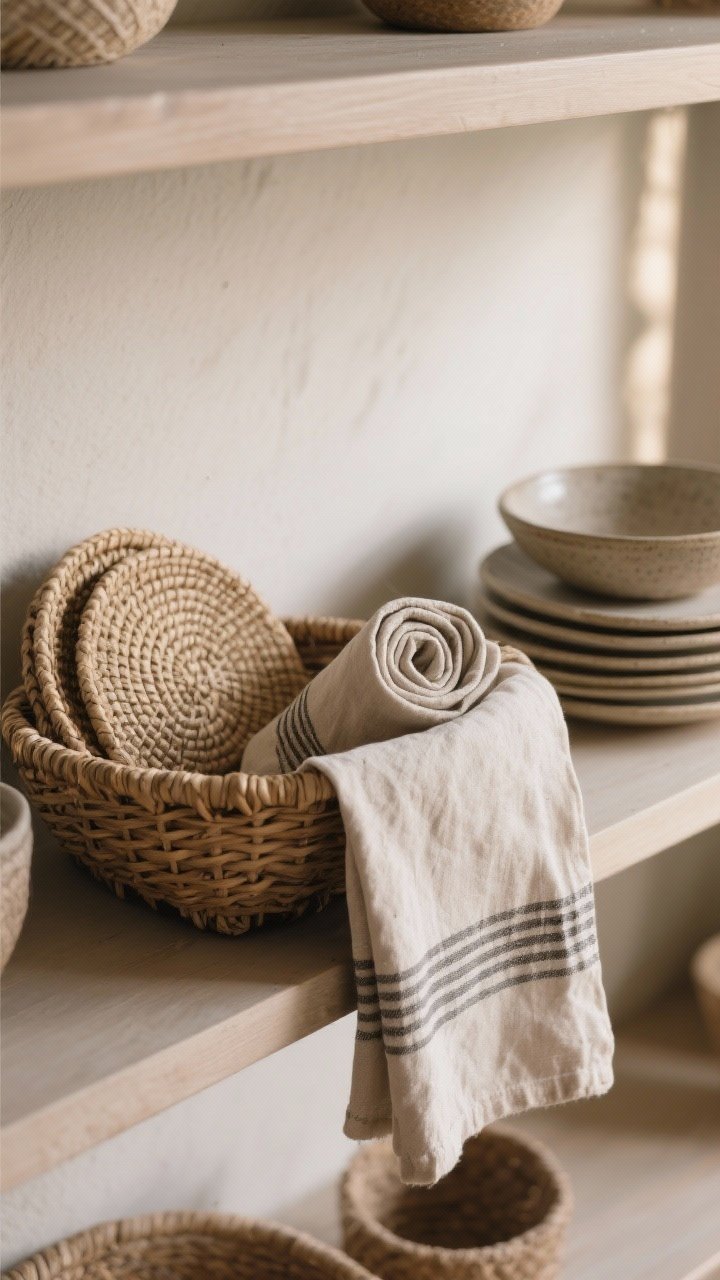
Don’t sleep on soft goods. A folded runner, woven placemats, or a small basket adds texture and function in one move.
Smart Soft Touches
- Folded napkins under a bowl to soften hard edges.
- Rolled placemats in a low basket for easy hosting.
- Tea towels draped casually over a stack of plates.
Choose high-quality linens in your palette for that quiet luxury vibe. It reads elevated without trying too hard, FYI.
12. Create Visual Rhythm With Repetition
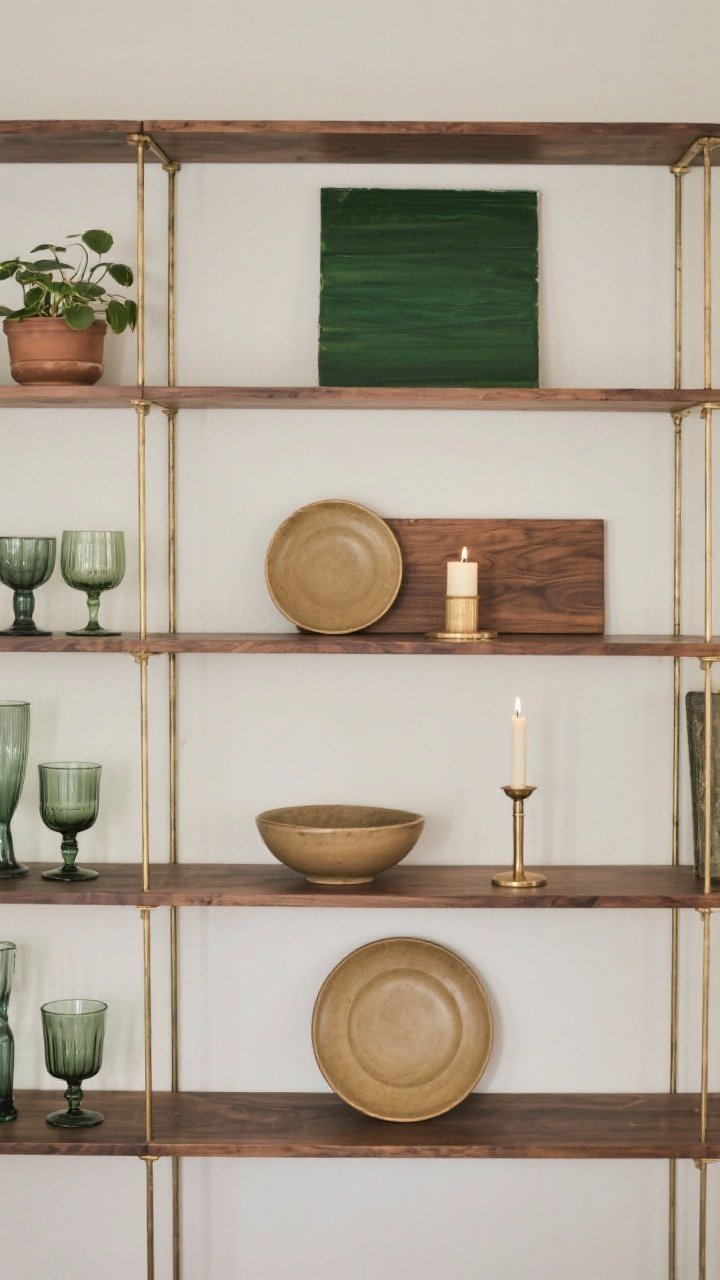
Repetition is your design cheat code. Repeat shapes, finishes, or colors to make everything feel cohesive, even if the objects are different.
Repetition Ideas
- Shapes: Three round forms—like a bowl, candle, and plate—anchored with a rectangular board.
- Materials: Brass appears on each shelf at least once.
- Colors: Echo a deep green from art to glassware to a plant pot.
The goal is rhythm, not uniformity. Your shelves should feel collected, not copy-pasted.
Bonus Styling Formula (Mix and Match)
When in doubt, use this simple shelf formula. It works almost every time:
- 1 tall anchor (vase, art, or lamp)
- 1 medium stack (books, plates, or boards)
- 1 small accent (bowl, candle, or figurine)
- A touch of green (real or faux)
Repeat across shelves, alternating placements so the eye travels naturally from left to right, top to bottom.
Common Mistakes to Avoid
- Overcrowding: Edit, then edit again.
- Only one height: Mix tall, medium, and low items on every shelf.
- No texture: Add wood, metal, and fabric to break up all the ceramic and glass.
- Ignoring scale: One tiny object alone on a huge shelf will look lost—group it.
Easy Seasonal Switch-Ups
- Spring: Fresh greens, pale ceramics, linen napkins.
- Summer: Rattan textures, citrus in a bowl, clear glass bottles.
- Fall: Amber glass, warm woods, dried stems.
- Winter: Brass candlesticks, deeper tones, evergreen clippings.
You don’t need to start over—just swap a few accents and adjust your palette.
Quick Layout Ideas by Shelf Type
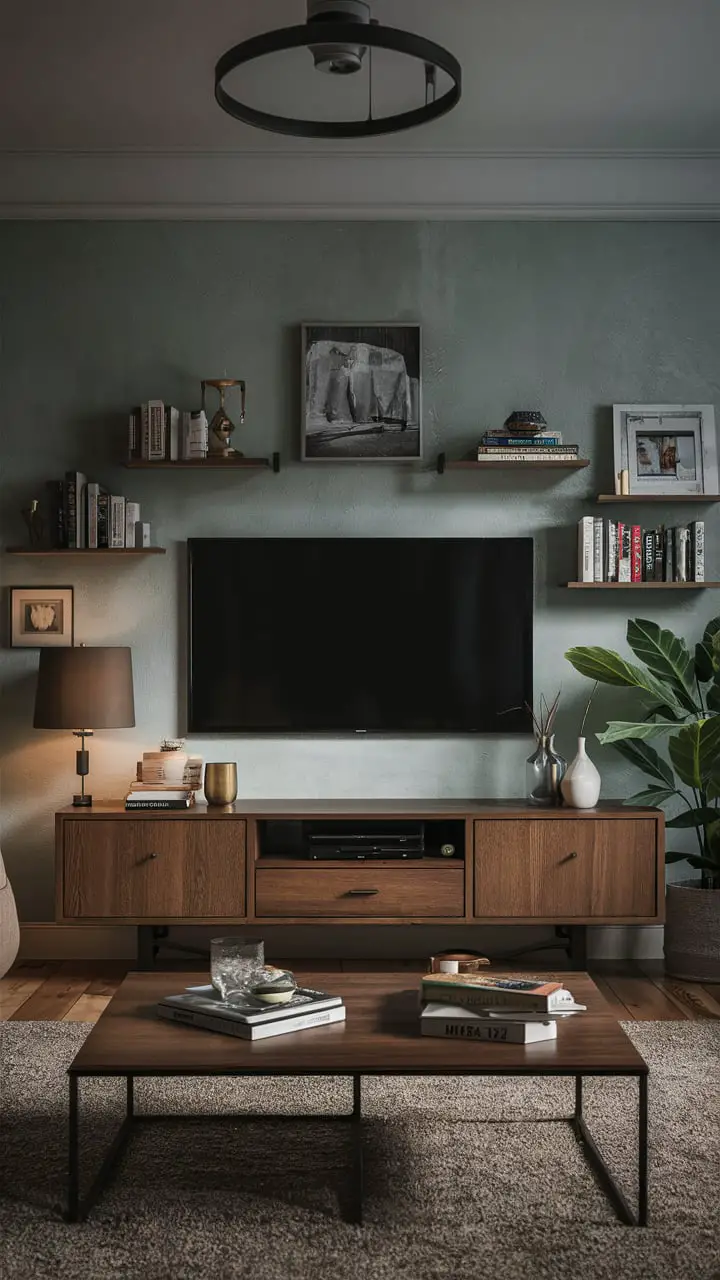
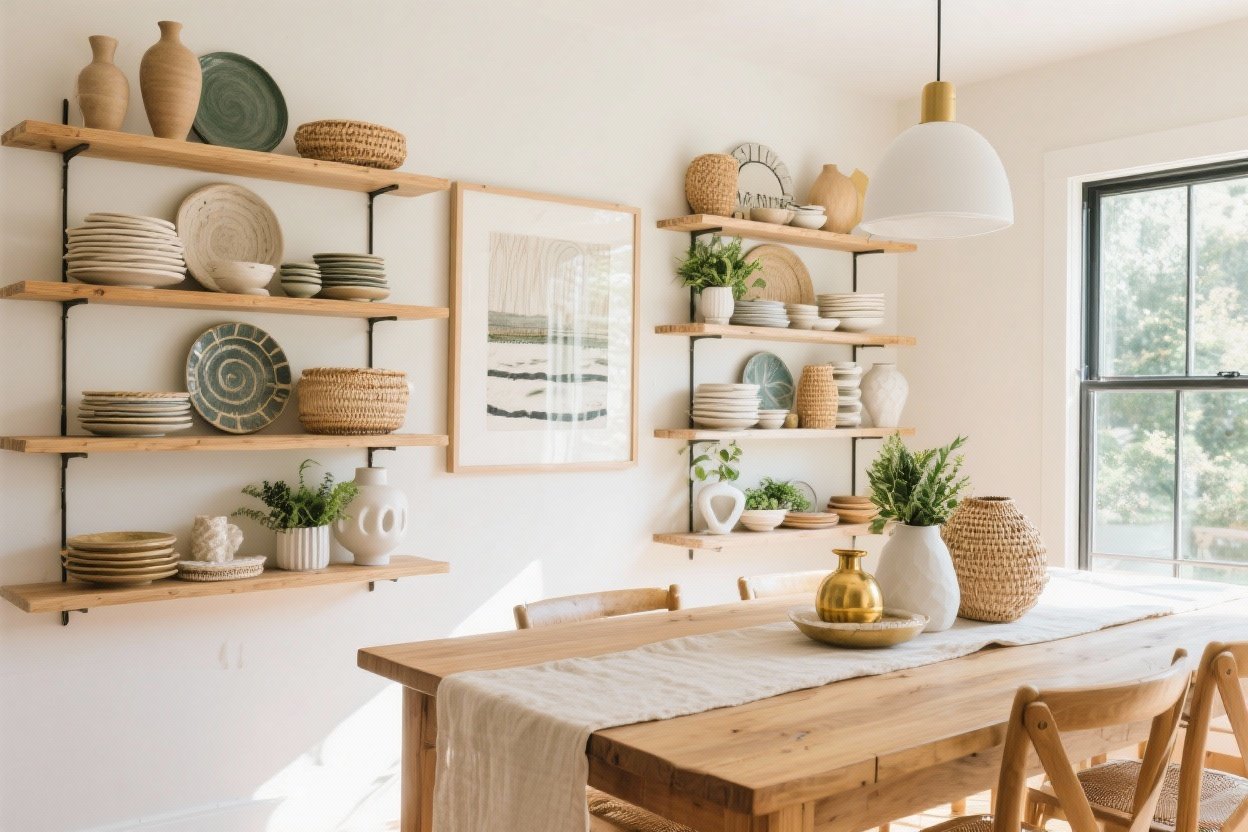
- Open built-ins: Keep the top airy with art and tall vases; heavier stacks on the lower shelves.
- Floating shelves: Keep each shelf simple—3 to 5 items max—so they don’t feel congested.
- Glass-front cabinets: Play with symmetry; repeat shapes for a polished, museum-ish vibe.
Budget-Friendly Styling Finds
- Thrift stores: Vintage brass, ceramic pitchers, and hardcover books for next to nothing.
- Craft stores: Affordable frames and faux stems that don’t look tacky.
- Kitchen aisle: Pretty serveware doubles as decor—no need for “extra” stuff.
At the end of the day, your dining room shelves should tell your story and make hosting feel easy. Start with one shelf, try a vignette, and build from there. You’ll be shocked how fast everything clicks when you stick to a palette, mix textures, and leave a little breathing room.
You’ve got this. Now go make those shelves the star of your next dinner party—no pressure, just vibes.